Flight instructions
How to Change Your MindFlight instructions are guidance for meeting fear during a psychedelic journey without either fleeing from it or trying to dictate what comes next. Their central move is to face threatening images and sensations, allowing the experience to unfold while treating its difficult material as something that can be approached and learned from. Across informal guidance and clinical preparation, the instructions turn a moment of potential panic into a deliberate practice of attention.
A Shared Practice and Its Safeguards
The instructions belong to a broader body of knowledge developed among psychedelic guides. A guide-community website offered a document called the Guidelines for Voyagers and Guides, which gathered accumulated experience on preparation, intention, the stages of a journey, difficult material, and post-session integration. It also addressed set and setting and potential drug interactions. The instructions for confronting frightening experiences sit within this practical framework rather than functioning as an isolated slogan.
That framework also emphasized the guide’s responsibility for the voyager’s safety. Its ethical code warned that participants in religious or psychedelic practices can be especially open to suggestion and exploitation, and required guides to explain risks, obtain consent, protect confidentiality, and safeguard clients’ health. The book describes these protocols as a cultural vessel for experiences that can otherwise be difficult to contain: structure does not erase the journey’s force, but can help guide how it is met.
Facing What Appears
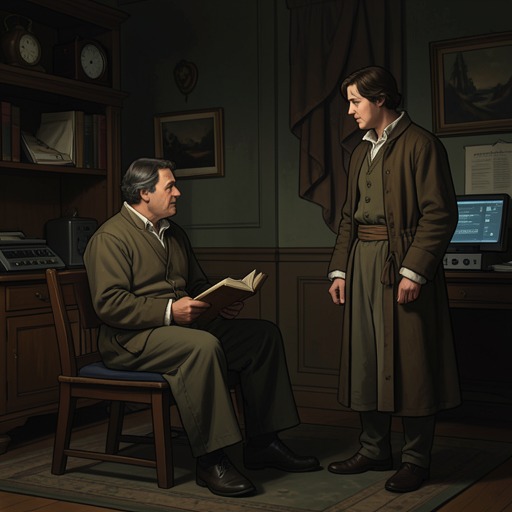
In preparation for his first LSD journey, the narrator spoke with Fritz about possible difficulties, including paranoia, frightening places, and the feeling of losing his mind or dying. Fritz compared the response to seeing a mountain lion: running would invite pursuit, so the voyager should stand firm. The narrator recognized the same principle in the flight instructions used by researchers at Johns Hopkins University: instead of turning away from a monster, move toward it, hold one’s ground, and inquire into what it is doing in the mind and what it might teach.
The method is not simply an instruction to be fearless. It changes the voyager’s relation to fear: the frightening appearance is not treated as a command to escape, but as material to encounter. Its questions make that encounter active without requiring the voyager to claim control over the experience. The emphasis is on curiosity and steadiness in the presence of what feels threatening.
Letting Go Without Fleeing
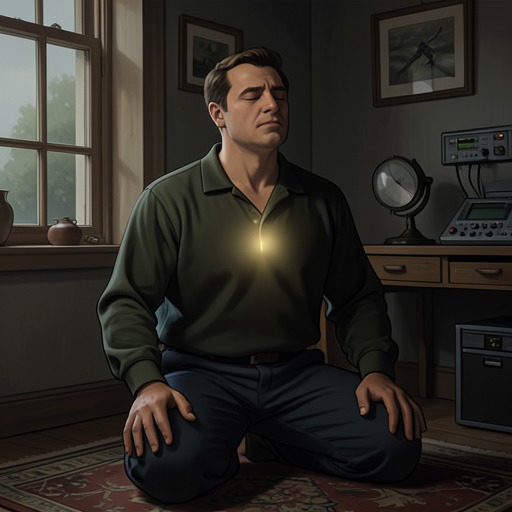
During a later journey, the narrator entered a prolonged, alienating computer-like world generated by patterns of music. He disliked being there and wished to return to nature; as anxiety began to rise, he recalled the flight instructions and concluded that he needed to let go and surrender to the experience. This was different from earlier journeys, in which he had felt able to steer his attention and change the mental channel. Here, the experience seemed to determine what appeared next.
The episode clarifies that approaching difficult material does not mean forcing the journey into a preferred direction. The narrator could not readily redirect the inner scene, and surrender became the means of staying with it rather than fighting its course. Removing his eyeshades did, however, reconnect him with the room and ordinary surroundings. The instructions thus coexist with practical choices about the immediate environment; they are guidance for meeting the experience, not a claim that every moment must be endured in the same way.
Clinical Use and Meaning
The same approach was built into Patrick Mettes’s preparation for psilocybin sessions with Tony Bossis. After several preparatory sessions, Patrick was to take part in two all-day sessions, one involving an active placebo and the other a 25-milligram psilocybin dose. He would lie on a couch wearing eyeshades and listening to curated music, while Bossis and a second sitter remained available. Bossis also gave Patrick the flight instructions, advising him to trust the process, let go, and explore whatever appeared; if something seemed monstrous, he should face it and ask what it might teach him.
The recurrence of the instructions links private guide practice with clinical research, without making the settings identical. In both, preparation gives the voyager a usable response to frightening material before the session begins. The language of flight is therefore deliberately paradoxical: the point is not to escape the journey, but to stop fleeing from what arises within it. Used this way, the instructions offer a method for staying engaged with an experience that may exceed ordinary control.