Harvard University Botany Library
How to Change Your MindHarvard University Botany Library is one of the book’s material anchors for the history of psychedelic research: its botanical collections preserve records of fieldwork, while nearby university spaces later housed an ambitious and controversial psilocybin project. Harvard’s role was not a single episode. It extended from the ethnobotanical work of Richard Evans Schultes, whose research helped redirect attention toward psychoactive plants and fungi in the Americas, to the conflict that brought Timothy Leary and Richard Alpert’s research into the national press.
Campus, collections, and ethnobotany
The relevant Harvard setting is distributed across the campus rather than confined to one building. Schultes’s work left a trace in the Harvard herbarium, where specimens connected to the study of psychoactive plants and fungi had been kept since the 1930s. Their presence predates Leary’s arrival at the university by more than a quarter century. The collection gives Harvard a role in this history earlier than the better-known experiments of the 1960s: plant specimens and botanical research were already helping establish the evidentiary basis for later interest in psychedelics.
Schultes was an ethnobotanist who studied how Indigenous cultures used psychoactive plants and fungi. He identified teonanácatl, the sacred mushroom of the Aztecs and their descendants, as well as ololiuqui, morning-glory seeds used sacramentally by the Aztecs and containing an alkaloid closely related to LSD. This work mattered to R. Gordon Wasson’s search for the mushroom he believed might illuminate the origins of religious experience. A clipping sent to Wasson in 1952 pointed him toward research on a psychoactive mushroom used in sixteenth-century Mesoamerica; Schultes’s findings helped turn the Wassons’ attention from Asia toward the Americas.
The university’s botanical holdings also preserve a record of Wasson’s own encounter with mushrooms. His original field notebooks are kept in the botanical library at Harvard University Botany Library. The notebooks track the night with unusual precision: Wasson recorded arriving at 8:15, taking the mushrooms at 10:40, and the extinguishing of the last candle at 10:45. After that point, the handwriting deteriorates, some sentences appear upside down, and his descriptions break into fragments. The contrast between the carefully logged times and the disrupted writing makes the notebook more than a store of observations: it is a material record of the point at which orderly documentation gave way to an experience that Wasson struggled to describe.
The Psilocybin Project at 5 Divinity Avenue
A later Harvard initiative placed psychedelic research in a different kind of university space. In the fall after Leary returned to Cambridge, he recruited Richard Alpert, then a promising assistant professor and heir to a railroad fortune. With the tacit approval of department chair David McClelland, they began the Harvard Psilocybin Project in a tiny office described as a broom closet, in the Department of Social Relations at 5 Divinity Avenue. The house that contained the office has since been razed and replaced by a large, block-long brick science building. The physical change records the disappearance of the project’s original setting, while the address remains attached to a research effort that quickly outgrew its cramped quarters in influence and controversy.
Leary presented the proposed work as part of a Harvard tradition associated with William James, who had studied altered states of consciousness and mystical experience. The university permitted Leary and Alpert to give the drugs to graduate students, but not undergraduates. The project also offered an unusually popular seminar, Experimental Expansion of Consciousness. Its description joined cross-cultural study of mystical experience with participation in methods intended to expand consciousness and a systematic examination of attention and research methodology. Admission was limited to advanced graduate students and required the instructor’s consent. The seminar’s popularity showed that the project was not only an experiment conducted in an office; it also became a point of attraction within the university’s intellectual and student life.
During its three years, the project administered psilocybin to hundreds of people, including housewives, musicians, artists, academics, writers, psychologists, and graduate students. Participants completed questionnaires about their experiences. A preliminary report found that most subjects described generally positive experiences, some of them life-changing. The range of participants and the project’s appeal distinguished its naturalistic approach from a narrowly controlled laboratory design, but also made questions about oversight and method increasingly difficult to set aside.
Academic conflict and public exposure
Concern about the project had been present among colleagues from early on. In a 1961 memo, McClelland questioned the lack of controls in the naturalistic studies, the absence of medical supervision, and the fact that Leary and Alpert took the drugs alongside their subjects. He also criticized what he regarded as the project’s philosophical naivete. The dispute was therefore not simply about whether altered states deserved academic study. It concerned how evidence was gathered, how researchers related to participants, and whether investigators could remain sufficiently detached from the conclusions they hoped to reach.
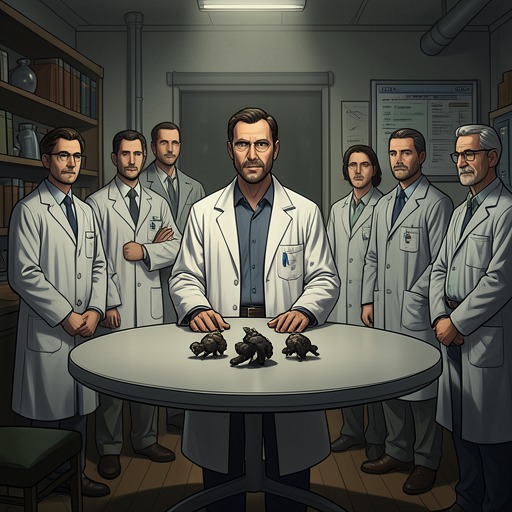
The disagreement became a formal departmental confrontation in March 1962. Herbert Kelman requested a faculty-and-student meeting after hearing reports from graduate students that a kind of cult had formed around Leary and Alpert and that some students felt pressure to participate in drug taking. Kelman objected to what he saw as an anti-intellectual emphasis on experience rather than the verbal analysis of findings. He also raised the concern that students who declined to take part were labeled squares, making participation a marker of belonging as well as a research choice. The episode exposed a tension built into the project’s campus setting: an enterprise that treated personal experience as important evidence could also alter the social relations of the department where that evidence was produced.
Alpert defended the work as continuous with William James’s intellectual tradition and characterized the criticism as an attack on academic freedom. Leary was more conciliatory and agreed to some restrictions. Those present left believing the issue had been settled, but an undergraduate reporter for the Crimson, Robert Ellis Smith, had taken notes unnoticed in the crowded room. The next day, the paper placed the dispute on its front page. The Boston Herald followed with a more sensational headline that emphasized the number of students said to have taken pills. A disagreement previously contained within 5 Divinity Avenue had become a public story, and Leary’s willingness to give reporters provocative statements helped make him a national figure.
Departure and the campus’s continuing significance
The university’s response tightened the project’s institutional constraints. Harvard required Leary to place his supply of Sandoz psilocybin pills under the control of Health Services. By the end of the year, Leary and Alpert had concluded that the drugs were too powerful and controversial to be researched in a university setting. In a letter to the Crimson, they announced the formation of the International Federation for Internal Freedom, under whose umbrella they intended to continue their work. Their departure marked a change in the project’s location and institutional status: research that had begun with university approval and a graduate seminar was moving outside Harvard’s formal structure.
The controversy helped publicize psychedelic research, but it also contributed to a broader backlash that would soon close down much of the field. Harvard’s role thus carries a double significance. Its botanical collections and Schultes’s research helped make the study of psychoactive plants possible; its social-science department gave Leary and Alpert a university platform from which to explore psilocybin and consciousness. At the same time, the project’s methodological weaknesses, concerns about student pressure, and rapid exposure in the press showed how research practice and institutional trust could become inseparable. Harvard is not merely the backdrop to these developments: its herbarium, library, classrooms, office, and faculty meetings form a connected geography in which knowledge was preserved, tested, contested, and ultimately displaced.