Kenyon College
How to Change Your MindKenyon College was the setting of a decisive early turning point in Paul Stamets’s life. During his freshman year, an intense psilocybin experience on a wooded ridgeline above campus brought his debilitating stutter into sharp focus and helped direct him toward the study of mushrooms. The college was not where he completed his mycological education, but the episode there became a starting point for the path he pursued afterward.
A Freshman Year Turning Point
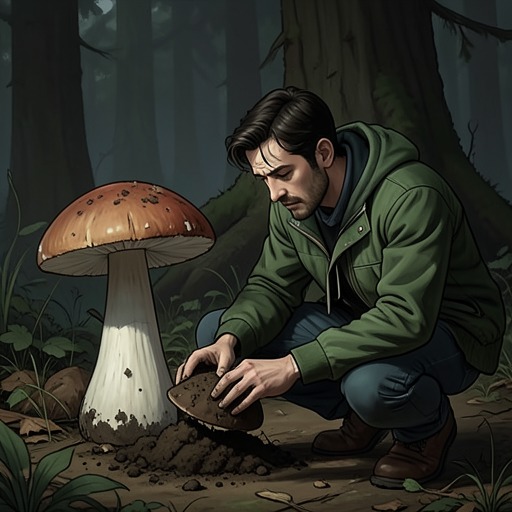
Stamets arrived at Kenyon College carrying a difficulty that had shaped his everyday interactions for as long as he could remember: a severe stutter. He recalled looking down at the ground because he feared people would try to speak to him, and connected that habit to how good he had become at finding mushrooms. His account makes the bodily experience of the campus landscape part of the story: the downward gaze that accompanied his speech anxiety had also trained his attention on the ground.
Toward the end of his freshman year, on a spring afternoon, Stamets walked alone along the wooded ridgeline above campus and ate a whole bag of mushrooms, perhaps ten grams, believing that to be a proper dose. As the psilocybin took effect, he noticed a particularly beautiful oak and began to climb it. The ascent coincided with a thunderstorm: the sky darkened, lightning flashed across the horizon, the wind strengthened, and the tree swayed as the storm approached.
The Oak and the Storm
Stamets became dizzy and felt unable to climb down, so he wrapped his arms around the tree and held on. In his experience, the oak became an axis mundi, a point of connection between earth and universe. That sense of connection unfolded alongside an immediate fear that lightning would strike him. He described crying in the warm rain and feeling at once exposed to mortal danger and united with the universe. The scene’s force lies in that collision: a storm threatening his life became the setting for a focused reckoning with what he would change if he survived.
In that reckoning, Stamets addressed the stutter directly. He judged that it was holding him back, particularly in his ability to look women in the eyes, and repeated a resolve to stop stuttering. The account does not establish that the experience cured the stutter; it shows instead that, under the pressure of the storm and the possibility of death, he made it the central issue he wanted to confront. Afterward, he recognized that he wanted to investigate mushrooms.
Departure and Significance
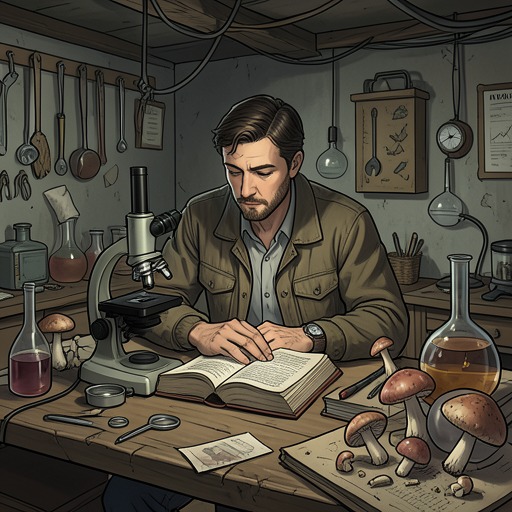
Stamets left Kenyon College after one year. His later mycological education took place at Evergreen State College, where he and fellow students studied under Michael Beug. In 1978, at twenty-three, he published his first book on Psilocybe mushrooms. These later developments distinguish Kenyon’s role: it was not the institution where he trained as a mycologist, but the place associated with the experience that first set his course and directed his curiosity toward mushrooms.
The episode also links two details that might otherwise seem separate: Stamets’s habit of looking down because of his stutter, and his eventual expertise in finding mushrooms. At Kenyon, the upward movement of the climb and the tree’s symbolic importance briefly reversed that habitual orientation, while the storm forced him to name the speech difficulty he wanted to overcome. The location therefore enters his story not simply as a college he attended, but as the landscape of an experience that connected personal vulnerability, danger, and a new scientific interest.