Mycoremediation
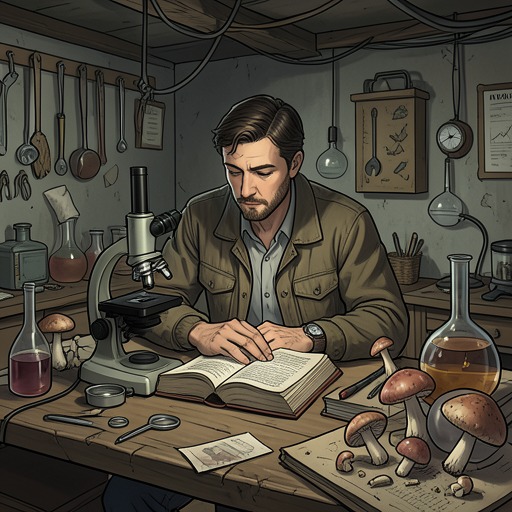
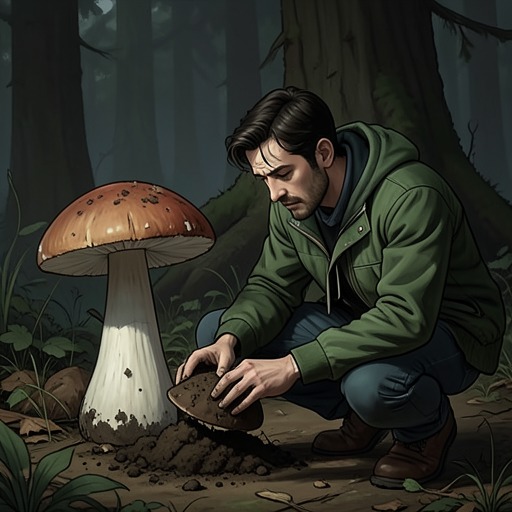
How to Change Your MindMycoremediation is Paul Stamets’s term for using mushrooms to clean up pollution and industrial waste. The idea applies fungi’s capacity to break down complex organic molecules to environmental damage: in the example Stamets presented, oyster mushrooms transformed a heap of oily sludge over four weeks. The demonstration gives the concept both a practical image and a larger ecological claim—that organisms often treated as obscure or unwelcome may help address the waste human activity leaves behind.
Definition and ecological basis
Fungi already perform a vital form of decomposition in nature, breaking down complex organic matter. Without that work, dead plants and animals would accumulate rather than return to the cycle of soil and growth. Mycoremediation extends this familiar ecological function to pollutants and industrial waste, including petrochemical material. It is not simply a claim that mushrooms are useful; it proposes putting their decomposing capacities to work on substances that otherwise persist as pollution.
The concept also belongs to Stamets’s effort to challenge the disregard and deep-seated mycophobia directed at fungi. He presents them as essential to planetary health—as recyclers of organic matter and builders of soil—and argues for their potential beyond that often overlooked role. In this framing, remediation makes fungal activity visible as a response to human-made damage, rather than leaving fungi in the background as a neglected part of the living world.
The oily-sludge demonstration
After the Exxon Valdez oil spill in 1989, when the tanker ran aground off Alaska and spilled millions of gallons of crude oil into Prince William Sound, Stamets revived a long-standing idea: using fungi to break down petrochemical waste. The book recounts his presentation of the idea through a before-and-after image. First came a steaming heap of oily black sludge; Stamets then showed the same pile after inoculating it with oyster-mushroom spores.
Four weeks later, the pile had been reduced by a third and was covered in a thick mantle of white oyster mushrooms. The sequence made the proposed process legible at a glance: the mushrooms were not merely placed beside the waste but appeared amid a visibly changed mass. The account presents this as a striking demonstration, not as a report establishing the method’s performance under every environmental condition. Its force lies in the specific transformation shown and in the way that image gives a concrete form to fungi’s capacity to break down complex material.
Significance and scope
The demonstration anchors a broader argument about what mushrooms might contribute to ecological and medical problems. Stamets’s aspirations extend well beyond petrochemical sludge, and his popular lecture and 2005 book Mycelium Running frame mushrooms as potential contributors to solving major problems. Mycoremediation is one distinct part of that larger advocacy: the term names the use of mushrooms against pollution and industrial waste, while the oil-sludge example supplies its clearest material image.
The episode also reverses the usual scale of attention. An oil spill involving millions of gallons marks environmental damage on a vast scale; the account turns to the work of fungi and to a single pile whose change can be seen over four weeks. That contrast makes remediation more than a hopeful slogan in the narrative: it is a proposed use of biological processes, illustrated through a before-and-after transformation, and a reason to reconsider fungi as active participants in environmental repair.