Psychedelics as disruptive technologies
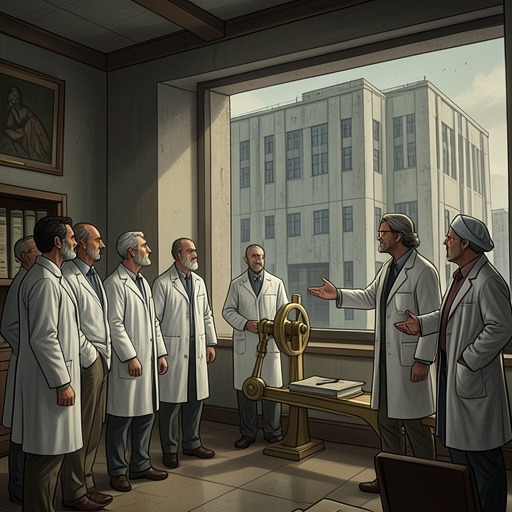
How to Change Your MindPsychedelics as disruptive technologies names a challenge that extends beyond any single drug or treatment: these substances seemed capable of unsettling the frameworks used to define illness, therapy, scientific evidence, and social order. The book locates their disruptive force in the conjunction of powerful experiences, ambitious hopes for personal and cultural change, and a therapeutic approach that could not easily be separated from its spiritual and interpersonal setting.
A Therapy Beyond the Treatment of Illness
The disruptive potential became apparent when researchers and practitioners began to imagine psychedelic therapy not as a drug that mimicked mental illness or merely assisted conventional psychotherapy, but as a high-dose experience that might reorganize a person’s outlook. The model proposed by Humphry Osmond, Al Hubbard, and Aldous Huxley in 1956–1957 depended on a single, intense session intended to produce something like a conversion experience. It also unsettled conventional therapeutic roles: the patient and therapist could no longer be understood only through the familiar arrangement of weekly talk therapy.
That ambition widened the question of who therapy was for. Al Hubbard helped connect researchers across North America, carrying Sandoz LSD and clinical knowledge between centers. In the late 1950s, he worked with Humphry Osmond and Abram Hoffer in Weyburn, met R. Gordon Wasson in Manhattan, and visited researchers in Chicago and Los Angeles, including Betty Eisner, Sidney Cohen, and Oscar Janiger. At Hollywood Hospital in Vancouver, he persuaded the institution to dedicate a wing to treating alcohol dependence with LSD; he also helped establish two other Canadian treatment facilities. His work with celebrities, whom he discreetly flew to Vancouver, earned him the nickname Captain Trips. Though LSD treatment became a business and some institutions charged more than five hundred dollars for a session, Hubbard regarded psychedelic therapy as philanthropy and spent down his fortune advancing it.
The movement beyond a strictly medical purpose also took institutional form. In 1955, Hubbard established the Commission for the Study of Creative Imagination, recruiting Osmond, Hoffer, Huxley, Cohen, philosopher Gerald Heard, a United Nations official, and other researchers; Hubbard called himself its scientific director. The commission’s practical scope may have been limited, but it signaled a growing divide between medical aims and spiritual or cultural ones. Sidney Cohen resigned in 1957. Hubbard, meanwhile, described his interest as moving away from science pursued for its own sake and toward what lay beyond empirical manipulation. The shift from psychotherapy toward cultural transformation was underway before Timothy Leary became its most visible advocate.
The Network and the Promise of Wider Change
The book presents the first wave’s expansive hopes as a product not only of individual conviction but of drugs that seemed to make those convictions difficult to contain. Researchers who experienced psychedelics could conclude that the substances might transform healthy people as well as treat the sick. Al Hubbard’s network carried methods and supplies between distant sites; in California, Myron Stolaroff shared his own experience with colleagues at Ampex, who met to discuss spiritual questions and the possibility that LSD could help healthy individuals realize their potential. Hubbard came to guide their sessions and train them to guide others. Stolaroff briefly tried, with Hubbard’s help, to remake Ampex as a psychedelic corporation, including weekly workshops and sessions for executives. The initiative foundered when the company’s general manager objected to the Christian images Hubbard placed in his office.
The larger significance of such efforts lay in their refusal to confine the drugs’ proposed benefits to clinical settings. Timothy Leary became the clearest public embodiment of that refusal. His colleagues could share his confidence in psychedelics’ transformative potential while speaking more cautiously in public; Leary was unusually willing to make the case openly. The resulting conflict was not simply a dispute over his personal conduct. If a drug seemed to offer insight or change to healthy people, its use could no longer be neatly restricted to the treatment of illness. The possibility of treating society itself as sick, rather than helping individuals adjust to its norms, made the project politically and professionally harder to accept.
Why the Disruption Provoked Resistance
The contrast with earlier models helps explain the resistance. The Psychotomimetic model could be fitted into psychiatry’s existing account of mental illness because the drug effects were taken to resemble psychosis. Psycholytic therapy could be treated as an adjunct to psychoanalysis. Psychedelic therapy, by contrast, proposed a dramatic experience with spiritual implications, set and setting as consequential factors, and a conversion-like outcome. Charles Grob later described this approach as applied mysticism. Its proximity to shamanic healing and its blurring of boundaries between religion and science, illness and health, and healer and sufferer challenged a psychiatric profession increasingly committed to a biochemical understanding of the mind.
The research methods of the period intensified the problem. Double-blind, placebo-controlled trials became the expected standard for drug research, but participants and guides could often tell whether psilocybin or a placebo had been administered. Researchers also had difficulty isolating the chemical’s effects from the person’s expectations, the therapist’s presence, and the surrounding environment. The question was therefore not only whether the drug worked, but how to assess a treatment whose apparent action depended on an experience shaped by context. These difficulties made the psychedelic model hard to place inside conventional testing without reducing the very circumstances that practitioners considered central.
The book links the collapse of the first research wave to both exuberance and institutional unease. Psychedelics encouraged some researchers to see a potential for broad personal and social change, while Timothy Leary’s public advocacy made it harder to preserve a bright line between scientific and recreational use. The ensuing reaction defended distinctions that the psychedelic project had put under pressure: patient and healthy person, therapist and participant, research and recreation, spiritual and material. In this account, the dispute was not reducible to the personalities or research flaws of a few figures. It concerned whether an experience that seemed to unsettle such divisions could be safely contained by the institutions that relied on them.
An Unresolved Challenge to Modern Medicine
The renewed clinical research has inherited the same problem of containment. Trials at New York University and Johns Hopkins University, alongside studies of depression and addiction, resumed questions that earlier researchers had been forced to abandon. But modern evaluation still confronts difficulties of blinding and of separating pharmacological effects from set and setting. The book frames this not simply as a technical inconvenience: if a treatment works partly by administering a particular kind of experience, conventional medicine must decide how to study that experience without pretending it is incidental.
The challenge has also persisted through the movement of knowledge between formal research and underground practice. Many underground guides traced their professional lineages to Timothy Leary, Stanislav Grof, Al Hubbard, or Leo Zeff. Myron Stolaroff argued that the research revival since the late 1990s had developed partly from the anecdotal experience of underground therapists as well as from the first research wave. Some guides helped train practitioners for university trials, and when the Johns Hopkins team investigated music in guided psilocybin sessions, it sought information from underground guides. At a 2010 conference organized by the Multidisciplinary Association for Psychedelic Studies, James Fadiman invited guides to meet; about a hundred attended the following morning, revealing a substantial practice that had been largely uncounted.
At a later gathering, recognition by mental-health institutions appeared both promising and precarious. Tom Insel praised psychedelic-assisted psychotherapy as a novel approach, while warning that regulators accustomed to assessing drugs in isolation might struggle with its paradigm. He and Paul Summergrad also stressed safety, rigor, and reputational risk. That caution echoes the book’s central tension: psychedelics may invite medicine to reconsider what treatment consists of, but their promise cannot be separated from the methods, settings, and public responsibilities through which the experience is delivered. Their disruptive character lies in that double demand—to take the experience seriously and to develop ways of studying it that do not erase what makes it difficult to contain.