Psychotomimetic model
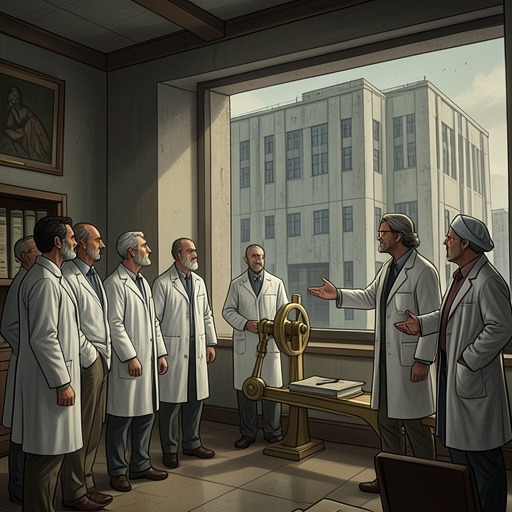
How to Change Your MindThe Psychotomimetic model interpreted the effects of LSD and related drugs through their resemblance to psychosis. In the early years of psychedelic research, that resemblance was not merely a warning: researchers thought temporary, drug-induced psychoses might reveal something about mental illness and let therapists experience aspects of madness firsthand. The framework gave psychiatry a familiar way to approach unfamiliar experiences. When the debate later turned toward whether psychedelics could produce spiritual insight or therapeutic change, the psychotomimetic account returned with new force, shaping both professional opposition and the interpretation of frightening reactions.
Definition and Early Psychiatric Use
Psychotomimetic described a drug understood to produce effects resembling psychosis. In the 1950s, when LSD and similar substances were first introduced into psychiatric research, the term expressed a working theory about what the drugs did: they could induce temporary psychoses. Researchers hoped that these states might offer clues to the nature of mental illness and allow therapists to encounter some features of madness directly. The model thus made the unusual experience legible within an established medical vocabulary, rather than requiring psychiatry to accept a wholly new account of consciousness.
That familiarity mattered. Psychiatrists could place drug-induced, psychosis-like effects alongside existing understandings of mental illness and investigate them as a temporary analogue. The model did not, by itself, establish that a drug experience was identical to a psychiatric disorder; its central claim was resemblance. But resemblance could serve both as a research premise and as a lens through which clinicians judged what they saw. The same intense changes in perception and thought might be treated as material for studying psychosis or as evidence that a drug was dangerous, depending on the question being asked and the observer’s expectations.
A Framework Among Competing Models
The Psychotomimetic model was one of several frameworks used to assimilate psychedelic drugs into psychiatric practice. Psycholytic approaches, by contrast, treated lower doses as a way to loosen psychological constraints and bring subconscious material into awareness, often alongside talking therapy. The later psychedelic-therapy paradigm proposed something more disruptive: a single high-dose session aimed at a conversion-like experience, requiring a reconsideration of the roles of patient and therapist. Compared with that proposal, the psychotomimetic account was easier to fit into conventional psychiatric ideas about illness and treatment.
The contrast was not only theoretical. The emerging psychedelic-therapy approach made spiritual experience, preparation, and the circumstances of a session central to treatment. The Psychotomimetic model instead foregrounded the drug’s capacity to reproduce symptoms resembling mental illness. By the 1960s, when some psychiatrists had little personal experience of psychedelics, that familiar interpretive frame could again dominate: what others described as transcendence could look, from outside, like psychosis. The book presents this return as a reversal in the argument over the drugs—not proof that all alarming experiences were misread, but a sign that the available framework shaped what observers considered plausible.
Professional Opposition and the Return of the Model
As psychedelic therapy challenged psychiatric conventions, professional critics questioned whether researchers who took the drugs themselves could remain competent and objective investigators. In 1963, Roy Grinker, editor of the Archives of General Psychiatry, attacked researchers who used the drugs and became absorbed in their mystical effects. The following year, he made a similar objection in the Journal of the American Medical Association, arguing that investigators’ experiences could bias their conclusions. Critics also objected to what they saw as an unscientific aura surrounding the drugs. Those concerns intersected with a broader shift toward the double-blind, placebo-controlled trial as the standard for drug research, a standard that psychedelic studies found difficult to satisfy.
The alternative, however, had its own limits. When researchers abstained, the most authoritative voices in public and professional debate could be those least familiar with psychedelic effects. In that climate, psychosis became the readily available explanation for experiences that researchers and participants might otherwise understand differently. The Psychotomimetic paradigm, initially one way to study the drugs, consequently returned as a dominant interpretation at a moment when mainstream psychiatry was increasingly withdrawing from psychedelic research.
The change was sharpened by events outside the laboratory. In 1962 and 1963, bootleg LSD appeared on the street, and people experiencing difficult reactions began arriving in emergency rooms and psychiatric wards. Afterward, the drug was increasingly treated as a cause of mental illness rather than a possible treatment. In 1965, Bellevue Hospital admitted sixty-five people for what it called LSD-induced psychoses. Media alarm and circulating stories helped establish a public narrative of LSD as a threat. A widely publicized claim that LSD could damage chromosomes and cause birth defects later lost support when the study was discredited in Science, but the refutation received far less attention than the original claim. In this setting, the psychotomimetic interpretation gained cultural force as well as clinical currency.
Clinical Ambiguity and the Limits of the Label
The dangers were not simply a product of public misunderstanding. The mid-1960s brought a surge of people on LSD to emergency rooms with acute paranoia, mania, catatonia, anxiety, and episodes described as acid flashbacks, in which symptoms returned spontaneously days or weeks after ingestion. Some patients experienced genuine psychotic breaks. A psychedelic trip could trigger a first psychotic episode in some young people already at risk for schizophrenia. The account also places that possibility in a broader context: traumatic experiences of other kinds, including parental divorce or graduate school, can also serve as triggers.
But a psychosis-like appearance did not always mean that a patient was undergoing full-blown psychosis. Doctors with little experience of psychedelics sometimes mistook panic reactions for psychotic episodes, and their response could make matters worse. Andrew Weil, volunteering as a young doctor at the Haight-Ashbury Free Clinic in 1968, described recognizing panic and briefly leaving the patient with the impression that someone else in the clinic had a more serious problem. The reassurance often helped the patient feel better. The episode illustrates the gap between a symptom’s appearance and its interpretation: the psychotomimetic frame could direct attention toward pathology, while a clinician’s understanding of panic could lead to a different response.
The model’s historical importance lies in that double edge. It provided an intelligible research hypothesis when psychiatry first encountered drugs that radically altered consciousness, and genuine psychotic episodes meant that concern could not simply be dismissed. Yet when resemblance became the default explanation, it could collapse distinctions among panic, drug effects, and psychiatric illness. Its force in the 1960s therefore reflected both real clinical risks and the limits of a debate in which the interpretive framework often determined whether psychedelic experience appeared as a potential route to treatment or as evidence of disease.