Spanish Inquisition
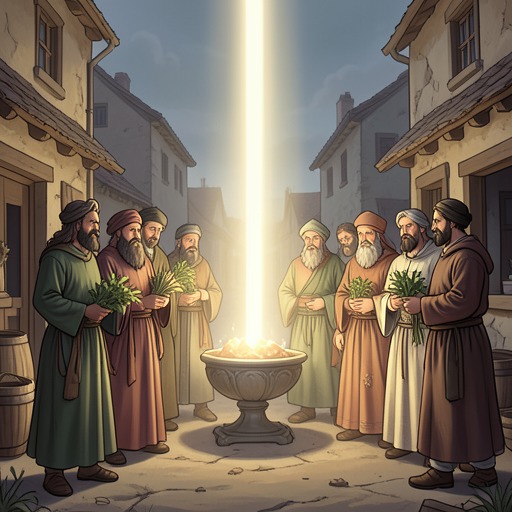
How to Change Your MindThe Spanish Inquisition is presented as an instrument of religious authority in the suppression of Indigenous practices involving psychoactive plants and mushrooms in the Americas. Its pursuit of Native Americans over ceremonies involving peyote and psilocybin formed part of a broader effort to drive the sacramental use of mushrooms underground after the Spanish conquest. In the book’s account, this history is not only a confrontation over ritual, but also an early struggle over who could mediate access to the sacred.
Colonial Suppression
The book describes the mushroom practice as having been kept secret from Westerners for centuries after Spanish authorities moved against it. Indigenous people were investigated over their participation, and mushroom stones—some carved from basalt and about a foot tall—were broken. Against this wider campaign, the Inquisition brought dozens of charges against Native Americans involving both peyote and psilocybin. The account characterizes these prosecutions as an early version of a war on drugs, while stressing that the conflict was more specifically directed at certain plants and fungi.
Religious Authority and the Mushroom Sacrament
The suppression had a theological and institutional dimension. Spanish church authorities treated mushroom ceremonies as a challenge to Christian authority, while the mushrooms’ Nahuatl name, Flesh of the gods, suggested a rival claim to sacred communion. The book contrasts access mediated through Christian clergy and liturgy with the direct access to visions attributed to the mushroom sacrament. From that perspective, the threat was not simply that another ritual existed: it was that the ritual offered an alternative route to divine experience beyond the church’s control.
Charges and Changing Uses
The Inquisition’s charges concerned practices that the book places within a changing Indigenous religious landscape. By the time R. Gordon Wasson attended a ceremony in 1955, many Mazatecs were devout Catholics, and mushrooms were being used chiefly for healing and divination, including efforts to locate missing people or important objects—not simply for worship. Wasson knew of these contemporary purposes, yet interpreted the ceremony through his theory that psychoactive fungi lay at the roots of religious experience. The contrast underscores how colonial authorities and later outside observers could impose broader theological meanings on practices whose local purposes were more varied.
Historical Significance
The book situates the Inquisition’s actions within a long conflict over religious practice and institutional power. In 1620, the Roman Catholic Church declared the use of plants for divination contrary to the purity of the faith, giving formal expression to the condemnation surrounding such practices. The Inquisition’s prosecutions thus belong to a history in which Indigenous ceremonies were not merely disapproved of but treated as a threat to established religious authority. The narrative also presents this campaign as an early precedent for later institutional efforts to control access to psychoactive substances.