Alpha obedience
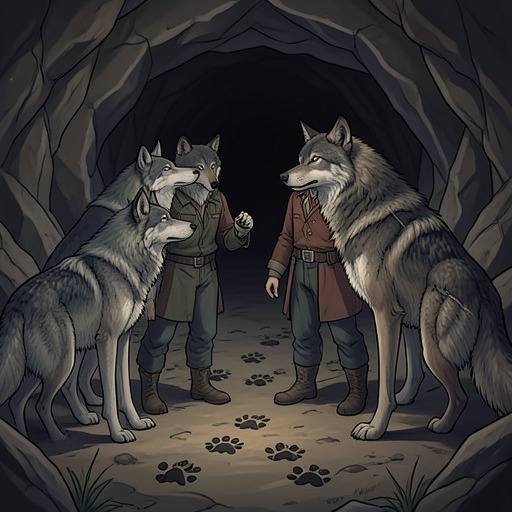
How to Flirt with A Naked WerewolfAlpha obedience is the werewolf pack’s instinctive submission to its alpha, a social rule that binds members into a community and makes leadership more than a matter of title. It can compel action even against an individual’s judgment, giving the pack a means to coordinate and protect its members while placing unusual responsibility in the hands of its leader.
How the Rule Works
Cooper Graham describes alpha status as something that is not inherited. A generation may begin as adolescent werewolves learning their abilities, then discover that one of their longtime companions has become the person they obey. The change is not presented as a formal election or a title conferred by ancestry: recognition of the alpha emerges within the group, and obedience follows almost reflexively.
That response is stronger than ordinary respect. Werewolves, Cooper explains, retain human flaws such as pride, anger, and lust, so their pack instincts must be correspondingly powerful. When an alpha gives an order, a member may comply even while understanding that the request is foolish or dangerous. The compulsion is not described as an external spell or as simple fear; it is an instinct tied to the perceived good of the pack. Cooper initially resists the comparison to brainwashing, but concedes that the rule can sound troubling when stated aloud.
Community and Purpose
The rule is also framed as the basis of collective life. Cooper recounts his grandfather’s satisfaction with serving as a foot soldier: pack membership meant belonging to something larger than oneself, sharing a purpose, and living alongside close friends. From this perspective, obedience is not merely submission. It supplies a common direction and a sense of mutual dependence that, in Cooper’s account, would be lost without the pack.
The pack’s responsibilities help explain why that coordination matters. Its alpha serves as a leader for the village and its families, making important decisions; the pack also drives away threats, including wild animals, criminals, and other unwelcome intruders. The arrangement gives obedience practical stakes: a member may be sent into danger because the group considers the action necessary. Cooper says he struggled with sending people he cared about into fights, took too much upon himself, and hurt people. His account links the rule’s communal value to its costs, since leadership can require decisions with consequences for friends and relatives.
Authority in Practice
Cooper’s position illustrates the difference between formal authority and day-to-day management. Although he has left the packlands in Crescent Valley, he remains the alpha; Eli, a relative who handles matters in Cooper’s absence, describes himself as the de facto leader rather than the actual alpha. Eli says that Cooper retains the position until his death and that Eli could not simply order Maggie Graham to stop fighting him. His explanation makes clear that administrative influence does not automatically carry the instinctive authority of the alpha.
Cooper can nevertheless exercise that authority at a distance. When he questions Eli about whether anyone in the pack has been running alone, Eli answers that no one runs without his knowledge. Cooper’s tone shifts into what the narrator recognizes as his alpha mode, and the exchange presents Eli as having little choice but to answer truthfully. The scene shows authority working not only through explicit commands but through the recognized presence of the alpha, even when Cooper is physically away from the pack.
The limits and instability of this hierarchy become visible in later conflict. During a confrontation involving Maggie, Eli tells her to step down and declares that he leads the pack. That assertion differs from his earlier insistence that Cooper remains alpha until he dies. The scenes establish both Eli’s ability to issue a forceful command and the unresolved tension between his practical leadership and Cooper’s stated status; they do not, by themselves, explain a formal transfer of authority.
Lineage, Membership, and Change
Alpha obedience belongs to pack organization, not to a guarantee that every member of a family can transform. Evie DuChamp says that her branch is a dead line, while Cooper’s generation includes werewolves; he also explains that intermarriage beyond the pack has produced more dead lines over time. His account separates the transmission of the capacity to change from the emergence of an alpha: bloodlines affect who can become a werewolf, but alpha status is not hereditary.
The rule’s force also helps make Cooper’s departure consequential. He was expected to lead his generation’s pack, and Evie describes leaving the packlands for Grundy as devastating for him. His move separates him from the community whose instincts and leadership structure helped define his place within it. Yet his authority persists despite his absence, and his return draws family expectations and conflicts back into view. Alpha obedience thus makes physical distance an incomplete escape: Cooper can leave the valley, but the pack’s recognition of him continues to shape its relationships and decisions.
Significance
The rule combines solidarity with constraint. It allows a pack to act collectively, defend its community, and organize responsibility under a recognized leader; at the same time, its compulsion can override private judgment, including when a command is dangerous. Cooper’s discomfort with sending loved ones into fights and Eli’s distinction between actual and de facto leadership show that the system’s effects depend on who holds authority and how that authority is exercised.
The narrative does not treat obedience as either uncomplicated devotion or mere coercion. Cooper values the common purpose his grandfather found in pack life, yet he also acknowledges the harm he caused while carrying leadership burdens. The instinct that makes the pack a community is therefore inseparable from the power it gives the alpha—and from the consequences borne by those expected to obey.