Ash Wenstein
How to Flirt with A Naked WerewolfAsh Wenstein, originally named George Wenstein, is Mo Duvall-Wenstein’s father and Saffron Wenstein’s lifelong partner. He helps define the eccentric, loving, and politically radical household in which Mo grows up: a self-sufficient vegan commune built around environmental principles, distrust of government, and resistance to conventional institutions. Although his convictions often make ordinary family life difficult, Ash’s affection and generosity are central to Mo’s memory of childhood and to her complicated effort to establish an adult life beyond her parents’ control.
Identity and Family Background
Ash Wenstein met Lynn Duvall at a 1975 recycling seminar in Chicago. The pair remained together afterward, but they never formalized their relationship through a conventional wedding. Instead, their closest equivalent was a naming ceremony in which Lynn renamed him Ash Wenstein, while he renamed her Saffron Wenstein. The ceremony captures the couple’s rejection of ordinary social forms and their investment in self-created identity. For Mo, however, the names also carry an element of affectionate embarrassment: her father had accepted a dramatic reinvention, while her mother had been given a name that clung to her as insistently as the spice it evoked.
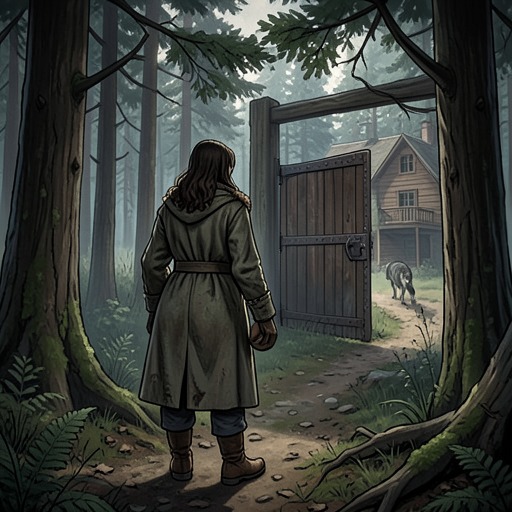
Ash and Saffron raised Mo according to a strict set of principles that excluded religion, television, junk food, Western medicine, and pets. His refusal of pets was based on an allergy rather than animal-rights politics, but the household’s larger program was ideological. The family lived in an old barn with literally no walls, converted into the central building of their self-sufficient, ecologically responsible commune. Ash named the community Sunrises, later changing the name after outsiders repeatedly left drugged-out teenagers at its gate, apparently mistaking it for a rehabilitation center.
Childhood in Sunrises
The commune’s population was unstable. People drifted in and out, bringing laughter, music, and energy, but rarely remaining for long. Mo learned not to become attached to other children because their families often left within months, unable to adapt to the standards Ash and Saffron described as responsible living. Ash’s community therefore gave Mo constant stimulation without offering the continuity of ordinary neighborhood friendships. His ideals created an environment that was lively and imaginative, but also transient.
Ash nevertheless made Mo feel intensely loved. His sudden decisions could turn daily life into spectacle, such as spray-painting the family Volkswagen van Easter-egg purple. Saffron once brought Mo to a nuclear-energy protest dressed as a radioactive Statue of Liberty, and Ash’s broader household encouraged the same spirit of theatrical resistance. Mo remembered the adventure, fun, laughter, and music fondly. Most importantly, she adored her parents’ love, generosity, and attention, and valued being the center of their world.
The Heart Attack and Its Consequences
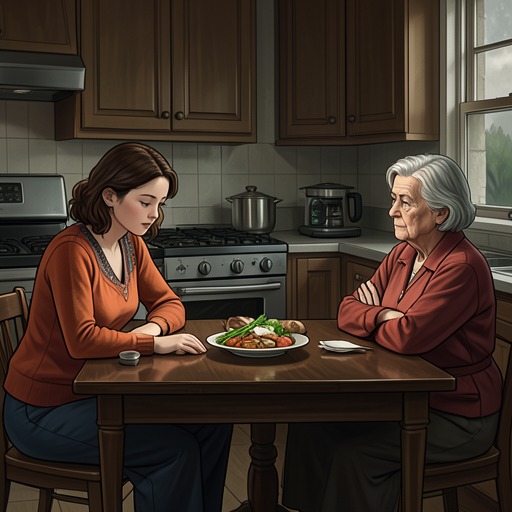
Ash’s pacifism is presented with comic literalness: when Saffron and Mo fought, he preferred not to place himself between them. That apparent neutrality became consequential shortly before Mo’s graduation. Mo argued with Saffron over whether her parents would attend the ceremony. Saffron wanted to attend a conference about pharmacological waste and dismissed the graduation as overblown, elitist, and meaningless. Mo answered that it was her ceremony and accused her parents of taking over every part of her life while showing little concern for what mattered to her.
During the argument, Ash suddenly collapsed with a massive heart attack. The moment punctures the family’s ideological performance with physical vulnerability. The household’s commitment to oat bran and alternative principles could not protect him from cardiac failure, and the narration treats the apparent contradiction with dark humor. Yet the practical consequences were serious. With Saffron overwhelmed by the crisis, Mo had to make decisions at the hospital and speak with the doctors. She moved back to the commune while Ash recovered, then found work near Jackson and endured an exhausting hour-long commute so she could continue checking on her parents while preserving a separate home of her own.
Ash’s recovery did not fundamentally alter the family’s pattern. Once he was back on his feet, he returned with Saffron to the intrusive habits of their earlier life. They appeared at Mo’s doorstep with large dishes of marinated tofu, herbal teas, and THC-soaked remnants of her childhood. His participation in this care is inseparable from its pressure: the visits express concern, but also extend the commune’s principles into Mo’s adult household. His role is therefore not that of a distant or uncaring parent; it is that of a loving parent whose attention repeatedly becomes difficult for his daughter to escape.
Relationship with Mo and Narrative Significance
Ash’s relationship with Mo is defined by a tension between devotion and boundarylessness. In childhood, being the focus of his attention made Mo feel secure and cherished. In adulthood, the same family intensity helped drive her need for distance. Her engagement to Tim Galloway sharpened the conflict because Tim represented nearly everything Ash and Saffron rejected: conventional religion, conservative values, paid taxes, and membership in the Steak of the Month Club. Ash does not appear as the principal critic in the supplied scenes, but his household’s shared convictions make Mo’s engagement part of a larger struggle over whether she will continue to live according to her parents’ worldview.
Ash also functions as a contrast to the communities Mo later enters in Grundy. His commune treats family and social life as an ongoing ideological experiment, while the town’s welcome is expressed through practical gestures: Nate Gogan delivers Gertie Gogan’s pot roast, potatoes, and berry cobbler, and Evie DuChamp offers Mo paid work at the Blue Glacier Saloon after seeing her reliability. These acts help Mo recognize that belonging need not require total submission to another person’s principles. Ash’s legacy is thus double-edged. He gives Mo a model of energetic, unconventional love, but his household also teaches her why chosen boundaries and independent domestic space matter.
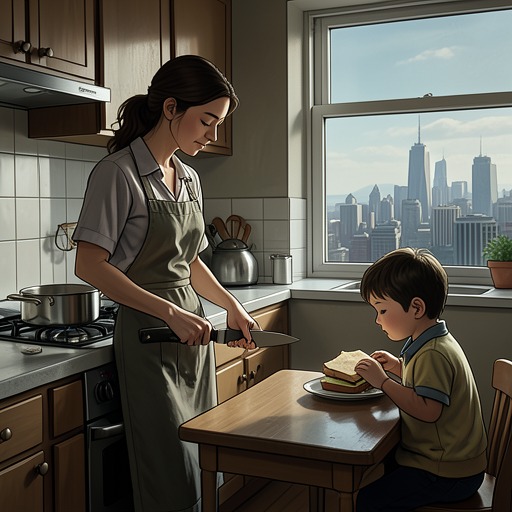
The contrast becomes especially meaningful when Mo builds her own network. At the Blue Glacier Saloon, she discovers that cooking can provide privacy, competence, and a gradual entrance into community life. Later, she purchases a house in Grundy and decides that it is the first place she has truly considered her own home. She imagines raising her child there, making permanent residence a deliberate choice rather than an inherited ideology. Ash’s influence remains part of the background to that decision: Mo does not reject love or community, but she seeks a form that allows care without erasing personal limits.
Ash is therefore a remembered but structurally important presence. He embodies the warmth, theatricality, and impractical extremity of Mo’s upbringing, while his heart attack reveals the costs of treating principles as a complete substitute for ordinary judgment. His family life gives Mo both cherished memories and the need to separate. Through him, the novel frames adulthood not as a simple escape from eccentric parents, but as the difficult conversion of inherited love into an independent home, working life, and family of her own.