Crescent Valley pack
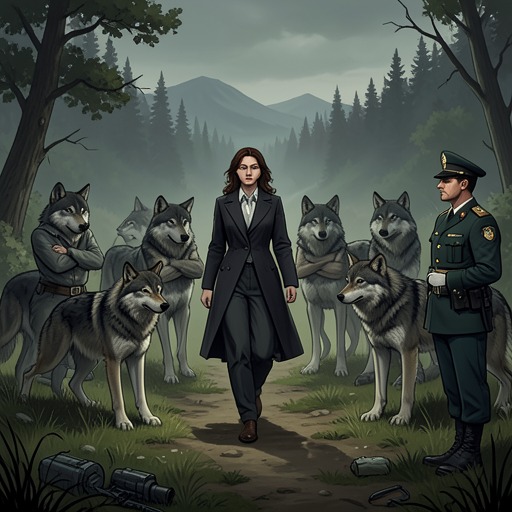
How to Flirt with A Naked WerewolfCrescent Valley pack is the werewolf community centered in the valley where Cooper Graham’s family lives, and its importance lies in the way it turns supernatural identity into a social system. Membership involves inherited transformation, territorial instinct, family loyalty, secrecy, leadership, and expectations about mating and return. The pack gives Cooper Graham extraordinary strength and a place in a long bloodline, but it also makes his separation from home a persistent physical and moral struggle. Through Cooper’s departure, the rival-pack attack, Eli’s conspiracy, and Maggie Graham’s eventual election, the pack changes from an inherited hierarchy dominated by one exceptional leader into a community capable of choosing its own future.
Nature, Bloodline, and Territory
Crescent Valley pack is not merely a group of people who can become wolves. It is a multigenerational society whose members understand their condition as genetic, familial, and historically continuous. Cooper Graham explains that werewolves exist in packs across the world, while his own community is comparatively small and has developed increasing numbers of dead lines as members marry outside the pack. The loss of transformation is therefore connected to marriage and bloodline mixing, even though Cooper’s grandfather regards that change as preferable to an inbred population of werewolves. The pack’s identity is consequently both hereditary and unstable: its traditions depend on descent, while its survival also involves contact with outsiders.
The community’s history links its origin to the valley’s earlier inhabitants and to a Northern Man who crossed the frozen oceans, came over the mountains, and married a woman of the valley. According to the family account, the mixing of bloodlines produced the first wolf-sons when two brothers transformed in response to a bitter winter and hunted enough food to sustain their starving village. That origin story presents lycanthropy not simply as a curse or personal mutation, but as a response to communal need. The first transformations are remembered as acts of provision, and the pack’s later emphasis on territory, hunting, and protection grows from that founding association between wolf strength and collective survival.
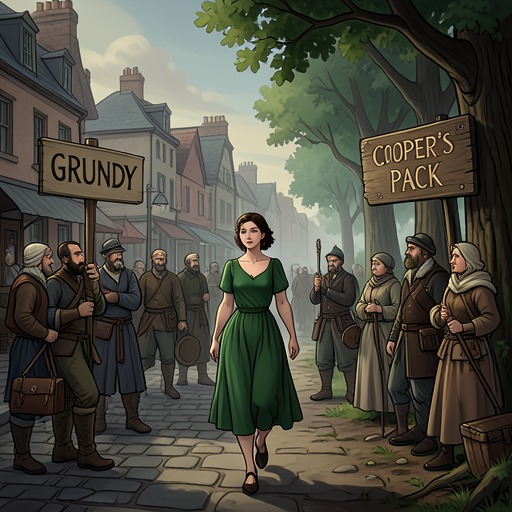
Territory is central to the pack’s organization. Evie DuChamp describes a wolf’s mind as hard-wired to protect a particular area, hunt there, and live there, with centuries of instinct reinforcing the attachment. For that reason, Cooper’s move roughly a hundred miles away to Grundy is treated as exceptionally difficult, not as an ordinary change of residence. His body continually urges him back toward the packlands. The valley is therefore both a geographic home and an embodied command, a place that exerts pressure through instinct even when Cooper consciously rejects the role assigned to him there.
Cooper Graham and the Inherited Alpha Role
Cooper Graham was one of the first members of his generation to phase, and the pack immediately recognized him as unusually fast and strong. Every generation produces a pack and a leader, and Cooper was expected to become that generation’s alpha. His potential was treated as visible from the moment he first transformed, making leadership appear less like a choice than the natural fulfillment of his birth and abilities. His departure from the valley thus represented a refusal of both territory and political destiny.
Cooper’s reluctance to lead is complicated by the fact that he does not cease to protect the pack. When he returns to the packlands to visit his grandfather and speak with Eli, he intends to warn the community about the people in Grundy who want to hunt wolves. He has delayed that conversation because he is torn between his life with Mo Duvall-Wenstein and the responsibilities generated by his origin. The pack remains a source of danger and anxiety for Mo, particularly because some members are physically intimidating and because the attacks on Susie Quinn, the missing hikers, and Abner leave open the possibility that a werewolf may be responsible. Yet Cooper still feels answerable to the community’s safety.
The pack’s expectations also reach into Cooper’s intimate life. His bite and scent-marking of Mo establish a lifelong mate bond: once a wolf marks a chosen partner, the wolf cannot mate with anyone else. Cooper initially withholds this crucial rule from Mo, but the revelation makes clear that his relationship with her has consequences for lineage and belonging. Their eventual marriage and pregnancy join the pack’s inherited future to a human woman living in Grundy. Cooper’s decision to ask Mo to raise their baby with him is personal, but it also creates a new bridge between the pack’s bloodline and the human community outside the valley.
Crisis, Violence, and Internal Power
The pack’s most traumatic political crisis begins about a year after Cooper becomes alpha, when a rival pack from outside Vancouver enters the valley. Its alpha, Jonas, has exhausted his own hunting grounds and seeks new territory. The rival group has carefully studied the packlands, the village, the number of able fighters, and what it regards as Cooper’s weakness as an alpha. Its strategy is coercive: Jonas drags Maggie Graham from her home and threatens to snap her neck unless Cooper relinquishes control of the valley.
Cooper’s first response is paralysis. Surrounded by his family, he can think only of offering the invaders a place in the valley, but Jonas refuses. Maggie, still a young sister relying on her brother, appears more confident in Cooper than Cooper feels in himself. When she attacks Jonas, biting his arm and kicking him, the confrontation becomes a full pack battle. Cooper changes before Maggie, holds Jonas off, and tries to protect her as both groups phase. The violence escalates when another male attacks Cooper from behind and Jonas gets Maggie to the ground with his teeth at her neck.
Cooper’s subsequent slaughter becomes the defining wound in his relationship to leadership. He kills the male who attacked him, tears out Jonas’s throat, and then kills the rest of the opposing pack one by one. Maggie kills one of the intruders; Cooper kills the others, twelve rival wolves in all. When he returns to human form, every member of the rival pack is dead. Some of his own pack try to help, but he snaps at them during the fight. Although the violence protects the valley and saves Maggie, Cooper remembers it as horrifying rather than triumphant. His rare clear memory of himself as a wolf makes the episode particularly disturbing: the wolf’s actions are not lost to him, and his success as a defender becomes inseparable from guilt, nightmares, and his conviction that he may be capable of harming others.
Eli’s Challenge and the Pack’s Succession
The rival attack also exposes a fracture within the pack’s leadership. Eli has spent years believing that Cooper is too weak because he values fairness and equality over strength. Eli sees himself as the person born to lead and resents Cooper’s existence because it leaves him second-best, or merely a substitute. His ambition is not an innocent alternative theory of governance; he seeks power through manipulation and a coup.
Eli admits that he supplied information to the rival pack for months while pretending to be shocked when its attack occurred. He expected the outside wolves to help remove Cooper and create the conditions for his own ascent, but their operation failed. The confession reveals that the pack’s greatest threat has come not only from outside territorial pressure but also from an insider who treats the community as an instrument of personal advancement. Eli’s conduct turns the pack’s ideals of strength, hierarchy, and alpha authority against the pack itself.
After Eli’s defeat and loss, Cooper still has no desire to resume the alpha position. The pack nevertheless cannot simply return to its former arrangement. Following an all-night meeting, its members adopt a more democratic method of choosing an alpha: a secret ballot. Samson is nominated but is not considered serious enough for the office, while Maggie wins by a landslide. Her election is a structural change as well as a personal one. The community no longer depends solely on the inherited expectation that the strongest male of a generation must lead.
Maggie Graham’s New Leadership and the Pack’s Wider Future
Maggie enters leadership without the genetic conditioning that had marked Cooper as an alpha, but the pack recognizes that she possesses the authority required of one. Fear contributes to her influence, yet her rule is not presented as mere intimidation. Her judgment is described as fair, swift, and generally directed toward the best interests of her people. The change in leadership also brings an emotional change: Maggie, previously associated with hostility toward Mo, is finally able to smile at her during a later visit to the valley. Even that smile is only a small movement of the lips, but its absence of hatred marks a meaningful easing of the boundary between the pack and Cooper’s human mate.
Cooper’s relationship to the pack also becomes more flexible after Eli’s fall. He does not reclaim the alpha role, but he visits the packlands more often, suggesting that separation no longer has to mean total abandonment and that belonging can be renegotiated. His return is supported by the life he has built with Mo rather than opposed to it. In Grundy, Cooper watches over Mo during her pregnancy, insists that she rest, and remains closely involved in the household and saloon. His protective behavior is sometimes excessive, but it shows that the obligations once directed toward the valley have been redirected into a broader form of family care.
Mo’s pregnancy makes the pack’s future visible in biological and political terms. Dr. Moder explains that human women carrying werewolf babies have a shortened gestation of about six months, halfway between human and wolf pregnancy, and provides specialized prenatal guidance. The pregnancy is kept private because Mo fears small-town gossip and does not want the pack to know before she can tell Cooper. When Cooper returns, he learns that the child is his and asks Mo to marry him and raise the baby together. Their marriage does not erase the difference between Grundy and the valley; instead, it establishes a durable alliance between them.
Crescent Valley pack therefore ends this phase of the story neither destroyed nor restored to its old order. It survives external invasion, internal treachery, and the departure of the man once expected to lead it. Its authority shifts from a predetermined alpha succession to Maggie Graham’s elected leadership, while Cooper Graham remains connected through family, bloodline, protection, and recurrent visits. The pack’s significance lies in that transition: it is a system built on instinct and inherited hierarchy that begins to accommodate choice, democratic succession, cross-community family ties, and a form of belonging no longer dependent on living permanently in the valley.