Dead lines
How to Flirt with A Naked WerewolfDead lines are werewolf family branches whose members cannot transform into wolves. They mark a distinction within the pack between those who can phase and those who cannot, without making the latter strangers to the family or its obligations. The concept connects inherited ability to marriage beyond the pack, the preservation of its secrets, and the uncertain continuation of wolf magic.
Definition and Inheritance
Evie DuChamp explains that no one in her branch of the family can become a wolf; the pack calls them a dead line. Cooper Graham describes the broader pattern as increasingly common: more dead lines have appeared over the years as pack members have married outside the group. He presents the ability as genetic, part of a person’s inherited makeup rather than a skill that can be learned or chosen. His grandfather considers the dilution of the bloodlines beneficial, preferring it to a population of inbred werewolves.
The term therefore describes an inherited limit, not the disappearance of every wolf-associated quality. When Mo encounters the pack together, she observes that even people from dead lines move with sinuous purpose and watch their surroundings attentively. The pack includes a wide range of appearances and genetic backgrounds; the visible diversity does not, by itself, reveal who can phase. Wolf magic has continued through generations even as the number of families carrying it has diminished.
Place Within the Pack
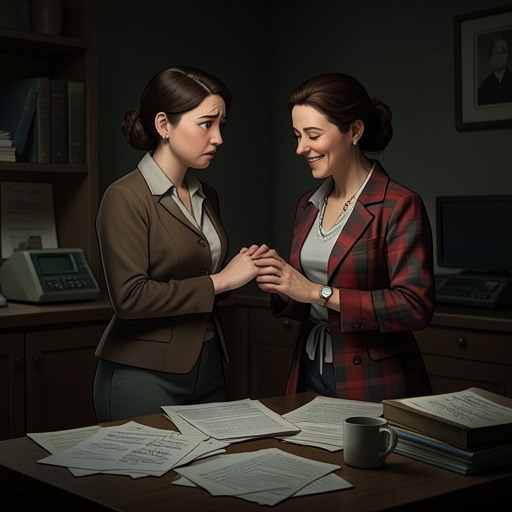
A dead line remains part of the pack’s social world despite lacking the ability that makes phasing possible for other family members. Evie speaks of the pack as her family and identifies silence as the service people in her position can provide. Their inability to transform thus has a social consequence: they are not the pack’s wolf-shifters, but they can help protect the community by keeping its existence and affairs concealed.
That responsibility places Evie in a difficult position when Mo worries that a werewolf may be attacking people and feels she ought to help Alan Dahling investigate. Evie resists exposing her family’s secret to a government representative. She describes years of practice at keeping secrets and treats discretion not as indifference but as the contribution available to those who cannot phase. The dead-line condition shapes what a person can do for the pack, as well as what she is expected to withhold from outsiders.
Bloodlines and Continuity
The growing number of dead lines suggests that the pack’s inherited capacity is unevenly distributed and vulnerable to changes in marriage patterns. Cooper says that wolf magic is being carried on in fewer families because of the mingling of bloodlines. Yet he also notes that human women have werewolf children, and that the surviving accounts of such pregnancies describe a shortened gestation of about six months. The evidence presents inheritance as a diminishing but continuing process, rather than establishing that every pairing beyond the pack extinguishes the possibility of a wolf-born child.
This tension makes dead lines more than a label for people who cannot change shape. They register a shift in the balance between the pack’s inherited power and its expanding family connections. The pack’s acceptance of people from these branches, and its reliance on their silence, show that inability to phase does not erase kinship or responsibility; it changes the form those responsibilities take.
Narrative Significance
Dead lines give the story a way to distinguish biological capacity from belonging. Evie’s disclosure corrects Mo’s assumption that everyone connected to the werewolf family can become a wolf, while Cooper’s account places individual ability within a longer history of inheritance and intermarriage. The concept also makes secrecy an active role: those who cannot serve as shifters can still help shield the pack from outside scrutiny. Its significance lies in that double meaning—an inherited absence of transformation, and a continuing place within the community that ability alone does not define.