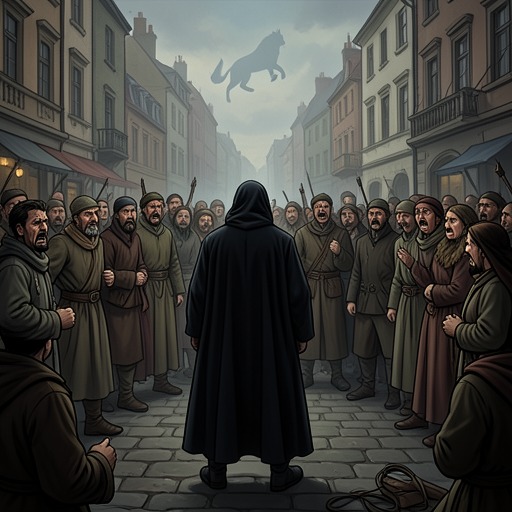
Eli’s Wolf Attack Campaign
How to Flirt with A Naked WerewolfEli’s Wolf Attack Campaign is the covert struggle for control of the Grundy pack that transforms a series of apparently separate wolf attacks into a deliberate political plot. Eli used a rival pack to force Cooper Graham out, exploited Cooper’s guilt to keep him away, and targeted humans to make Cooper seem unable to protect the valley. The attacks were not simply violence against the community: they were instruments in Eli’s bid to become alpha without directly challenging a rule that prevented him from harming Cooper.
Causes and Political Design
Eli’s stated grievance was that Cooper was a weak leader, too concerned with fairness and equality when the pack needed strength. He believed himself born to lead, but felt destined to remain second to Cooper as long as Cooper stayed in power. Eli therefore treated the rival pack’s arrival as an opportunity. The intruders had come from outside Vancouver after exhausting their own hunting grounds, and they had selected the valley as a new range. Their alpha knew the packlands’ vulnerabilities, the village layout, the number of able fighters, and Cooper’s relative weakness as a leader because Eli had been sending information for months.
The rival attack was designed to remove Cooper, not to install the invaders peacefully. Their alpha dragged Maggie from her home and threatened to snap her neck unless Cooper surrendered control of the valley. Cooper offered to share the land, but the rival leader refused. The crisis ended in a massacre: Cooper killed all twelve wolves in the invading pack, while Maggie killed one. Eli later described the rival operation as badly executed, but its failure did not undo its political purpose. Cooper’s violence, and the guilt it left him with, drove him away from the family and pack Eli wanted to control.
Exploiting Cooper’s Absence
After Cooper left, Eli stepped into the vacuum as a consoling presence and presented himself as a reluctant hero. He cultivated Maggie’s trust, telling her what she wanted to hear about Cooper’s failures and promising that he would not abandon her as Cooper had. In private, Eli found her problems tedious; politically, however, comforting her gave him influence over the person most wounded by Cooper’s departure. He encouraged her to see Cooper as the betrayer and himself as the dependable brother.
The plan did not produce the lasting authority Eli expected. Even after Cooper was gone, the pack continued hoping for his return rather than giving Eli the respect he believed he deserved. Eli tried to provoke Maggie into killing Cooper for him, but she would not do it. He also hoped a neighbor might shoot Cooper. These failures shifted his strategy from exploiting Cooper’s departure to manufacturing danger around the valley: if the community believed wolves were attacking its residents, Eli could deepen the crisis and make Cooper’s return seem either necessary or disastrous.
Attacks and the Alpha Constraint
Eli admitted to targeting people, including a hiker and an old woman, and to following Mo and Cooper on a camping trip in hopes of seizing Mo. He claimed that finding Abner near the campsite had been good luck: Abner fought back, but Eli considered him vulnerable because he was human. Mo connected Eli’s confession to the attack on Susie Q, the hikers whose remains were scattered, and Abner’s death. The violence turned ordinary residents into leverage in Eli’s private contest for leadership, while its apparent randomness helped disguise the pattern.
The central constraint was a pack rule: Eli could not attack the alpha himself unless Cooper attacked him first. He contrasted his own better recall and control in wolf form with Cooper’s conflicted nature, but the rule still blocked a direct assault. Instead, Eli tried to make Cooper’s position untenable by endangering people around him. He hoped that fear for Mo would make Cooper want to protect her from the supposed monster he believed himself to be. In practice, Cooper’s instinct to stay close to Mo frustrated that plan. Eli’s scheme depended on drawing Cooper into a defensive role while keeping Eli’s own hand hidden.
Exposure and Consequences
The plot became legible when Maggie reconsidered her estrangement from Cooper. She acknowledged that it had been easier to believe the worst of her brother than to face how she might have hurt him, and that Eli had encouraged that interpretation. She and Cooper began comparing the rival-pack attack, the incidents in Grundy, and Eli’s trips to Dearly. The timing of the attacks and his movements connected details that had seemed unrelated. Cooper had gone back to camp to tell his clients he was leaving; there he found Mo’s messages and realized she was alone with Eli, prompting him to rush back.
Eli’s confession exposed the purpose behind both the pack crisis and the attacks on humans: he wanted Cooper gone, and then wanted a more permanent way to prevent his return. Maggie’s recognition of how Eli had manipulated her allowed her relationship with Cooper to begin repairing, while Cooper’s return undercut Eli’s effort to make himself indispensable. The campaign’s immediate political success had been limited: the pack still hoped for Cooper, and Eli’s violence ultimately revealed the disloyalty beneath his claims to leadership.
Narrative Significance
The campaign makes leadership a contest over information as much as strength. Eli secretly supplied the rival pack with intelligence, publicly performed loyalty after its attack, and privately used Maggie’s hurt to keep Cooper isolated. His attacks on residents extended that strategy beyond the pack: fear could pressure Cooper, distort the community’s understanding of events, and make Eli appear necessary. The delayed recognition of the pattern gives the attacks a double meaning. What first looks like a succession of dangers is exposed as a coordinated attempt to seize power.
The contrast with Cooper’s earlier leadership is especially sharp. Cooper understood the alpha’s role as serving the village and protecting the pack and its families; during the rival attack, he killed to save Maggie and defend their home, then regarded that defensive violence as an unforgivable moral failure. Eli, by contrast, treated violence against both wolves and humans as a means to personal advancement. His campaign turns the difference between protection and domination into the story’s central political and ethical conflict.