Grundy wolf-attack crisis
How to Flirt with A Naked WerewolfThe Grundy wolf-attack crisis is the growing threat to Grundy posed by attacks attributed to wolves, a danger that turns fear into a community-wide struggle over safety, suspicion, and control of the woods. It begins with Susie Q’s near-fatal mauling and escalates when evidence at a hikers’ campsite suggests that two missing men may have been killed and dragged away. As residents search for explanations, the attacks also bring competing responses: alarm and calls to hunt, efforts to track the animal, and a mounting influx of outsiders drawn by the danger.
The Attacks and Their First Signs
The crisis becomes unmistakable when Gertie (postmaster) finds Susie Q in her driveway and the ambulance takes her to intensive care in Dearly. Her throat is nearly torn out; later details establish the extent of the damage: serious injuries to her trachea and jaw, broken ribs, internal injuries, and the loss of two fingers from her right hand as she tried to fend off the wolf. Her prognosis is good, but doctors do not know whether she will ever speak again. In a brief message to state police, Susie identifies what attacked her as a big wolf.
The search for the animal offers little reassurance. Alan (tracker) spends days circling Susie Q’s home, but the trail disappears a few miles into the woods. The missing tracks leave the attack unresolved: the evidence points toward a wolf, yet the animal’s route provides no clear way to find it or establish where it went. Fear intensifies when two hikers, Craig Ryan and Jacob Bennett, disappear. At their campsite, Alan finds a badly torn tent, scattered equipment and food, large tracks, and smears of blood, but no bodies. The tracks resemble those associated with Susie Q’s attack, linking the cases in the minds of both the investigators and the community.
Community Response and the Expanding Threat
The missing hikers turn the attacks from a frightening mystery into a public crisis. At breakfast, Grundy’s residents debate what might have happened to Craig Ryan and Jacob Bennett, whose campsite bears the signs of a violent struggle: a torn tent, scattered belongings, large tracks, and blood, but no bodies. Alan finds the scene difficult to reconcile with ordinary wolf behavior. Wolves generally avoid people when they can, he explains, and an attack on a person is more often the work of one sick or frightened animal. Here, the evidence suggests an organized assault by an animal that knew how to strike without being injured. The tracks resemble those associated with Susie Q’s mauling, but neither the campsite nor the tracks explain where the hikers went.
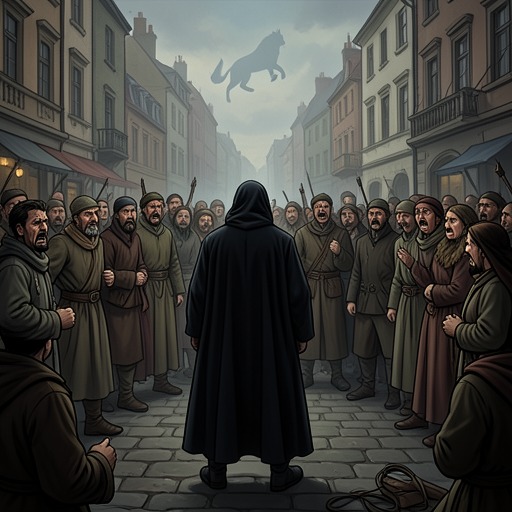
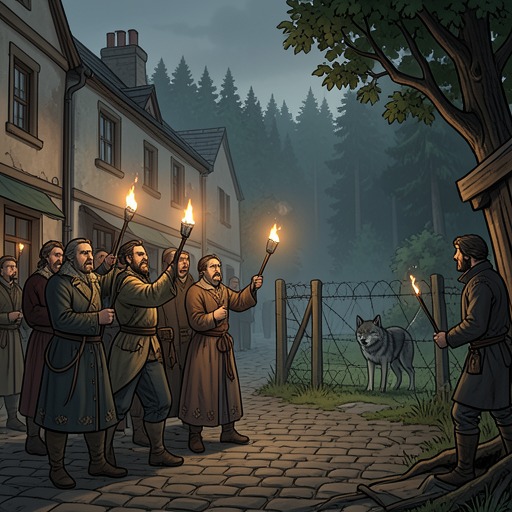
The uncertainty gives fear different targets. Walt wants to organize a wolf shoot, turning the possibility of a predator into a prospect of armed neighbors taking to the woods. Mo fears that an angry mob might mistake Cooper for the culprit and shoot him. Nate, by contrast, worries about the effect on Grundy’s tourism-dependent economy: news of killer wolves and missing hikers could drive visitors away, cost the town income, and eventually force families to leave. These responses expose competing ideas of what must be protected—the residents’ immediate safety, the town’s economic future, or the suspected animal’s life—and none can resolve the central question of what is moving through the woods.
The hikers’ remains are eventually found about a mile from their campsite, after the snow clears enough for Alan to locate them. They are bones scattered through a ravine, gnawed by multiple animals. Their recovery confirms that the men are dead but does not identify what killed them, preserving the crisis’s most disturbing uncertainty even as the search reaches a grim conclusion. Alan remains at the site until the remains can be properly recovered, while the discovery makes the loss feel final without answering whether further attacks are likely.
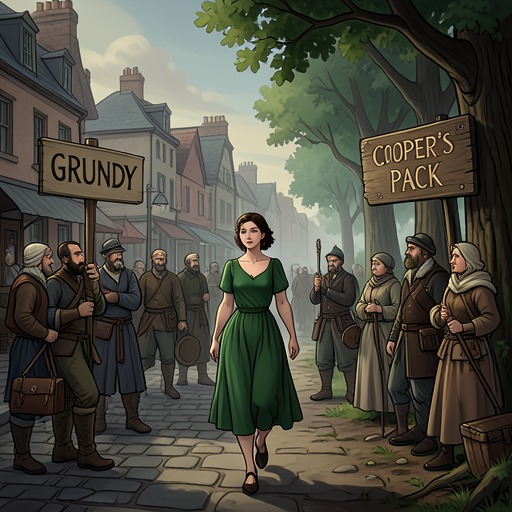
Instead of reducing Grundy’s isolation, the story of the missing men draws outsiders into the danger. The town acquires a reputation for mystery, and morbidly curious visitors arrive seeking tales of the monster wolf and directions to the attack site. Some venture into the woods with illegal, powerful weapons, hoping to return with a trophy. Alan’s work shifts from searching for the wolf to protecting people from their own recklessness. The influx also restricts Cooper’s movement: unable to run long distances safely, he is confined to patrolling around the house, where even Oscar tries to keep pace with him. The crisis therefore expands beyond the original attacks, changing life in the woods and bringing the danger back into town through the very people who come looking for it.
Suspicion and the Unidentified Attacker
The crisis becomes personal for Mo when she and Cooper find Abner in a clearing. His pack is still strapped to his chest, and his loaded rifle lies unused beside him. Deep claw-like gashes cross his chest close to his neck; other wounds have left dark, dried blood on his trousers. Cooper, in wolf form, circles them with his hackles raised while Mo checks Abner’s weak, erratic pulse and reaches for her first-aid kit. The scene makes the attacks more than a distant danger: an armed resident has been caught off guard, and even his rifle has not protected him.
Abner’s mauling sharpens Mo’s suspicion of Cooper, already troubled by the memory of seeing him bite John Teague. Cooper cannot rule himself out. He says he remembers nothing from the night Abner was attacked—not even waking—and fears he could have left their sleeping bag and changed into wolf form without either of them noticing. He asks how else Abner could have been mauled so close to their campsite, and points to Abner’s terror when he saw Cooper, as if he recognized him as the attacker. Mo objects that Cooper has never changed that way at home, but Cooper insists that he could have. The uncertainty turns their intimate trust into a painful question: the person Mo wants to believe may be the very danger she is trying to understand.
The search for a physical suspect reaches a new, unresolved point when Walt and two friends shoot a wolf outside town. They call Alan to inspect it and determine whether it could be the animal that attacked Susie Q and Abner. The news leaves Mo pale and stunned, but the report establishes no identification: at this point, the animal’s death has not answered whether it was responsible for either attack. The crisis remains suspended between evidence and fear, with residents taking armed action before they know what they have found.
The Pack History Behind the Uncertainty
The crisis unfolds in a world where wolves are not only an external danger but also part of a community’s hidden structure. Cooper describes pack life as resembling an army: the alpha leads the village, makes decisions affecting the pack and its families, and organizes the defense against threats ranging from wild animals to criminals. He says he took too much responsibility onto himself and hurt people; unable to live with what he had done or its effects on his family, he eventually left. His account gives the crisis a wider frame without identifying its attacker: wolf violence belongs to a social world with leadership, obligations, and conflict, not simply to the behavior of an isolated animal.
That history is marked by an earlier death. When Cooper was young, his father stayed behind to free Cooper’s uncle, Samson’s father, from a cage trap set by researchers tracking wolves. The researchers returned while Cooper’s father was still in wolf form; after he became aggressive, they shot him in the head. He reached the woods so his uncle could bring him home, but his injuries could not be treated. The researchers had been working to tag and track wolves, not knowingly to attack people, and Cooper later recognized that they had faced a huge, angry animal. The incident complicates any simple division between human danger and wolf danger: an effort to study and contain wildlife became fatal when the human and wolf worlds collided.
Cooper also recounts a direct challenge to his pack’s territory. About a year after he became alpha, a rival pack from outside Vancouver seized Maggie Graham and threatened to kill her unless he surrendered control of the valley. Its leader, Jonas, had depleted his own packlands and sought new hunting grounds; his group had scouted Cooper’s territory, including its vulnerabilities, village layout, and available fighters. Cooper offered to share the valley, but Jonas refused. The episode supplies a concrete precedent for organized, strategic wolf-group violence and for the danger of an alpha’s decisions, while leaving the attacks on Grundy’s residents unresolved. The distinction matters: a history of territorial conflict makes the crisis more legible, but it does not establish who attacked Susie Q, the hikers, or Abner.