Leland, Mississippi
How to Flirt with A Naked WerewolfLeland, Mississippi is the hometown and childhood setting that Mo Duvall-Wenstein spends her early life trying to outgrow. Although the town itself is only glimpsed through remembered episodes, it functions as the emotional opposite of Grundy: Leland is associated with parental control, social conformity, and a personal history Mo guards fiercely, while her eventual departure marks the beginning of her search for privacy, independence, and belonging.
Family World and Early Education
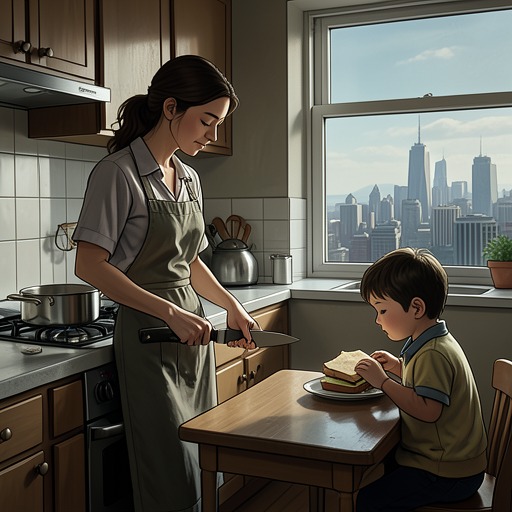
Leland shaped Mo inside an unconventional but loving household. Her parents filled her childhood with improvised adventure, from spray-painting the family Volkswagen van Easter-egg purple to bringing her to a nuclear-energy protest dressed as a radioactive Statue of Liberty. Their generosity and attention made Mo feel like the center of their world, but the same intensity eventually became exhausting. The family attracted a constant flow of people, many of whom soon moved on, teaching Mo that even the lively community surrounding her parents was unstable and temporary.
Her mother homeschooled her until age thirteen, maintaining elaborate lesson plans for county inspections but often abandoning actual lessons when another political cause demanded attention. Fractions and state capitals could be displaced by activism, leaving Mo to conduct “independent study.” Her father’s earlier career as a certified public accountant at least gave her enough practical instruction to balance a checkbook. Leland therefore represents both unusual freedom from conventional institutions and a damaging lack of preparation for the ordinary educational world Mo wanted to enter.
Rebellion and Becoming “Normal”
Mo’s decision to enroll in public school began when she realized that homeschooling would prevent her from attending college. She bicycled to the Bowdry County Public Schools office carrying little proof of her existence beyond her birth certificate and an essay explaining why she needed immediate enrollment. The superintendent determined that she was neither neglected nor abused and affirmed her right to attend, after which her mother reluctantly signed the papers. Mo entered Leland High School’s ninth grade as an outsider to the culture she had been raised to distrust.
The transition became a decisive rupture. At school, Mo recognized how different and unprepared she was, and her embarrassment hardened into anger. She rebelled through deliberately conventional gestures, including wearing leather shoes and voting conservative in a mock election, because each act made her feel more like everyone else. She earned good grades, formed a close friendship with Kara Reynolds, and relied on Kara to teach her the customs and rituals of “regular people.” Leland’s public-school world thus gave Mo the tools for assimilation, even as it exposed the cost of the identity her parents had constructed around her.
Mo also worked after school at the Tast-E-Grill Drive-In, first as a car hop and eventually at the grill. Her first bacon cheeseburger made her sick, but the owner gradually helped her tolerate heavier processed foods, eventually reaching Frito Pie. She spent those wages on clothes, CDs, makeup, and junk food, hiding these forbidden purchases in an old steamer trunk. These concrete objects become small instruments of self-invention: Mo was not merely rejecting her parents’ values in theory but assembling a private, ordinary adolescence from the consumer goods they had forbidden.
Parental Intrusion and Departure
The conflict intensified when Mo attended the University of Mississippi. Her mother used a security pass to enter Mo’s dormitory and later her off-campus apartment, supposedly to help remove unnecessary possessions. She discarded lunch meat, nonorganic produce, chemical cleaning products, and eventually an entire bulk-sized box of Hostess Sno Balls. When Mo began storing junk food in a locked plastic tub, her mother took even that container to a recycling center. The pattern made Leland feel portable: even after Mo left town for college, the habits and authority of her family followed her into supposedly private spaces.
Mo understood that her mother believed she was acting for Mo’s health, but that justification made resistance harder rather than easier. Her mother could replace discarded food with nine-grain bread, tofu dogs, carob cookies, and other foods Mo had once loved, turning every objection into an argument about care. Mo’s father embraced pacifism so thoroughly that he refused to intervene when mother and daughter fought. Family love remained real, but it operated through surveillance, correction, and the assumption that Mo’s choices could be revised by someone else.
Mo responded by studying hard and planning to use her marketing degree far from Mississippi, imagining Illinois, New York, or California as possible destinations. What she wanted was not simply geographical distance but solitude, privacy, and a home her parents could not enter with a spare key obtained from a maintenance man. Her eventual move to Grundy began after a broken engagement, when a search for the farthest possible place within the same country led her to Alaska and the tiny rental known as the Meyers place. Leland is therefore the starting point of a deliberate escape: Mo leaves not because affection is absent, but because affection has become inseparable from intrusion.
Language and Personal Identity
Leland remains present in Mo’s speech. She describes her accent as a mixture of her mother’s faint Texas twang and her classmates’ slow Delta drawl, an accent she worked for years to suppress. She believes she has reduced it to something that emerges mainly when she is upset, only to discover in Alaska that local listeners treat it as a novelty and repeatedly ask her to say “ice.” Her irritation shows that the accent is not a neutral regional marker for her; it is evidence of the identity she has tried to manage and contain.
At the Blue Glacier Saloon, Evie DuChamp treats Mo’s Southern manner of speaking as a source of amusement and charm, referring to her “genteel Southern patois” and contrasting it with imagined verandas and mint juleps. Mo answers with another regional expression, suggesting that Alaskan speech sounds Canadian to her. Later, the same verbal distinctiveness becomes part of her social visibility in Grundy. The woman who once wanted to erase the signs of Leland becomes known as “Mo from the Blue Glacier,” recognized through her work, her voice, and her contribution to the community rather than through her parents’ beliefs.
Leland also accounts for Mo’s fierce protection of her full name. When a package arrives at the Grundy post office addressed to the only Wenstein in town, Susie Q begins revealing that Mo’s legal name is Moonflower Freedom Refreshing Breeze Joplin Duvall-Wenstein. Mo stops her before the name can be heard by everyone at the counter. The name was publicly humiliating during her school years, including a graduation announcement that stalled the ceremony for three minutes, but changing it would also mean erasing part of the limited official history her parents had allowed her to possess. Her secrecy is consequently both comic and defensive: Leland has taught her that names can expose a person to ridicule, while her new community gives that exposure a different, more intimate meaning.
From Exile to Chosen Community
Mo initially reaches Grundy intending to live an idle, solitary life, but her first day at the Blue Glacier changes that plan. She discovers that she enjoys working in the kitchen, feels connected to the room without being trapped in its center, values the privacy of her position, and likes being close to Evie. The saloon offers friendly voices and conversation without reproducing the demands of her family home. Her decision to accept work there becomes a first step into a community she has chosen rather than inherited.
Within days, Grundy residents call her “Mo from the Blue Glacier.” She begins leaving the kitchen to take orders and pour coffee, eager for new faces and conversation. Unlike in Leland, she is not defined by her parents’ needs or beliefs and is not invisible. She becomes a contributing member of the community, even while some residents withhold recognition until she proves her mettle. The town’s romantic attention, including frequent flirtation from unattached men, functions as a rough but affectionate initiation into local life.
The contrast with Leland is ultimately a contrast between imposed identity and negotiated belonging. Leland gave Mo her accent, her family history, her education gaps, and her instinctive need for boundaries. Grundy does not erase those inheritances; it allows her to rework them. Her Southern speech becomes social currency, her carefully guarded name becomes a secret shared with new friends, and her isolation turns into a position from which she can join the Blue Glacier’s network without surrendering privacy. Leland matters because Mo’s later belonging is meaningful only against the memory of the place she had to leave.