Mo's Bear Encounter
How to Flirt with A Naked WerewolfMo's Bear Encounter is a turning point in Mo Duvall-Wenstein's life in Grundy: an evening walk meant to end with Oscar's return to the house instead becomes a direct confrontation with a grizzly bear, and Cooper Graham reveals himself as the wolf who can stand between her and death. The event changes the value of the forest from welcoming refuge to immediate threat, then reverses that terror when Cooper's wolf form becomes the source of Mo's safety. It is both a rescue scene and a revelation, because the naked, angry man who remains after the bear leaves makes the impossible physical fact impossible for Mo to dismiss.
Causes and Setting
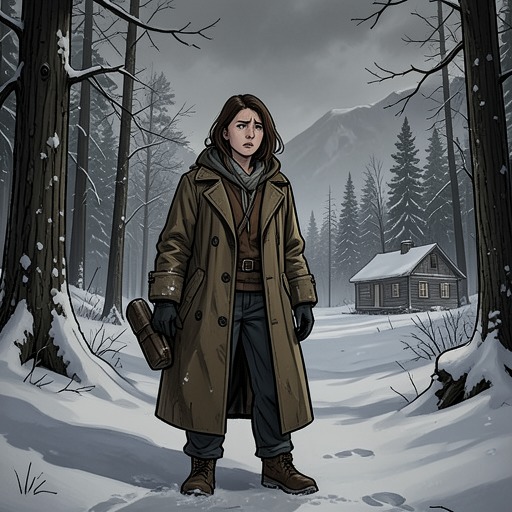
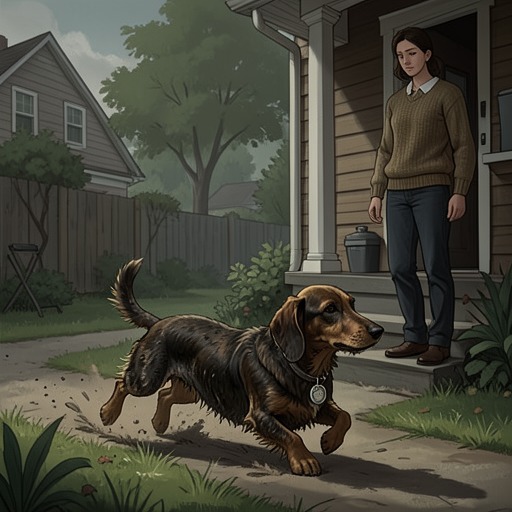
Mo's danger begins when Oscar, her small dachshund, refuses to accept the leash and bolts into the trees after dark. She follows him through thick branches and underbrush, slowed by the failing light, until she reaches a clearing where the dog's barking and growling have stopped in one place. The walk has carried her farther from her cabin than prudence allows, although she has bear mace in her pocket, a precaution associated with Alan Dahling's concern for her safety. The setting therefore contains both preparation and helplessness: Mo possesses the correct defensive object, but fear overwhelms her ability to reach for it.
The forest's emotional meaning changes in an instant. Only shortly before, Mo had contrasted the green, shadowed landscape around Grundy with the more threatening natural world of her Mississippi childhood, where mosquitoes, water moccasins, and alligators made nature feel predatory. In the clearing, that northern landscape becomes a living nightmare. Oscar's pursuit exposes both animals to a grizzly already agitated by the dog's yapping, turning an ordinary domestic command—getting the dog home—into a struggle over life and death.
The Bear's Advance
The grizzly rears to a full eight feet, a scale Mo compares with her first car. Its size drives her rational mind into paralysis even though she knows the bear mace is available. She can imagine only screaming or wetting her pants, and chooses screaming as the animal drops onto all fours and advances. Its breath reaches her as hot, rank, damp puffs; its raised paw displays long claws; and Mo throws her arms over her head, waiting for the blow.
The expected strike never lands. Wolf-Cooper appears between Mo and the bear, standing wide and defensive with the hair along his back bristling. At first Mo interprets the wolf as a last protective fantasy produced by a brain trying to soften the horror of being eaten, but the growl is real, and the animal remains physically present between her and the grizzly. This beat supplies the encounter's decisive reversal: the wilderness does not become safe, but the apparently dangerous wolf becomes the immediate guardian of Mo's life.
Oscar adds his own reckless intervention by lunging at the bear's front leg and biting it. The grizzly flicks him away, sending his small body close to Mo; she gathers him into her lap while he continues trying to return to the fight. Wolf-Cooper then holds his ground as the bear attempts to circle, countering its movement and advancing against its charge. When the bear strikes from the left, the wolf nips its nose, backs into a defensive crouch, and answers the animal's roar with a vicious snarl. After another display of size and aggression fails to drive him away, the grizzly abandons the confrontation and saunters back into the woods.
Revelation and Immediate Aftermath
The bear's retreat leaves Mo with no time to restore an ordinary understanding of the evening. She releases a long, trembling breath and buries her face in Oscar's sweater, still holding the dog after his impulsive attack. The forest has not been made harmless; rather, survival has depended on a second animal whose presence is more inexplicable than the first animal's violence. Cooper then phases back into human form. He is naked, sweaty, and angry, a combination that turns the rescue into an unmistakable personal revelation. The wolf who defended Mo is not merely an unknown creature moving through Grundy but the man she knows, and the physical continuity between wolf and human makes the encounter impossible to explain away as panic or fantasy. Cooper's immediate anger also complicates the rescue: he has protected Mo, but he does not receive the scene as a triumph, and his reaction signals that the transformation carries consequences neither of them can treat casually.
Trauma, Memory, and the Event’s Wider Consequences
Mo’s encounter with the grizzly becomes part of a larger pattern in which violence returns through the body before it can be organized into a stable explanation. Earlier, John Teague had twisted Mo’s arm behind her back, shoved her face against rough brick, and threatened her in a voice that remained almost friendly while he controlled her. After Teague’s death, she cannot simply file the assault away as finished: she leaves Buzz DuChamp’s office to hide in the kitchen, sees again the smirk that accompanied her screams and the three slashing wounds across Teague’s shirt, and then imagines the truck tumbling into a ravine and burning around him. The alley later reactivates the same memory through pavement, the sour smell of a Dumpster, the sensation of breath against her neck, and the remembered warmth of blood soaking her shoulder. Against that history, the bear encounter is not only an isolated animal attack. It repeats the structure of sudden physical domination while reversing its moral and emotional outcome: the threatening figure is displaced by a protector, and the body that had learned to freeze is carried through danger by another body’s intervention.
Wider Consequences and Narrative Significance
The encounter also acquires retrospective force through the stories Cooper later tells about violence, responsibility, and memory. He explains that his father died after remaining in wolf form to free an uncle from a research trap, and that the humans who returned with a rifle did not understand what they were confronting. Cooper’s account of his own past is darker: after becoming alpha, he defended Maggie Graham when Jonas’s invading pack threatened to kill her, killing all twelve members of the rival pack in the ensuing fight. He remembers the act as the destruction of people rather than a clean victory, waking from nightmares, withdrawing from his family, and believing that his capacity for violence made him unworthy of them. The bear rescue therefore introduces a crucial contrast. Cooper’s wolf body can be an instrument of protection without erasing the danger and moral weight attached to its power.
That contrast becomes especially important when Abner Golightly is later found mauled near the campsite. Abner lies with his pack still strapped to his chest, an unused rifle beside him, deep claw marks across his chest near the neck, and additional wounds darkened by dried blood. Cooper cannot remember anything from the night of the attack and fears that he may have left the sleeping bag, phased without waking Mo, and harmed Abner. The possibility transforms the earlier rescue in retrospect: the same wolf form that stood between Mo and the grizzly may also be connected to the violence threatening the community. The bear encounter thus gives Mo evidence of Cooper’s protective nature while leaving open the frightening question of whether protection and predation can coexist within the same hidden identity.
The event’s emotional resolution depends less on a definitive explanation than on relational repair. Cooper’s history of pack violence culminates in an admission that he hurt many people and made bad choices, while Mo refuses to reduce him to the worst thing his wolf form has done. After Eli’s defeat, she tells Cooper to have no regrets, no self-torment, and no guilt; he agrees and responds by saying that he will apparently have to marry her. That later exchange does not make the grizzly encounter harmless or erase the unresolved danger surrounding Abner’s attack. Instead, it clarifies the event’s lasting narrative function: the first time Cooper’s wolf body saves Mo, fear becomes the beginning of intimacy, but intimacy must later survive questions of accountability, memory, family loyalty, and the consequences of violence.