No solo runs
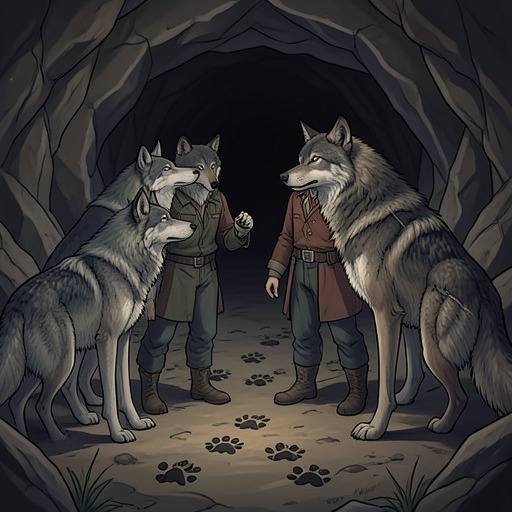
How to Flirt with A Naked WerewolfNo solo runs is a rule of the werewolf pack that prohibits members from running alone and places their movements under the leader’s knowledge. The rule comes into focus when Cooper asks Eli whether anyone has been making solo runs while attacks near Grundy have left people hurt and two children missing. In that exchange, the rule is more than a restriction on individual movement: it becomes a test of whether the pack’s leadership can account for activity that may endanger both local residents and the wolves themselves.
Meaning and Authority
The clearest statement of the rule comes from Eli: “No one in this pack runs on his own. No one runs without me knowing about it.” His answer links two conditions that Cooper’s question distinguishes: a wolf should not run alone, and the leader should know about the pack’s movements. The first is a limit on individual conduct; the second makes oversight part of the rule’s operation. The account does not specify a punishment for breaking it, but it presents the leader’s awareness as an asserted expectation, not merely a preference.
That expectation is politically charged because Eli speaks as the pack’s leader, while Cooper has held a position of authority and still commands a form of respect. Cooper’s expression hardens as he asks about solo runs, and Eli’s usual grin falters before he answers. The conversation thus makes compliance a question of credibility as well as procedure: Eli must reassure Cooper that no member is moving beyond his knowledge, while Cooper is plainly unwilling to accept a bare denial without pressing him.
The Grundy Security Crisis
Cooper raises the rule against the background of danger in and around Grundy. He tells Eli that there have been attacks and other incidents, that people are being hurt, and that two children are missing after wolf prints were found at their campsite. The town’s residents are becoming increasingly angry and discussing organized hunts. Cooper warns that if they see a wolf nearby, a pack member could be killed. The risk therefore runs in both directions: attacks threaten the people of Grundy, while human retaliation could threaten any wolf found in the area.
His question about solo runs follows this warning. Cooper asks whether there have been emergencies the pack should know about, then specifically asks whether anyone has been running alone. The sequence makes the rule a means of asking whether the pack can account for potentially dangerous movement when its presence near Grundy could intensify an already volatile situation. Cooper describes the area as his backyard, making clear that he regards activity there as directly consequential to his own territory and to the people living in it.
Denial and the Limits of Enforcement
Eli responds that no one runs without his knowledge and denies that a pack member is making a habit of attacking humans in Cooper’s territory. His assurance is categorical, but the scene does not independently establish how the rule is monitored or whether the denial is accurate. Cooper asks whether Eli is sure, adopting what the narration identifies as his alpha mode; Eli then answers that he is positive. The exchange consequently leaves a deliberate distinction between the rule as stated and the evidence available to verify compliance: Eli claims comprehensive knowledge, while Cooper’s questions show that he considers the possibility of unaccounted-for activity serious enough to investigate.
Eli also tells Cooper that he has instructed the pack to keep a wide berth around Grundy, and Samson adds that the pack usually does so because Cooper dislikes being crowded. These statements describe a related territorial boundary, not a replacement for the no-solo-runs rule. Together, however, they show the kinds of assurances at issue: pack members are said to be under the leader’s awareness, and the pack has been told to avoid the area where the human-wolf conflict is escalating. The book does not establish that the rule itself requires every wolf to stay away from Grundy; it presents the broad-berth instruction and the ban on unaccounted-for solo runs as distinct parts of the conversation.
Narrative Function
The rule gives the confrontation a practical stake beyond the dispute over leadership. Cooper’s concern is not abstract discipline: he connects pack movement to specific injuries, missing children, wolf tracks, and the prospect of armed human hunts. Eli’s answer is therefore also a claim that he can control the conduct of those he leads. The exchange leaves that claim under pressure, with Cooper continuing to scrutinize the assurances rather than simply accepting them.
The rule’s force lies in this overlap between collective safety and authority. A wolf running alone is presented as a possible gap in the leader’s knowledge at exactly the moment when an unexplained presence near Grundy could bring lethal consequences. Yet the scene supplies no account of enforcement, sanctions, or a confirmed breach. What it does establish is the standard Eli says governs the pack and Cooper’s insistence that, during a crisis, the standard must amount to more than words.