Rival Pack Attack on the Grundy Valley
How to Flirt with A Naked WerewolfThe Rival Pack Attack on the Grundy Valley was a violent invasion that tested Cooper’s authority as alpha and ended in the deaths of all twelve attackers. Cooper later remembered the night not as a straightforward defense of his home, but as the moment he killed people and could no longer live comfortably within his family or pack.
Causes and Background
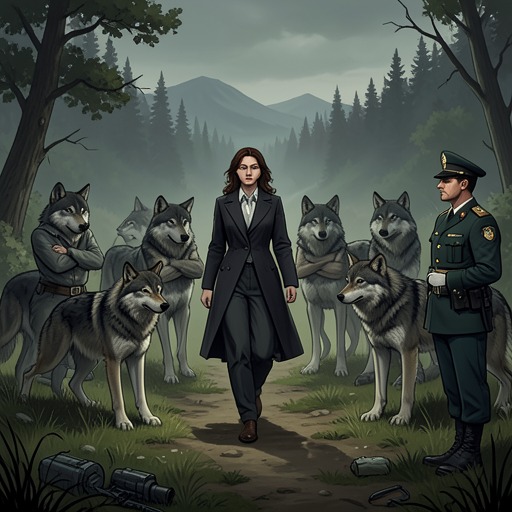
About a year after Cooper became alpha, a pack from outside Vancouver arrived in the valley at night. Its members had exhausted their own hunting grounds and were seeking better territory. They had scouted the Grundy Valley carefully, learning the weaknesses of its packlands, the village’s layout, the number of fighters available, and Cooper’s perceived lack of strength as a leader.
The attack threatened more than territory. The rival alpha, Jonas, had Maggie Graham dragged from her home and threatened to snap her neck unless Cooper surrendered control of the valley. Cooper’s understanding of alpha leadership was already bound to responsibility for the village and its families: the pack was expected to drive off threats, from wild animals and criminals to other dangers. With his family gathered around him and Maggie in Jonas’s grasp, that responsibility became immediate and personal.
The Attack and Cooper’s Response
Cooper froze while Jonas held Maggie Graham by the neck. Maggie was not waiting passively for rescue: she bit Jonas’s arm, kicked him, and taunted him to fight. When Jonas went for her throat, Cooper changed before Maggie could. He held Jonas off, but both packs transformed and the attack became a fight in which bloodshed could no longer be avoided.
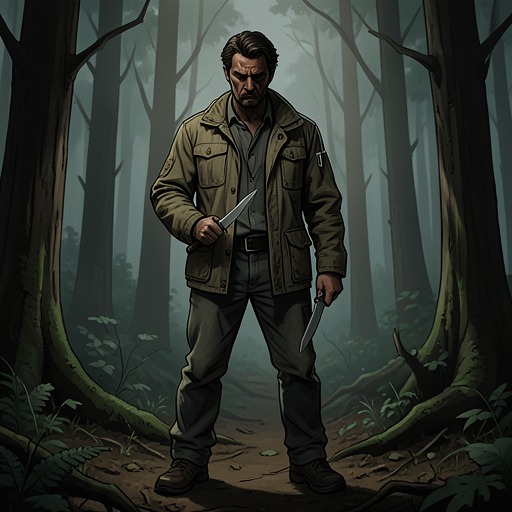
Cooper was distracted when another male leapt onto his back. Jonas forced Maggie to the ground, his teeth at her neck, and Cooper lost control of the fight. In one of his rare clear memories from his wolf form, he recalled killing the attacker on his back, knocking Jonas away from Maggie, pinning him, and tearing out his throat. Maggie brought down one rival herself. Cooper killed the rest, one by one; when he returned to human form, all twelve wolves from the invading pack were dead. Members of his own pack tried to intervene, but he snapped at them as he continued the attack.
Aftermath and Moral Injury
The victory became, for Cooper, the beginning of an estrangement from the people he had defended. His pack praised him as a great leader and said his father would have been proud, but those affirmations could not reconcile him to what he had done. He remembered the dead rivals as people, not merely wolves, and was horrified that he had been capable of killing them. Night after night, he woke screaming from nightmares; unable to trust himself around his family, he left because he felt he did not deserve them.
The attack also fractured his bond with Maggie Graham. She could forgive his initial hesitation and the killings themselves, but could not accept that he failed to return to the role of her goofy big brother. In Cooper’s account, she resented his inability to take up a position she was better suited to hold and saw his departure as a betrayal; his leaving seemed to relieve her by giving that anger a reason. The invasion thus continued long after the rival pack was dead, as a conflict over leadership, loyalty, and the family life Cooper believed he had forfeited.
Cooper eventually tells Mo about the attack while they are alone together. As he describes killing all twelve invaders, he buries his face in his hands, and she takes his hands and tries to bring him back to the present. Mo does not dismiss the deaths or claim to have fully processed his confession. Instead, she rejects the idea that his violence makes him a monster: he had hurt someone to protect her, she says, and she cannot judge him for doing the same for his family. Her response offers intimacy without erasing his guilt, beginning to loosen the isolation that followed the fight.
Later Reckoning
The attack’s moral consequences become clearer in the contrast between Cooper’s earlier inability to forgive himself and his later response to another killing. After the confrontation with Eli, Mo tells Cooper not to torment himself with guilt, and he agrees. The exchange does not erase the deaths of the twelve invaders or prove that the old nightmares have vanished; it marks a changed willingness to accept Mo’s judgment rather than treating violence as proof that he is unworthy of his family.
In retrospect, the invasion is both a defense of the valley and a rupture in Cooper’s sense of himself. His pack could call him a great leader for protecting them, while he remained haunted by the fact that his victims were people. The conflict’s lasting weight lies in that unresolved difference between communal praise and private moral injury—and in the slow, relational work required before Cooper can imagine living with what he did.