Spirit Wind Bed-and-Breakfast
How to Flirt with A Naked WerewolfSpirit Wind Bed-and-Breakfast is the commercial and communal reworking of Mo Duvall-Wenstein’s childhood home. Formerly a private alternative-lifestyle commune, it becomes a spiritual retreat operated by Mo’s parents and their companions, offering lodging, meals, cooking classes, yoga, meditation, and nature walks. Its decisive importance lies in the way it converts an eccentric family environment into a successful public enterprise while forcing Mo to recognize that home has changed in her absence: the place remains available to her family, but it is no longer held in reserve solely for her.
From Commune to Retreat
The transformation begins before Mo’s call home, when her parents recast the commune as Spirit Wind Bed-and-Breakfast. Ash explains that the idea arose after Mo left. Thinking about his daughter traveling through an unfamiliar world, he reconsidered the value of keeping their community closed and decided that its teachings might benefit travelers who needed to examine their minds and bodies. The conversion required only limited physical work, described as some paint and elbow grease, because the property already contained empty cabins that could be put to use.
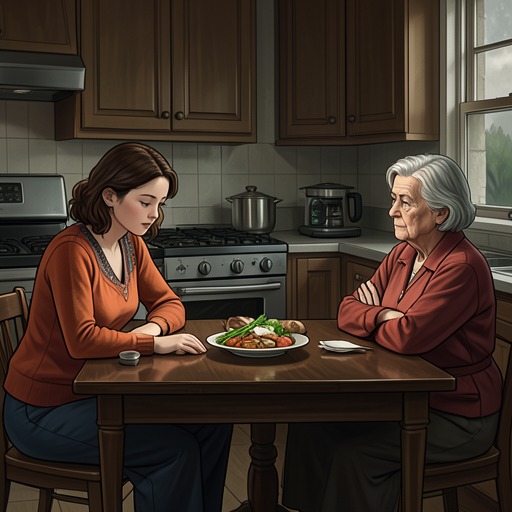
The new establishment preserves the commune’s collective labor while giving it an outward-facing economic form. Sven prepares meals and teaches cooking classes; Sundrop leads yoga; Mo’s mother conducts meditation seminars and nature walks; and the family works together to maintain the retreat. Guests do not necessarily pay in conventional currency: the business accepts in-kind contributions or “sweat equity” on the farm, while also taking cash when appropriate. The arrangement therefore occupies an amused middle ground between hospitality business, educational community, and the parents’ earlier communal ideals.
A Successful Public Enterprise
Spirit Wind’s unexpected success gives the parents’ experiment material credibility. Within two months, the retreat has been booked solid, and favorable reviews in trade magazines have made demand so strong that the family is nearly turning guests away. The business thus reverses Mo’s expectations about her parents’ relationship to outsiders. They had disliked strangers entering their garden, yet the new enterprise deliberately invites travelers into the property and organizes their presence as part of the family’s work.
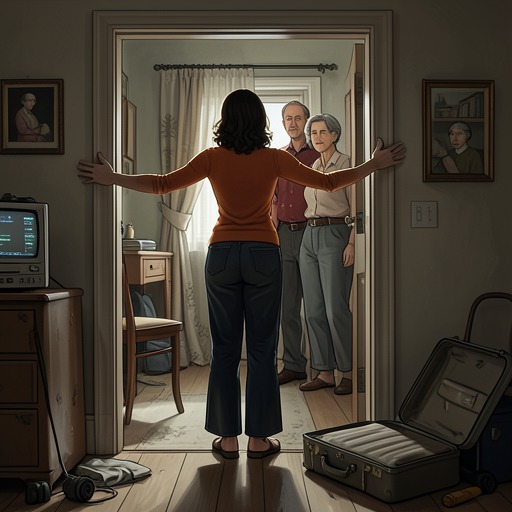
Even the question of refusing guests reveals the parents’ continuing communal ethic. When Ash says the retreat is practically turning people away, Mo’s mother corrects him: they would never turn anyone away. During overflow periods, guests are placed in Mo’s old room. This policy makes the retreat’s hospitality expansive, but it also exposes the cost of its success. Space once associated with Mo’s childhood has become part of the public accommodation system.
Mo’s Displaced Room and Changed Home
Mo reacts most sharply to the conversion of her bedroom into a guest suite. She had expected, despite all her complaints about home, that the room would remain a fallback position or even become a kind of shrine to her. Instead, strangers now sleep in her former space, drawn by an uncomfortable twin bed, sunrise yoga, and organic carrot lasagna. The scene is comic, but the underlying change is serious: the physical place that represented guaranteed return has been absorbed into a functioning business.
Her first instinct is bodily and defensive. She reaches automatically for Tums, expecting the heartburn that accompanies difficult exchanges with her parents, but the anticipated acidic pain never arrives. She keeps her tone pleasant even while asking whether guests object to the absence of walls. That response marks a subtle alteration in her relation to the family home. The loss of her room hurts, yet it does not produce the old familiar crisis; she can acknowledge displacement without being overwhelmed by it.
Family Contact and Reconciliation
Spirit Wind also becomes the setting through which Mo’s estranged family begins a more ordinary form of contact. After a period in which she instinctively avoided calls from her parents because she expected lectures about responsibility, global awareness, or ear-candling, she receives an unusually normal voicemail inviting her to call. Her suspicion that the message might be a trap gives way to curiosity and desperation, and she phones home.
The call initially sounds so unfamiliar that Mo checks the number after the bed-and-breakfast answers. Her mother’s greeting confirms that the former commune has become an operating lodging house rather than merely a renamed household. Although the conversation retains the family’s eccentricity, it also carries warmth: Ash asks how Mo is doing, and the parents later send a heartfelt letter filled with good wishes when they cannot attend her wedding.
By the time Mo and Cooper Graham await her parents’ arrival by plane, Spirit Wind represents a possible new balance rather than a simple return to the past. Mo does not resent their absence from the wedding as intensely as she once might have, and she understands that her parents act in their own time. The retreat has not erased the family’s oddness or repaired every emotional distance, but it has created a practical channel through which affection can travel. Spirit Wind is therefore both a home altered by commerce and a home made newly reachable.
Narrative Significance
The bed-and-breakfast embodies the book’s recurring contrast between rigid expectations and improvised belonging. Mo arrives in Grundy intending to live an idle, private life, yet work at the Blue Glacier Saloon gives her a first sense of community; meanwhile, the parents she once treated as immovable eccentrics have turned their secluded commune outward. In both cases, belonging emerges through participation rather than through preserving an untouched private refuge.
As a location, Spirit Wind joins economic adaptation to emotional change. Its cabins, shared work, and guest services make the family’s values legible to outsiders, while the occupied childhood room makes clear that every expansion has a cost. The place no longer promises Mo an unchanged retreat from the world. Instead, it offers a more complicated inheritance: a living community that has adapted, prospered, and opened itself to strangers, and a family relationship that can begin again only after the old idea of home has been relinquished.