The werewolf pack
How to Flirt with A Naked WerewolfThe werewolf pack is the hidden social and political community centered in the packlands near Crescent Valley. It is not merely a group of people who can become wolves: it is a hereditary society organized by bloodlines, territorial instinct, secrecy, mating rules, and leadership. Its members protect their valley and one another while concealing the most dangerous parts of their existence from ordinary humans. The pack’s decisive significance lies in the tension between inherited obligation and chosen belonging. Cooper Graham is born to lead it, leaves after a devastating crisis, and later returns to defend both the pack and the human community connected to him. By the end, the pack survives a power struggle and adopts a secret-ballot election, preserving its collective structure while revising the authority that governs it.
Nature, Bloodlines, and Transformation
The pack is a hereditary institution whose members inherit the capacity to change into wolves. Evie DuChamp describes her own family line as a “dead line,” meaning that no one in her branch can transform, while Cooper Graham’s entire line has retained the ability. The distinction does not make deadliners outsiders in a social or emotional sense; they remain members of the extended community and are loved by the transforming families. It does, however, determine access to the pack’s most important knowledge. Matters that occur while the wolves are in wolf form remain inside the active pack, and deadliners are not told what has happened even when the events affect the whole village.
Cooper explains that lycanthropy is treated within the pack as a genetic inheritance rather than a curse acquired through an external infection. The community contains many packs across the world, with the local group representing a relatively small population compared with rural Southern clans. Intermarriage with outsiders has produced more dead lines, and Cooper’s grandfather regards that development as beneficial because it prevents the dangers of inbred werewolf families. The pack’s origin story nevertheless presents transformation as a form of collective providence. After a Northern Man entered the valley and married a woman from there, two sons inherited the capacity to become wolves. During a bitter winter, when hunters could not feed the village, the older son’s desire to provide for his family and neighbors enabled his transformation; his brother followed him, and together they hunted enough food for everyone.
This origin binds wolf identity to service rather than private power. Transformation is associated with feeding the village, guarding its territory, and continuing a lineage that predates the arrival of the first white man. The pack therefore understands itself through both ancestry and usefulness: its supernatural inheritance is justified by the protection it gives to the human community around it.
Territory, Secrecy, and Social Order
The pack’s strongest organizing force is territorial instinct. Evie explains that a wolf’s mind is hard-wired to protect a particular area, hunt there, and live there, a pattern repeated by the pack for almost a thousand years. The instinct is not presented as a preference that can be set aside without cost. Every part of Cooper’s body urges him to return to the valley, and his decision to move roughly a hundred miles away to Grundy is described as one of the most difficult acts available to a werewolf. His physical survival away from the packlands does not mean that he has escaped the territory’s claim; his withdrawal leaves him emotionally altered, isolated, and reluctant to speak about home.
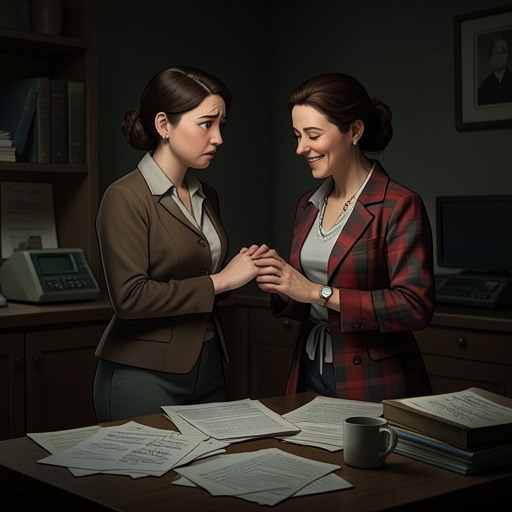
Secrecy is the pack’s second major defense. Evie insists that exclusion from wolf-form knowledge is not personal hostility. The transforming members are portrayed as friendly and loving toward deadliners, but they handle serious matters affecting the village, and they believe that fewer informed people make the community safer. This rule creates an internal boundary between affection and information. Evie and the other deadliners may belong to the family, yet they cannot participate fully in the pack’s confidential decisions or reconstruct what happened during a crisis unless a transforming member chooses to tell them.
The pack also maintains a formal hierarchy. Each generation is expected to produce a pack, and each pack has a leader. Cooper was recognized as the likely alpha almost as soon as he first phased: he was the fastest and strongest of his generation, and the local wolves regarded his leadership as an obvious natural order. The system combines biological inheritance, physical ability, and communal expectation. Cooper’s refusal to accept the role does not erase the authority attached to him; instead, it leaves the pack vulnerable to a contest over whether leadership should rest on inherited status, strength, fairness, or political consent.
Cooper’s Separation and Renewed Connection
Cooper’s departure is the pack’s central fracture. Before leaving, he had been lively and funny, much like his cousin Samson. After a crisis in which the village was placed in danger and Cooper defended it, his family was told only that he had been injured and needed time to recover. Months later, he appeared in Grundy physically recovered but changed in temperament. He avoided friends, refused to discuss the packlands, and seemed not to know whether he would ever return. His family gradually accepted that he might remain away, even though the territorial pull continued to shape his life.
His relationship with Mo Duvall-Wenstein creates a bridge between the secret pack and the ordinary human community. Mo begins as an outsider in Grundy herself, but work at the Blue Glacier Saloon gives her a place, privacy, and a role among the town’s voices and routines. That experience helps her understand the difference between formal exclusion and gradual belonging. Cooper’s pack has a far more consequential boundary than the town’s suspicion of newcomers, yet Mo’s attachment to him makes the pack’s secrecy personally and ethically urgent.
Cooper continues to patrol and guide in wolf form, sometimes remaining away from Mo because staying human too long makes him restless. Even while building a household with her, he retains an obligation to the pack’s way of life. His wolf nights, his scent, and his repeated movement between the house and the wilderness show that his identity cannot be divided cleanly into human domesticity and wolf affiliation. When he finally decides to return to the packlands, he does so because he needs to see his grandfather and question Eli, and because he must warn the pack about people in Grundy who want to hunt wolves. His return is therefore motivated by both family duty and responsibility toward the human town where he has made a life.
Mating, Reproduction, and Community Boundaries
The pack’s rules extend beyond leadership and territory into intimate relationships. Cooper tells Mo that biting and marking a chosen partner creates a permanent bond: once a wolf marks a mate, the wolf cannot mate with anyone else because the pair’s DNA will not mix with another partner’s. The rule is described as more magical than scientific, but its social force is absolute. Wolves mate for life, turning a private act of desire into a lifelong biological and communal commitment.
That system also links the pack to the continuation of its bloodlines. Mo’s pregnancy becomes a matter involving both human medicine and werewolf knowledge. She learns that wolves carry their young for three months, while human women carrying werewolf babies have a pregnancy of approximately six months. The reduced gestation period produces unusually high hormone levels and requires specialized care. Gracie Graham directs Mo to Dr. Moder, who works with pregnant pack women and helps births appear normal for government paperwork. Dr. Moder’s house call, blood tests, extra-strength prenatal vitamins, and hand-typed copy of “What to Expect When You’re Expecting a Werewolf” demonstrate how the pack maintains practical systems beneath its secrecy.
Mo initially fears that the pack will learn of the pregnancy before she can tell Cooper. Her concern reveals the cost of entering a closed hereditary society: pregnancy is not only a personal development but also a fact with consequences for lineage, family alliances, and communal knowledge. Once Mo chooses to have the baby and remain in Grundy, however, the relationship between the human town and the werewolf community becomes more durable. Cooper’s later proposal asks him and Mo to raise their child together, while their marriage converts a supernatural mating bond into a public family union.
Eli’s Coup and the Pack’s Political Change
Eli exposes the destructive side of the pack’s inherited leadership structure. He believes Cooper was too weak because he cared about fairness and equality rather than strength. Eli considers himself born to lead and resents being treated as the second-best substitute while Cooper remains alive. His ambition is not merely personal vanity; it is a claim that the pack’s hierarchy should recognize force and potential above all other values.
To advance that claim, Eli secretly supplies information to a rival pack for months and helps stage an attempted coup. He expects the rival group to be strong, but complains that it is clumsy and insufficiently subtle. When the plan fails, he performs shock and surprise alongside everyone else. The conspiracy turns the pack’s secrecy against itself: information that should protect the community becomes a weapon for someone seeking control of it. Eli’s betrayal also clarifies why the pack fears outside knowledge and why its internal boundaries can become dangerous when authority is not accountable.
After Eli’s loss, Cooper still refuses the alpha position. His refusal prevents the old hereditary expectation from simply reasserting itself, but it also forces the pack to address succession directly. Following an all-night meeting, the wolves adopt a more democratic method of choosing their leader: a secret ballot. Maggie Graham wins by a landslide. Samson had been nominated, but the pack did not believe he would treat the office seriously. Maggie, despite lacking the genetic conditioning associated with traditional alpha authority, proves capable of exercising power through judgment rather than mere physical dominance. Her decisions are fair, swift, and generally directed toward the interests of her people.
Maggie’s election marks the pack’s clearest institutional transformation. The community does not dissolve its hierarchy or abandon its ancestral order; it changes the procedure by which authority is legitimized. Fear still contributes to Maggie’s power, since much of the pack is terrified of her, but her leadership is also recognized as competent and surprisingly just. Cooper visits the packlands more often after the change, suggesting that the pack can remain his family without requiring him to become its ruler.
Significance and Final Form
The werewolf pack functions as a hidden kinship network, a territorial society, and a political order at once. Its rules determine who may transform, who may know the truth, where members belong, whom they may mate with, and who can speak for the community. The same structures that protect the pack also produce isolation: deadliners are loved but excluded from crucial knowledge, Cooper is biologically pulled toward a home he cannot emotionally inhabit, and Eli exploits the community’s reverence for inherited authority.
The pack’s final development is therefore neither a rejection of tradition nor a simple return to it. Cooper’s marriage to Mo brings a human outsider into the center of a lineage that had been guarded by secrecy, while Mo’s pregnancy makes the future of the bloodline visible beyond the packlands. Maggie’s election replaces the assumption that the strongest or most genetically destined wolf must lead with a collective decision. The result is a community still defined by wolves, blood, territory, and lifelong bonds, but newly capable of choosing how those inheritances will govern its future.