University of Mississippi
How to Flirt with A Naked WerewolfThe University of Mississippi is the setting in which Mo Duvall-Wenstein’s rebellion against her parents’ countercultural upbringing becomes an organized adult project. Her enrollment gives her access to conventional education, social independence, and a marketing degree, but it also exposes the tension between the ordinary life she wants and the intrusive family habits she is trying to escape.
Entry into Conventional Education
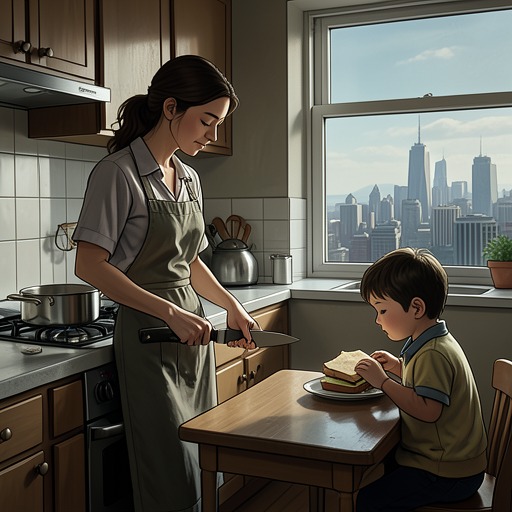
Mo’s path to the University of Mississippi begins with an educational conflict at home. Her mother, Ash Wenstein, had been responsible for homeschooling her, but the lessons were repeatedly displaced by political causes and activism. Although Ash kept elaborate plans ready for county inspections, instruction often stopped at the planning stage; Mo was frequently left to conduct “independent study,” while her father’s earlier professional experience as a CPA supplied much of the practical knowledge she retained.
At thirteen, Mo decided that public school was necessary if she ever hoped to attend college. She rode her bicycle to the Bowdry County Public Schools office carrying little proof of her existence beyond her birth certificate and an essay explaining why she needed immediate enrollment. After the superintendent confirmed that she was neither neglected nor abused, he told her that every child had the right to attend public school. Mo refused his offer to visit her parents because she feared that exposure to their strange, colorful household would make her appear hopelessly abnormal. Her mother eventually signed the papers, and Mo entered Leland High School’s ninth grade.
Formation of an Adult Identity
Public school became the breaking point in Mo’s adjustment to ordinary society. She recognized how different and unprepared she was, then treated conventional behavior as a form of rebellion against her upbringing. Wearing leather shoes, participating in a mock election, earning good grades, and forming a close friendship with Kara Reynolds all helped her feel “normal.” Her job at the Tast-E-Grill Drive-In extended that transformation into work and consumer culture: she learned to tolerate processed food, bought clothes, CDs, makeup, and junk food, and stored those forbidden pleasures in an old steamer trunk.
The University of Mississippi therefore represents more than the next educational step. It is the institutional space where Mo can pursue the life her parents’ commune-like world could not provide. Her enrollment in a marketing degree confirms her ability to succeed within conventional structures, while the distance from home gives her the first credible opportunity to define herself without constant parental supervision.
Conflict over Privacy and Control
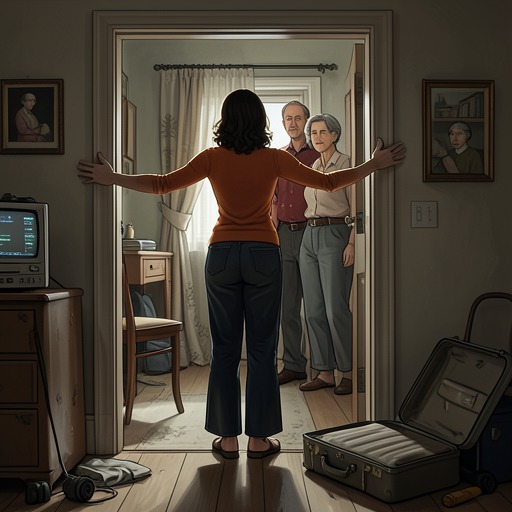
Mo’s university years do not free her entirely from Ash’s influence. Ash used her eccentric charm to obtain a security pass into Mo’s dormitory and later her off-campus apartment building, claiming that the access would let her visit whenever she wished. Instead, she used it to remove items she considered harmful: lunch meat, nonorganic produce, chemical cleaning products, and other products associated with Mo’s adult choices. When Ash discarded a bulk-sized box of Hostess Sno Balls, Mo began keeping junk food in a locking plastic tub; Ash then took the tub to a recycling center.
These intrusions turn the University of Mississippi into a contested domestic space. Mo is physically away from her parents, yet Ash’s authority follows her through spare keys, dietary rules, and the presumption that a mother may reorganize her daughter’s home. Ash frames the interference as concern for Mo’s health, replacing discarded food with nine-grain bread, tofu dogs, carob cookies, and other foods Mo had enjoyed as a child. The conflict is difficult for Mo to resolve because the unwanted control is mixed with genuine affection and a claim to parental care.
Distance, Ambition, and Later Contrast
Mo responds by studying hard and imagining a career elsewhere. She wants to use her marketing degree to work in Illinois, New York, or California, as far from Mississippi as possible. Her ambition is inseparable from a desire for solitude, privacy, and a home her parents cannot enter through a key obtained from a maintenance worker. The University of Mississippi thus becomes a launching point for geographic and psychological separation, even though the separation remains incomplete.
The later contrast with Mo’s life in Grundy clarifies what the university years provided and what they did not. In Grundy, employment at the Blue Glacier Saloon gives her a practical place within a small community: she enjoys the kitchen, the surrounding voices, and the privacy of working near rather than directly inside the social room. She gradually becomes part of the town through cooking, menu design, and daily routine. Her university experience had offered credentials and escape; Grundy offers belonging. The movement between the two settings traces Mo’s shift from trying to become indistinguishable from “regular people” to finding a community in which her differences can remain visible.
Narrative Significance
The University of Mississippi marks the middle ground between Mo’s childhood and her later life with Cooper Graham. It is where inherited eccentricity is challenged by institutional education, peer culture, paid work, and consumer choice, and where Mo acquires the qualifications that make independence imaginable. Yet its promise of freedom is compromised by Ash’s continued access to Mo’s rooms and possessions. As a result, the university functions not simply as a campus but as a threshold: Mo leaves home, earns a degree, and develops the wish for privacy, while discovering that adulthood requires more than physical distance from the people who shaped her.