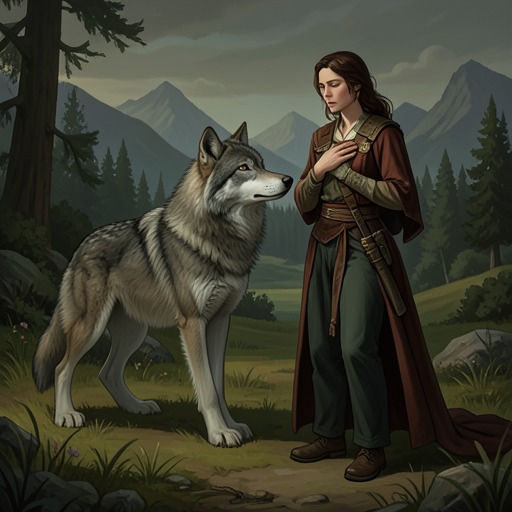
Wolf form memory loss
How to Flirt with A Naked WerewolfWolf-state memory loss is the uneven recall Cooper experiences around some of his actions while shifted, not a total absence of memory from wolf form. Its decisive effect is to make uncertainty feel like evidence against him: unable to remember a night near an attack, Cooper suspects himself, withdraws from Mo, and becomes vulnerable to Eli’s manipulation. The story’s counterexample—a rare, vivid memory of killing an invading pack—shows that the gaps are selective, and that they can conceal the truth without proving guilt.
Nature and Limits
The clearest account of the phenomenon comes when Cooper tries to explain why he might have attacked Abner. He says he has no memory of that night: no dreams and no recollection of waking to check on Mo. He considers that he could have left their sleeping bag, shifted, and returned without waking her. The uncertainty is not abstract. Abner has been found near their campsite with deep claw wounds, and Cooper fears that the injured man recognized him as the thing that caused them.
Cooper’s account of his abilities makes clear that wolf-state memory is inconsistent rather than simply absent. He believes he could have acted without remembering, but elsewhere recalls one particularly clear episode in wolf form: the battle in which he killed an invading pack. In that instance, the memory remains vivid, including his violence and the danger to Maggie. The contrast matters. The story does not treat every shifted action as forgotten, nor does a memory gap establish what happened during a particular episode.
Suspicion and Withdrawal
Cooper’s fear grows when he connects Abner’s mauling to another unexplained night. While hunters slept, he had shifted and run home because he could not bear being away from Mo. He then changed back, ran through the preserve, and returned to camp before anyone woke. After hearing that two boys had gone missing nearby on the same night, he could no longer set aside the coincidence. He tells Mo that the clues are adding up, but the crucial part of the chain—the experience of the run itself—is not something he can offer as a remembered account of what he did throughout the night.
That gap turns uncertainty into a personal accusation. Cooper says he cannot see Mo while people may still be getting hurt and walks away from her. His fear is not only that a wolf attacked Abner; it is that he may have been responsible without knowing it. The suspicion also draws force from his history of taking responsibility for violence. As a pack leader, he had sent people he cared about into fights and had taken too much onto himself. After killing the invaders, he could not accept the act as justified defense, despite his family’s pride in him. His readiness to blame himself makes the possibility of forgotten violence especially difficult to dismiss.
Eli’s Exploitation of the Gap
Eli’s confession overturns the interpretation Cooper has built from the missing memories. Eli says he has better control in wolf form and better recall of his wolf memories than Cooper, whom he describes as conflicted about their nature. He has used that advantage while secretly encouraging a coup, supplying information to the rival pack, and maneuvering to remove Cooper. When the coup failed to achieve that end, Eli sought a more permanent way to get rid of him.
Eli admits to targeting humans, including a hiker and an old woman, and says that he followed Mo on her camping trip, looking for an opportunity to reach her. Abner’s presence near Mo gave Eli an opportunity: he attacked him, while Cooper’s inability to remember the night made self-blame plausible. Eli explicitly observes that Cooper was quick to blame himself, even when his instincts suggested otherwise. The memory gap thus serves as cover for deliberate violence. It does not make Cooper the attacker; it gives Eli room to make Cooper doubt his own innocence.
Resolution and Significance
The truth comes through Eli’s own account rather than through a recovered memory from Cooper. After Eli is killed, Cooper accepts that he was wrong to believe himself homicidal. The resolution corrects his conclusion about the attacks without establishing that every gap in his wolf-state memory has been explained. What changes is his understanding of the evidence: missing recollection had left a frightening possibility open, but it could not identify the attacker.
The concept links a supernatural limitation to the novel’s human stakes of trust, responsibility, and fear of harming others. Cooper’s rare clear memory of the massacre shows that he is not simply cut off from his wolf actions; his unremembered journey home shows why he cannot confidently account for all of them. Eli turns that unevenness into a weapon, while Cooper’s eventual acknowledgment that he was wrong marks a shift from treating suspicion as proof to recognizing the limits of what he can know.