Compton Boulevard
I Am LegendCompton Boulevard is one of the principal routes organizing Robert Neville’s life after the plague. It connects the isolated domestic space of Robert Neville’s house with the emptied neighborhoods and the burning grounds where the dead are disposed of. At first it appears to be a familiar urban road, but repeated journeys along it expose the collapse of ordinary civic life and turn the boulevard into a charged boundary between temporary safety and public danger.
Setting and Physical Character
Compton Boulevard runs through a landscape emptied by catastrophe. When Robert Neville drives east along it, the houses stand silent and the cars at the curbs are abandoned, giving the road the appearance of a city preserved only in its outer shell. He later continues past the tall oil derricks and through Compton, again finding no one visibly present. The absence is deceptive: Robert Neville knows that the streets are not truly empty, because the creatures who threaten him remain nearby, hidden from ordinary sight.
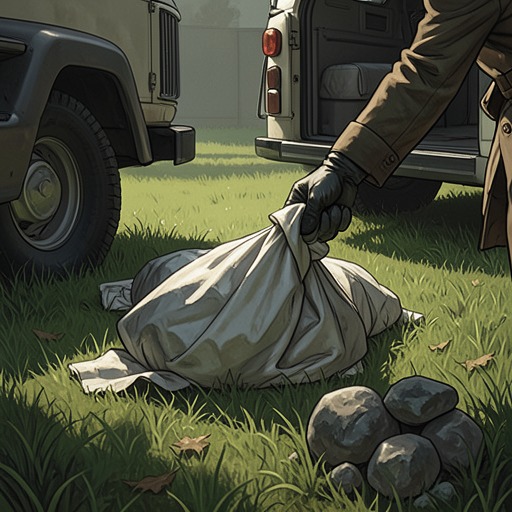
The boulevard is also associated with the atmosphere of the disposal grounds. As Robert Neville approaches the field, he puts on gloves and a gas mask and watches the sooty pall of smoke suspended above the earth. The field has been excavated into a gigantic pit, and the fire there is always burning. Compton Boulevard therefore links routine transportation with the physical aftermath of the plague: every approach to it can lead toward the place where bodies are destroyed, and every return from it carries the knowledge of a society compelled to treat the dead as contamination.
Route of Daily Survival
Robert Neville uses Compton Boulevard as part of a tightly controlled daily circuit. Before setting out, he checks his station wagon and preserves the gasoline stored at home, stopping on Western Avenue to fill the tank rather than consume his reserve. He then proceeds along Compton Boulevard toward the corpse-disposal grounds. The careful maintenance of the vehicle and the attention to fuel are essential because a breakdown that prevented him from returning before sunset would be fatal.
The route also represents the practical discipline by which Robert Neville keeps himself alive. He drives through silent streets, monitors the car, and treats distance as a measurable risk. Yet the boulevard never becomes fully controllable. It is open enough to permit escape but exposed enough to allow pursuit, and its broad emptiness magnifies every engine noise and every glimpse of movement.
A Corridor of Pursuit
During one desperate return, Compton Boulevard changes from a route home into the center of a chase. Robert Neville leaves his house without knowing where he is going, then accelerates onto the boulevard, reaching eighty-nine miles an hour on the lifeless road. The speed expresses panic rather than freedom: his rigid leg keeps the accelerator down, his hands feel frozen on the wheel, and the roaring station wagon becomes the only conspicuous sound in the stillness.
As he passes the corner of Western and Compton, a man runs from a building and shouts after him. Robert Neville cannot gain more speed, and his fear shifts from the attackers themselves to the possibility of mechanical failure. At Cimarron, another man emerges and begins chasing the station wagon. When Robert Neville finally turns toward his home, he sees the others waiting there. The streets converging around the boulevard make the danger appear organized and enclosing rather than accidental.
The pursuit continues through the connected residential streets. Ben Cortman reaches the vehicle, and Robert Neville strikes him in the face when the impact jerks the car forward. Another pursuer clings to the rear of the station wagon until Robert Neville swerves toward the curb and throws him against a house. Robert Neville then uses Compton Boulevard and the adjoining turns to keep moving, checking the rear-view mirror and fearing that the pursuers may cut through yards to block him. The road is thus both escape route and trap: it offers motion, but the surrounding neighborhood can continually fold back into his path.
A Road Shaped by Grief
Compton Boulevard is also connected with Robert Neville’s refusal to surrender Virginia Neville to public procedure. When an official insists that the law requires the body to be taken to the fire, Robert Neville drives rapidly back toward Compton Boulevard and leaves rather than accept the command. He cannot use the cemeteries because they are locked and watched, and men have been shot while attempting to bury their loved ones. The boulevard becomes the route by which he escapes institutional supervision and searches for a hidden place to carry out a private burial.
That episode gives the road a second emotional meaning. It is not merely the avenue of plague logistics or pursuit; it is the passage through which Robert Neville protects the last physical remnant of his marriage from a law that treats intimacy as irrelevant. After secretly burying Virginia Neville, he lies fully clothed on his bed, half drunk, watching the darkness spin with fireflies and the spilled whisky spread across the floor. The road remains outside, but its silence is inseparable from the grief that has driven him along it.
Narrative Significance
Compton Boulevard repeatedly brings together the book’s opposing conditions: movement and entrapment, public order and private loyalty, apparent emptiness and concealed threat. Robert Neville travels it to dispose of bodies, obtain safety, flee attackers, and evade the authorities, yet each purpose reveals another form of social disintegration. The road is a surviving piece of infrastructure whose original meaning has been stripped away and replaced by urgency.
Its recurrence also gives the narrative a spatial rhythm. Robert Neville leaves the house, crosses the abandoned city, confronts the evidence of death or the danger of pursuit, and tries to return before darkness. In that pattern, Compton Boulevard becomes a measure of his shrinking world. It is long enough to expose him, familiar enough to guide him, and dangerous enough to remind him that no route through the ruined city is neutral.