Majority decision normality
I Am LegendMajority-defined normalcy is the conceptual reversal that gives Robert Neville’s final understanding its force. The term names the principle that a society’s “normal” condition is established by the many rather than by an isolated individual. At the end of the novel, this principle transforms Robert Neville from the last human observer of vampirism into the abnormal figure judged by a new social order.
Definition and Intellectual Basis
The idea first takes shape when Robert Neville tries to formulate a general explanation of vampiric behavior. He imagines addressing an audience about the vampire as a minority element and argues that minority groups are hated because they are feared. His unfinished thesis shifts attention away from legends and toward social mechanisms: fear produces prejudice, prejudice defines an outsider, and the majority treats its own reaction as justified. The thought is important because it makes vampirism intelligible not only as a medical condition but also as a political and social identity.
Robert Neville’s developing scientific method reinforces this challenge to inherited definitions. Flies and mosquitoes appear in his reflections as possible mechanical agents in the dissemination of bacterial disease, while the dog’s infection forces him to question rigid assumptions about how the bacillus operates. A dog can appear outdoors in daylight, survive repeated nightly attacks, and still show signs of illness; Robert Neville therefore begins distinguishing between the disease itself and the conditions under which it becomes active. Normalcy is likewise separated from essence: what most people accept as ordinary may simply be the condition shared by the largest group.
From Isolated Human to Social Minority
For most of the story, Robert Neville treats the vampires as the abnormal population and himself as the remaining representative of ordinary humanity. His house, garlic, research, and daylight activity all express that position. The distinction seems especially secure when he observes the vampires’ physical limitations and concludes that they are not invincible but highly perishable beings dependent on strict conditions for their existence. Scientific explanation appears to restore a stable boundary between reality and superstition, and between healthy humanity and diseased monstrosity.
Yet the boundaries never remain entirely secure. The infected dog becomes a test case that unsettles Robert Neville’s categories. He finds it limping across the lawn, tries to lure it with milk and hamburger, and places a ring of garlic bulbs around the food in the hope that vampires will not approach. When he realizes that the garlic may repel the dog as well, his confidence in simple divisions between human, animal, infected, and uninfected life is shaken. He eventually waits on the porch and picks up the terrified, nearly hairless animal when it returns, holding its jaws closed as it tries to snap at him. His attempt to rescue it shows that his scientific investigation is inseparable from an emotional need to preserve a living connection, but it also exposes the limits of his categories and control.
The Final Reversal
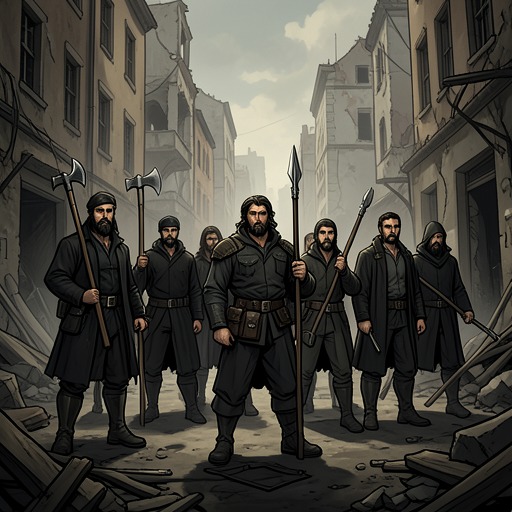
The principle becomes explicit when Robert Neville is captured and confronted by the new people of the earth. Their silence, white faces, startled cries, and collective gaze place him under the judgment that he had previously directed at the vampires. He realizes that normalcy is a majority concept, a standard established by many rather than by one man. The insight does not merely mean that public opinion has changed. It means that the social world has changed so completely that his former status as the representative of health and humanity no longer carries authority.
The new society sees Robert Neville as a scourge. The bloodless bodies left behind by his actions function for them as evidence of a terrifying, nearly supernatural predator, just as the vampires’ attacks and appearances had functioned for him. Their fear is therefore not presented as wholly irrational. Robert Neville recognizes the awe, horror, and shrinking fear on their faces and understands what they feel without hating them. His recognition marks a moral extension of the principle: once he sees himself through the majority’s eyes, he can no longer claim that his own perspective is the only legitimate measure of reality.
Consequences for Identity and Meaning
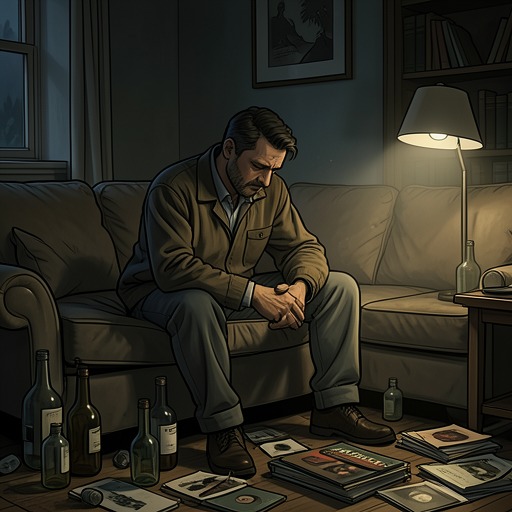
Majority-defined normalcy changes the meaning of Robert Neville’s entire life. His solitary research, repeated defenses, and killing of vampires had seemed like acts of survival undertaken by the last normal man. From the new society’s perspective, those same actions make him an invisible specter whose existence is proved by the bodies of their loved ones. The reversal does not erase the suffering he endured or establish that every judgment against him is factually correct. Instead, it reveals that moral and social identities are relational: the defender of one order can become the monster of another.
The concept also clarifies the novel’s movement from supernatural legend toward biological and social explanation. Mosquitoes and flies suggest ordinary mechanisms through which disease can spread; the dog complicates the supposed rules of infection; Robert Neville’s investigations expose the physical conditions behind vampirism. At the same time, the ending shows that explanation alone cannot secure a permanent human center. Knowledge may explain why vampires behave as they do, but it cannot prevent a new majority from classifying the last human as a threat.
Full Circle and Narrative Significance
The final recognition produces a complete circle. Robert Neville understands that he does not belong to the new people any more than he belonged to the vampires he studied and killed. He has become anathema and black terror to be destroyed, a status that mirrors the vampires’ earlier position in his world. His death therefore completes the social transformation rather than merely ending his personal story: a new order is established, and a new superstition enters its account of the past.
Majority-defined normalcy is consequently both a social theory and the novel’s final irony. It explains how a population can regard its own condition as natural while casting the remnant of an earlier humanity as diseased, monstrous, or impossible. Robert Neville’s last understanding is painful because it denies him the stable identity he thought he had defended, but it is also lucid. He sees that normalcy belongs not automatically to the virtuous or the healthy, but to whoever constitutes the accepted majority. That insight gives his ending its paradoxical title-like force: in the new world, Robert Neville becomes the legend.