Neville reveals the physiological mechanism of vampires
I Am LegendRobert Neville’s revelation of vampire physiology is the decisive intellectual achievement of his investigation: it transforms the apparently supernatural vampire into a biological system governed by infection, metabolism, oxygen, blood, and bodily decay. By explaining the mechanisms behind familiar vampire legends, Neville develops a model that accounts for both the creatures’ powers and the practical methods by which he can destroy them.
From Legend to Experiment
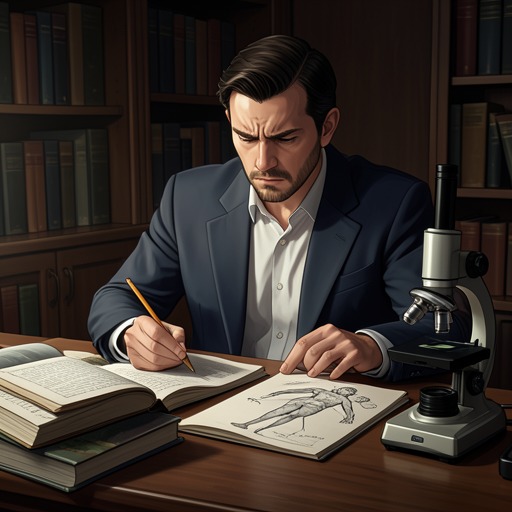
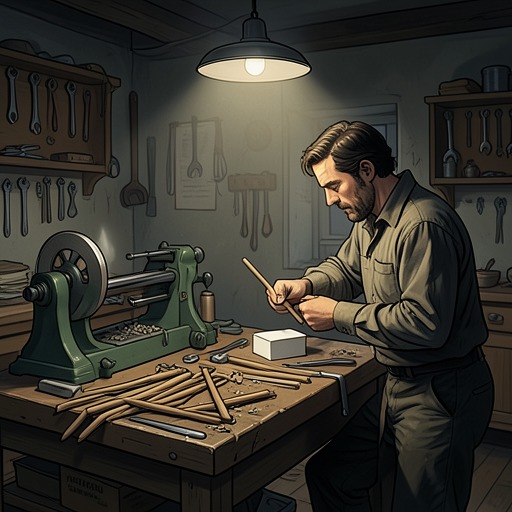
Neville begins by challenging the assumption that a stake must strike the heart. He had accepted the legend at first, but experiments in which stakes were driven into different parts of vampire bodies showed that the heart was not the essential target. The victims died regardless of where the stake entered, leading him first to suspect hemorrhage. That explanation also failed when he watched a woman decompose before his eyes, proving that death could not be reduced to the loss of blood caused by a wound.
His next decisive test used a dead vampire’s arm inside an artificial vacuum. Neville punctured the arm while it was isolated from air, and blood spurted out. When he allowed air back into the tank, the arm decomposed. The experiment supplied the missing connection between injury and dissolution: the crucial change was not simply penetration or bleeding, but the admission of oxygen into infected tissue.
The Bacillus and the Vampire Body
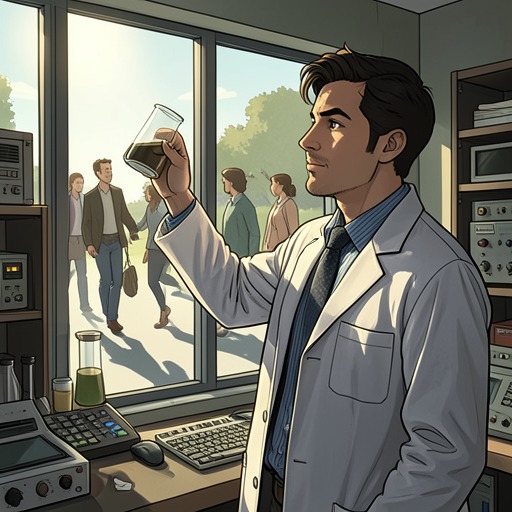
Neville identifies the infection as a cylindrical bacterium that creates an isotonic solution in the blood, slows circulation, activates bodily functions, lives on fresh blood, and supplies energy. The organism also contributes to the physical transformation of its host, including the growth of canine teeth. In this account, vampirism is not a curse imposed from outside the body but a disease that reorganizes the body’s chemistry and behavior around the need for blood.
The bacillus is a facultative saprophyte, capable of living with or without oxygen, but its activity changes according to its environment. Inside the vampire system, it is anaerobic and forms a symbiosis with the host. The vampire feeds the bacterium fresh blood, while the bacterium provides the energy that enables the vampire to obtain more blood. This reciprocal arrangement explains the creature’s unnatural vitality as a biological exchange rather than a supernatural force.
When air enters the system, however, the relationship reverses. The bacillus becomes aerobic and virulently parasitic, abandoning its partnership with the host and consuming the host’s flesh. The stake therefore kills not because it reaches the heart, but because it opens a path for air and prevents the body’s repair mechanism from sealing the wound. Neville eventually cuts the wrists deeply enough to keep that mechanism from closing the injury, making the old staking ritual an accidental biological procedure.
Repair, Bullets, and Decomposition
Experiments on dead vampires reveal that the bacillus induces a powerful body glue. The glue seals bullet openings almost as soon as they are made, enclosing bullets and limiting penetration to a few fractions of an inch. Because the repair system is activated by the germs, ordinary gunfire cannot seriously injure the infected body; shooting a vampire is therefore ineffective in a way that the legend never explains.
The same mechanism clarifies why a stake works while bullets do not. A bullet leaves the infected tissue almost immediately sealed, but a stake admits air and keeps the flesh open long enough for the bacillus to change from symbiotic to parasitic. The wound becomes a site of accelerated self-destruction. Neville’s method consequently depends less on the shape or destination of the weapon than on its ability to defeat the body glue and alter the bacterium’s environment.
The rapid collapse of one woman’s body receives the same explanation. She had already been dead for so long that, when air reached her system, the germs produced spontaneous dissolution. Decomposition is thus not an incidental horror following death; it is the visible result of the infected body’s altered microbial state.
Infection, Sporulation, and Immunity
Neville also describes the bacillus’s response to the absence of fresh blood. It may produce self-killing bacteriophages, or it may sporulate, creating oval bodies containing the basic ingredients of the vegetative bacterium. When the vampire host decomposes, the spores disperse, seek new hosts, germinate, and begin another infection. The disease therefore possesses a mechanism for persistence and spread even after its immediate host has broken down.
His account includes the lymphatic system’s imperfect waste disposal, garlic’s action as an allergen capable of causing anaphylaxis, and the various vectors through which the disease travels. These findings rationalize several customs associated with vampires. Garlic is effective because the infected body reacts to it as a dangerous allergen, not because the plant has an intrinsically sacred or magical power.
Neville’s own immunity is presented as a hypothesis rather than a proven conclusion. While stationed in Panama during the war, he was bitten by a vampire bat. He theorizes that the bat had previously encountered a true vampire and acquired the vampiris germ, causing it to seek human blood rather than animal blood. The organism was weakened as it passed through the bat’s system, making Neville terribly ill without killing him; his body then developed immunity. He cannot establish the theory conclusively, but he finds no better explanation for his survival.
Limits of the Explanation
The physiology Neville uncovers gives order to years of observation, experimentation, and solitary labor, yet it does not make his knowledge final. He later recognizes the crucial fact that bacteria can mutate. That realization changes his understanding of the entire situation: the organism he has studied may not remain fixed, and the rules he has established may describe only one phase of its development.
This limitation is particularly significant because Neville’s scientific method has made him the principal observer of the infected world, while leaving him largely isolated from other observers. He studies dead vampires, tests weapons and air exposure, and explains his conclusions to Ruth, but his knowledge remains vulnerable to biological change and to the possibility that a new society has developed beyond his categories. The physiology of vampirism therefore marks both his greatest achievement and the boundary of his authority. It defeats superstition by explaining the body, but it cannot guarantee control over mutation, social transformation, or the future of the disease.