
Fitz’s Ascendancy
I Heard You Paint HousesFitz rises from Hoffa’s selected successor to the leader who consolidates control, blocks Hoffa’s return, and becomes a target of Hoffa’s anger.
increasing Bearing strength in each event
 decreasing
Bearing strength in each eventdecreasingChosen Successor
A Coin-Toss Consequence
The vacancy
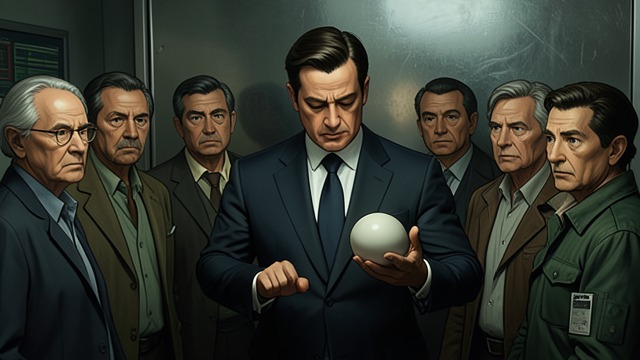
After Owen Bert Brennan died, James R. Hoffa had to choose a new International vice president. He selected Fitz over the loyal Bobby Holmes, reportedly after a coin toss.
The succession seed
The choice placed Fitz in a position from which he could later succeed Hoffa. Sheeran believed the alternative would have been more loyal, but the decision was made and its effects unfolded over years.
Acting Leadership
Running the Union
Hoffa imprisoned
When James R. Hoffa entered prison, Fitz assumed day-to-day leadership. Hoffa initially expected his associate to protect the organization and help secure his release.
Separate interests
As time passed, Fitz developed his own base of support and treated the presidency as more than a temporary role. Hoffa’s growing suspicion turned their old alliance into a contest for control.
The Restricted Release
A Presidency Secured
The pardon condition
Fitz supported the political steps that accompanied James R. Hoffa’s release from prison. The commutation barred Hoffa from union management until 1980.
A new balance
The restriction gave Fitz room to remain in control while Hoffa was outside prison. Hoffa and his supporters later regarded the condition as a betrayal engineered through political maneuvering.
Open Conflict
The Former Partner
Hoffa’s challenge
James R. Hoffa launched a legal challenge and announced plans to run against Fitz. He accused Fitz of weakness and of tolerating criminal influence.
Fitz under threat
The contest exposed Fitz’s vulnerabilities and made the possibility of Hoffa’s return frightening to those invested in the status quo. Sheeran’s account places Fitz among the people Hoffa threatened to punish.
A Presidency Without Closure
Power After Hoffa
The disappearance
Hoffa vanished before the 1976 contest. The unresolved case left Fitz’s role in the succession shadowed by accusations and suspicion.
The moral ambiguity
The book recounts claims about intimidation around union leadership but does not establish that Fitz ordered the killing. His rise and Hoffa’s disappearance remain connected by political consequence, not a proven direct command.
1961
1967–1971
December 1971
1973–1975
July 1975 and after
