Broadway Eddie’s
I Heard You Paint HousesBroadway Eddie’s is the small Philadelphia bar where a private celebration for Frank Sheeran doubled as a meeting about James R. Hoffa’s political future. With about sixty people gathered inside, the room’s apparent purpose and its actual business diverged: most guests were there to honor Sheeran, while Russell Bufalino and Angelo used the occasion to tell Hoffa that his effort to regain control of the Teamsters had lost important support.
Setting and Occasion
Broadway Eddie’s stood at the corner of Tenth and Christiansen. Sheeran described it as a small bar with a few tables, and noted that it remained open under a different name when he recounted the gathering. On this particular night, however, it was closed to the public. Entry required a special invitation, making the meeting private without making its political purpose obvious to the other guests.
Sheeran’s friends from downtown and upstate had assembled to show their appreciation for him. The arrangement could therefore look, to anyone watching, as though the whole party had been organized around Sheeran. That appearance was useful: the stated occasion was a celebration, but Bufalino had asked Sheeran to bring Hoffa to meet some of his “special friends.” When Sheeran asked Hoffa whether the gathering mattered to him, Hoffa answered, “Is it important to you?” Sheeran said, “Yes,” and Hoffa agreed to attend.
The Journey to the Bar
Hoffa had arrived in Philadelphia from Detroit that afternoon. Sheeran guessed that he had flown, but observed that Hoffa no longer had the private plane at his disposal; Fitz had it. Sheeran collected Hoffa at the Warwick Hotel and told him about a meeting he and Bufalino had had with Fat Tony Salerno, a development that pleased Hoffa.
The two then drove in Sheeran’s large Lincoln to New Jersey, where they visited John Greely at Local 676. Greely was a Hoffa supporter, and Hoffa wanted to speak with him about something. Sheeran waited outside while the meeting took place. Only afterward did they go to Broadway Eddie’s. The sequence placed union business before the private gathering, while the dinner itself brought Hoffa into a more consequential conversation with Bufalino and Angelo.
The Dinner and the Warning
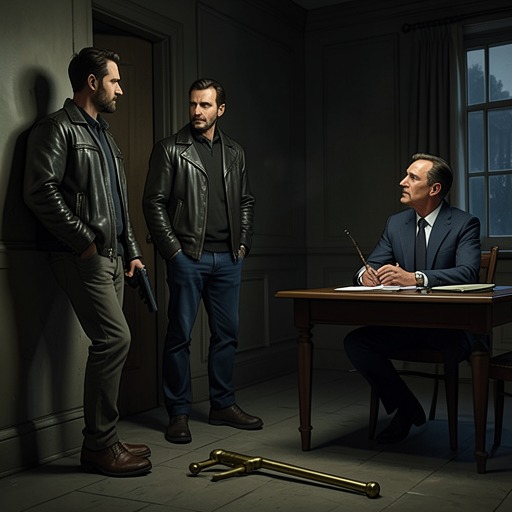
About sixty people were present, but only four sat together at a table to eat: Angelo, Bufalino, Hoffa, and Sheeran. The rest stood or gathered at the bar, where trays of food continued to arrive from the kitchen. Hoffa ate spaghetti and meatballs; Sheeran had ravioli. The four men sat in a row, close enough to speak, though a person wishing to join the conversation had to lean out slightly. Angelo sat at one end beside Bufalino, with Hoffa between Bufalino and Sheeran.
Angelo and Sheeran said nothing during the meal. The men knew Sheeran supported Hoffa: Hoffa stickers covered the Lincoln that had brought them there. There was no extended explanation of the meeting’s purpose. Sheeran imagined that Hoffa understood why he had been invited, but admitted he did not know for certain.
Bufalino asked Hoffa what office he intended to run for. Hoffa answered, “It’s my union.” Bufalino pointed out that Hoffa had only four years to wait and could run in 1980. Hoffa rejected the suggestion that money was the issue: “It’s not about the money,” he said. “I’m not letting Fitz have the union.” After a pause in which Bufalino ate silently, Hoffa added, “I’m going to take care of the people who’ve been fucking me.”
Bufalino then turned toward Hoffa and Sheeran. He said that people above him believed Hoffa was failing to show appreciation, and quietly added, “for Dallas.” Hoffa made no reply. Bufalino turned away to make small talk with Angelo, a gesture that signaled the meeting was over. The meal ended without a prolonged argument, but its message was unmistakable: Bufalino was speaking for a wider group, and that group opposed Hoffa’s return.
Aftermath and Significance
Sheeran understood the opposition as more than a dispute over whether Hoffa should run. In his account, Tony Pro had won the group’s support, and Hoffa’s manner of pursuing the presidency—not simply the candidacy itself—was costing him allies. The allusion to Dallas added a pointed charge of ingratitude, which Hoffa left unanswered. The bar thus became the setting where personal loyalty, union ambition, and the expectations of powerful associates collided in a conversation conducted over dinner.
As Hoffa and Sheeran prepared to leave, Bufalino pulled Sheeran aside and told him, “Some people have a serious problem with your friend. Talk to your friend. Tell him what it is.” Sheeran promised to try, while noting that Hoffa was difficult to talk to. Bufalino insisted that Hoffa had no choice. Broadway Eddie’s therefore marked not a resolution but a transfer of responsibility: Sheeran left the gathering charged with carrying its warning to the friend whose cause he had supported openly, stickers and all.