Forged Jimmy Hoffa letter
I Heard You Paint HousesThe Forged Jimmy Hoffa letter was a supposed 1974 letter from Jimmy Hoffa that Frank Sheeran handed to Charles Brandt while Brandt was interviewing him about Hoffa’s disappearance. Its exposure as a forgery unsettled the book’s publication, but its deeper significance lay in Sheeran’s explanation of why he had kept it: the document was a reserve means of repudiating the story he had entrusted to Brandt.
The Letter and Its Contents
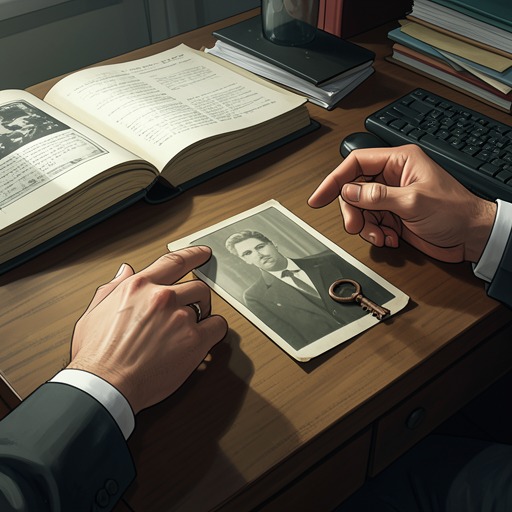
Two nights before a meeting arranged for Sheeran with Fox News correspondent Eric Shawn, Brandt stayed overnight at Sheeran’s apartment. Sheeran handed him a typewritten letter purportedly signed by Jimmy Hoffa after Frank Sheeran Appreciation Night in 1974. More than half of it, Brandt observed, consisted of material Sheeran had already told him, going back to their aborted interviews in 1991. The remainder could more readily be read as supporting the version of events Sheeran had promoted with his friend John Zeitts.
The letter therefore combined familiar claims with material that could reinforce a more self-protective account. Brandt told Sheeran that he would check whether it was authentic. At the time, Sheeran had already admitted to Brandt that he was the shooter in the Hoffa case, but the scheduled meeting would be the first occasion on which he would tell anyone else those words. The letter entered the process at a moment when Sheeran’s account was about to move beyond private interviews and into public view.
Authentication and Exposure
Brandt contacted the forensic laboratory of Henry Lee, which said it could assess Hoffa’s signature and seek latent Hoffa fingerprints on the letter. The examination would require Hoffa’s fingerprints and handwriting exemplars from the Federal Bureau of Investigation. Brandt hesitated to contact the agency: there was not yet a publisher or a completed book, and he feared that making inquiries could cause the story to leak before publication.
After a publisher came aboard, Brandt explained the earlier correspondence with Lee’s laboratory. The publisher had also published Lee’s book, and Brandt hoped that relationship would help the laboratory make the necessary requests itself. The publisher sent the letter to the lab. In the end, no fingerprints or handwriting exemplars were needed. Examination under a special light showed that the paper had been manufactured in 1994, not 1974; the purported signature had been inked over a faint photocopy of an authentic Hoffa signature.
The Publication Crisis
The finding made the letter a laughable forgery, but did not establish that Sheeran’s account of Hoffa’s killing was false. Brandt said the document was not central to the book and could easily be removed. The editor assigned to the manuscript also had no doubt that Sheeran had killed Hoffa. Even so, the publisher cancelled the book deal.
Brandt was angry with Sheeran. His former editor cautioned him that he had, in effect, escaped lightly given what Sheeran had done to other friends, and warned him not to give Sheeran his phone number. The episode made the document consequential beyond its evidentiary value: a letter that could be taken out of the manuscript had nevertheless disrupted the book’s route to publication.
Sheeran’s Intended Safeguard
When Brandt confronted him after the forgery was uncovered, Sheeran conceded that the letter had provided insurance—a way out if he ever needed one. He described it as a loose thread he could unravel if the heat became too much. If a grand jury were convened, he could expose the letter and thereby undermine everything else in the book.
That explanation recasts the document from a supposed piece of historical correspondence into a contingency built around the risk of disclosure. The letter’s copied signature and anachronistic paper made its claims vulnerable to verification; its intended usefulness, however, depended on its capacity to cast suspicion over the larger account. Its exposure removed that particular escape route, while leaving the central question of Sheeran’s account distinct from the proven falsity of the letter.