Joe Biden
I Heard You Paint HousesJoe Biden’s appearance in the book centers on his 1972 campaign for the United States Senate in Delaware. He was then a county councilman seeking support from Teamsters Local 326, whose leader, Frank Sheeran, had already decided that Biden was the stronger candidate for labor. The account gives Biden a consequential but carefully bounded role: he made a favorable impression on union members, while a picket-line maneuver disrupted newspaper advertisements for his opponent. It does not establish that Biden knew the maneuver had been organized on his behalf.
A Candidate in a Union Setting
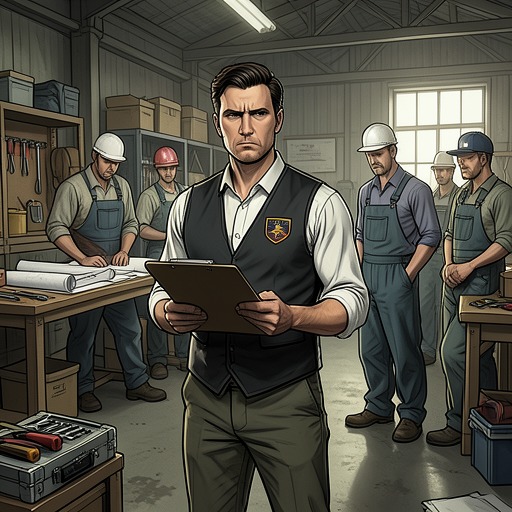
The campaign encounter took place at the Local 326 office at 109 East Front Street, in what Sheeran recalled as a rundown neighborhood near the railroad station. The union’s local reach was substantial: it had secured its own charter through Jimmy Hoffa, and Sheeran later described handling members’ grievances and contract enforcement. In 1972, the office became a point of contact between a Senate candidate and organized labor’s rank and file.
The wider union setting carried both political weight and contradiction. Hoffa had built national power through organizing and bargaining, including the 1963 National Master Freight Agreement. The agreement brought a 45-cent hourly raise and improved pensions; it also put Sheeran on the union’s National Negotiating Committee. At the same time, the pension fund Hoffa established in 1955 had become a source of loans to La Cosa Nostra, giving the union’s financial influence a darker dimension. Those details do not show that Biden was involved in the union’s dealings. They clarify the institution whose members he addressed: a labor organization with resources and political influence, but also a history entangled with organized crime.
Meeting the Local’s Members
Earlier in the year, incumbent Caleb Boggs asked to address Local 326’s membership. Sheeran took the request to the executive board, which declined it. Sheeran described Boggs as personable and widely liked, with a long record in elected office, but considered him too favorable to corporations and too hostile to labor. The refusal reflected the local leadership’s assessment of Boggs’s politics, not a lack of recognition of his public standing.
When Biden asked to speak, Sheeran likewise consulted the executive board. No one objected, so the local invited him. Sheeran remembered Biden as young beside Boggs, but said he proved to be an effective speaker. Biden delivered a speech in favor of labor, took questions from the floor, and handled them with a confidence Sheeran associated with someone much older. He also promised that the Teamsters would be able to reach him. Sheeran’s account says that this meeting put him firmly in Biden’s corner before the later approach about the newspaper inserts.
The Informational Picket Line
A little before Election Day, a prominent lawyer Sheeran knew came to the office with a man who worked inside Wilmington’s two daily newspapers, the Morning News and the Evening Journal. The papers, published by the same company, were effectively the state’s only daily newspapers. The lawyer explained that Boggs had prepared advertising inserts for the final week of the campaign. The inserts challenged Biden’s description of Boggs’s voting record by setting Biden’s claims against Boggs’s actual votes. The lawyer wanted the newspapers kept from being delivered.
The newspaper employee proposed an informational picket line but lacked people he trusted to staff it. Sheeran agreed to hire men for the line, describing them as people others would not interfere with. He also promised that truck drivers would not cross it. His account explains that this kind of line was used to press a labor claim or draw attention to alleged unfairness; because the union involved was not yet recognized, its signs could not claim that the workers were on strike under National Labor Relations Board rules.
The line went up. The newspapers were printed, but the inserts and papers remained in the warehouse rather than reaching readers. When the company called, asking for the men to return to work, Sheeran said the Teamsters were honoring the picket line. A company representative also asked whether Sheeran had anything to do with a railroad car being blown up. It contained supplies intended for the newspaper printing process, though Sheeran said he did not know whether they were paper, ink, or something else. No one was hurt. Sheeran denied responsibility in the exchange by telling the caller to hire guards if the company wanted protection for its railroad cars; the account does not identify who caused the explosion.
Election, Consequences, and Limits of the Account
The day after the election, the picket line came down, newspaper delivery returned to normal, and Delaware had a new senator. Sheeran later acknowledged that people had written about the maneuver and that he was routinely mentioned. Republicans, in particular, argued that delivery of Boggs’s inserts might have damaged Biden’s prospects, especially because they would have arrived during the final week, leaving little time to answer them. Sheeran did not claim to know whether the disruption decided the election.
He was equally explicit about Biden’s knowledge: he could not tell whether Biden knew that the picket line had been arranged to help his campaign, and Biden never indicated that he did. The account therefore distinguishes a concrete act by Sheeran and the local union from a proposed connection to the candidate. Its evidence supports Biden’s visit, his favorable reception, and the later obstruction of the inserts; it does not establish that he requested, approved, or even knew about that intervention. Sheeran’s final judgment was that Biden kept his promise to the membership: after becoming a senator, he remained accessible to the Teamsters and willing to listen.
The episode also sits against a broader political contrast. The national Teamsters executive board formally endorsed Richard Nixon for reelection in 1972, while Sheeran’s local account records his own preference for Biden. The book does not describe the local meeting as a formal endorsement by the national union. Instead, it shows how local labor relationships could shape a campaign encounter and, through the picket line, affect the circulation of political messages. Biden’s role in this episode rests on what he said to the members and on the limits of what Sheeran could say about his knowledge of the campaign maneuver.