Sheeran's final interview recording
I Heard You Paint HousesSheeran's final interview recording is the last recorded testimony of Frank Sheeran, made during his final illness and intended as a public affirmation of the account in I Heard You Paint Houses. It mattered both as a deliberate confirmation—Sheeran said he stood behind what the book said about Jimmy Hoffa—and as an accidental source of new, ambiguous information: a remark about “a real estater” involved with the Detroit house. The recordings preserve not only what Sheeran chose to confirm, but also his hesitations, the interruptions in the recording process, and the boundary he ultimately set against further questioning.
From interviews to a final affirmation
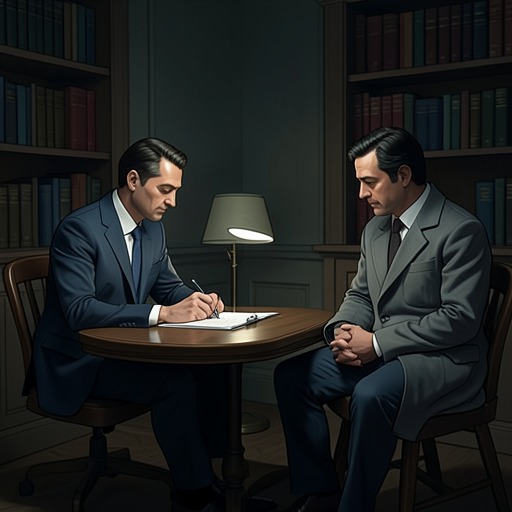
The recording came at the end of a long interview process with Charles Brandt. Brandt first interviewed Sheeran in 1991, after helping secure his early release from jail on medical grounds. Sheeran soon ended that session, having disclosed more than he was comfortable with. Following a meeting with a priest in 1999, he contacted Brandt again and agreed to be questioned; the interviews then continued for four years. Sheeran read and approved each chapter as the book was written, and later reread and approved the complete manuscript. The final recording therefore did not stand alone: it followed years of questioning, an earlier body of recorded material, and Sheeran’s review of the book’s account.
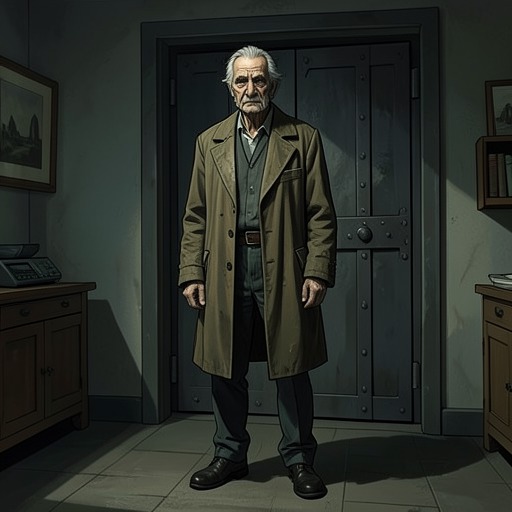
In the weeks before the recording, Sheeran’s health had sharply worsened. He was repeatedly hospitalized, in severe pain, and bedridden. After speaking with F. Emmett Fitzpatrick, he decided to go on videotape and stand behind the book, including its account of what happened to Hoffa on July 30, 1975. Sheeran understood that this meant publicly endorsing the material, and Brandt told him that he would only need to back up what the book said. Sheeran agreed, though he also remarked that his poor health meant he could not be made to travel easily and that he did not expect a prosecutor to indict him.
The camera, the book, and the confirmation
When Brandt turned on the video camera, Sheeran initially appeared hesitant and withdrawn. Brandt asked whether he was hesitating and offered to stop if he did not want to proceed. Sheeran denied hesitating, said that he had to work himself into it, and asked for a mirror to check his appearance. The small gesture belongs to a recording framed as a “moment of truth”: an affirmation made by a seriously ill man who was still conscious of how he would appear before the camera.
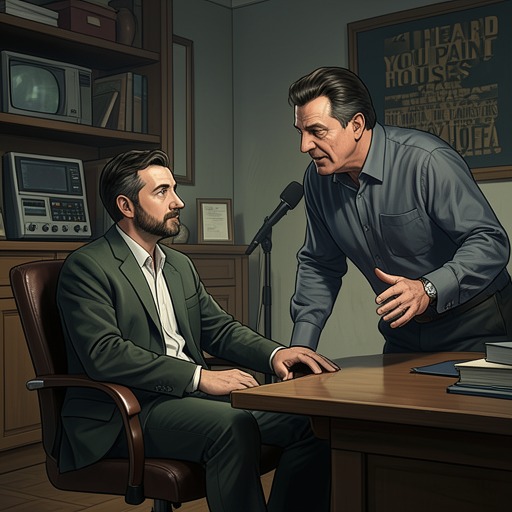
The exchange was direct. Brandt gave Sheeran a galley copy of the book to hold and asked whether the statements about Hoffa were things Sheeran had told him. Sheeran agreed, then confirmed that he stood behind what was written. When Brandt tried to draw him into describing Hoffa, Sheeran faltered and redirected attention away from further detail, telling him, “Let the book speak for itself.” The camera thus recorded a confirmation, but not an open-ended retelling. Sheeran endorsed the published account while limiting what he would add in his own words.
The session was not captured as one uninterrupted video. The camera battery died, and Brandt did not notice immediately; he later plugged it in. At Sheeran’s request, or to make him more comfortable, Brandt also stopped the video from time to time and turned on an audio recorder. Both audio and video nevertheless yielded substantial material. Their imperfect, interrupted form is part of the evidence: the surviving record contains a mixture of formal on-camera affirmation and less formal exchanges, rather than a single seamless statement.
A new clue and a refusal to elaborate
Among the most consequential moments came while Brandt and Sheeran looked at a photograph of the Detroit house. Sheeran began speaking about the people who had originally been there, then said they had not been involved. When Brandt asked whether the house had been lent to the people involved, Sheeran did not answer directly; instead he remarked that he did not have to worry about being indicted. Brandt understood this guarded response as a possible sign that Sheeran was deciding whether to reveal something new, but that interpretation remained Brandt’s, not an explicit explanation from Sheeran.
Later, when Brandt pointed to the house where Hoffa had died, Sheeran made a mumbled remark that seemed to refer to a man connected with the house. An audio expert later heard the words as something like “…that’s the house that the guy did his letters to.” The recording was difficult to interpret: Sheeran had lost considerable weight, and his old dentures no longer fit. Brandt could not determine whether Sheeran meant that the man had lent the house, and even the sound of the word remained uncertain.
The disclosure became clearer, though not complete, when Sheeran said, “There was a real estater —” He added that the people who owned the house lived there at the time and had never been questioned. Brandt pressed him about the real-estate intermediary. Sheeran mumbled words Brandt could not make out, then drew a firm line: “No. Well, you got enough, Charles.” He followed with, “Be satisfied, Charles,” and, “You got enough. Don’t be probing.” The recording preserves the existence of the disclosure and Sheeran’s refusal to explain it; it does not identify the intermediary or establish precisely what that person did.
Record, limits, and aftermath
Brandt later considered possible explanations for the intermediary’s presence, including that the house had been rented or offered for sale and that an agent might have had a key. He also proposed that such an arrangement could help explain why people involved in the plot felt able to park in the driveway. These were possibilities Brandt raised, not facts established by Sheeran’s recorded words. The distinction is central to the recording’s value: it adds a lead while leaving its meaning unresolved.
Brandt described the video as a formality, an affirmation of a confession that already existed on audiotape. Yet the session yielded more than the expected endorsement. Its clearest confirmation was that Sheeran accepted responsibility for the account already in the book; its most intriguing addition was the fragment about the intermediary. When Brandt sought more, Sheeran declined. The recording therefore bears two marks at once: the effort to put a final public signature to his story, and the silence that kept one detail beyond reach.
The timing made that silence final. Sheeran died on December 14, 2003, about six weeks after the hospital interview. In his last days he continued to receive visits from Brandt and his family, but he became increasingly withdrawn and stopped eating. Brandt later recalled that the next day they prayed together, after which Sheeran stopped eating. The “real estater” remained, in Brandt’s words, an intriguing slip rather than a developed account. The recording is consequently both an ending to the interview process and an incomplete record: it documents Sheeran’s final affirmation, while preserving a new question that his death left unanswered.