Teamsters Local 107
I Heard You Paint HousesTeamsters Local 107, based in Philadelphia, was the fourth-largest local in the International Brotherhood of Teamsters and a persistent center of factional conflict. Its internal battles were not merely local contests for office: they tested James R. Hoffa’s campaign for a unified national union, while exposing the corruption, patronage, and violence that could accompany control of a powerful local. In Frank Sheeran’s account, Philadelphia became a place where national labor strategy and street-level muscle repeatedly met.
Size, Leadership, and Internal Divisions
The local’s scale made it difficult to manage, and its affairs drew the attention of the United States Senate, which investigated it for corruption. Raymond Cohen, its president, was often under pressure. Sheeran depicts Cohen as publicly supportive of Hoffa but resistant to him behind the scenes, particularly when Hoffa sought to make the union’s bargaining more centralized. Cohen also complained to Hoffa about Sheeran, who regularly moved against him at meetings by proposing that the local remove privileges such as his car or expense account.
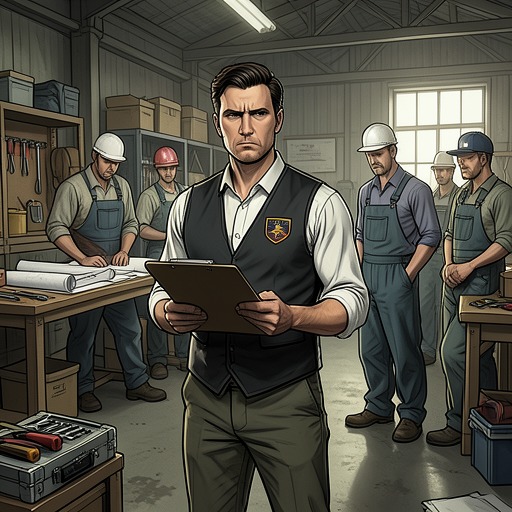
The local’s conflicts involved more than a simple division between the president and his opponents. Joey McGreal had a separate group of supporters and, in Sheeran’s telling, sought to take control of the local and its jobs. Another opposition group called itself the Voice of Teamsters Local 107. The Betterment Committee represented a further faction: Sheeran characterized it as less radical than the Voice and made up less of muscle than of people he considered more intelligent. The factions did not share a single purpose, but their competition made Local 107 difficult to govern and gave employers an opening to resist union-wide demands.
Elections and the National Contract Campaign
The conflict over Local 107 mattered to Hoffa because he was pursuing the National Master Freight Agreement, intended to establish common wages and benefits for Teamsters across the country. Under a single agreement, the trucking companies would negotiate with a national committee rather than bargain separately with individual locals. That arrangement, Hoffa argued, would make it harder for employers to divide workers and would constrain local officials who benefited from separate, under-the-table arrangements. Philadelphia was a particularly difficult obstacle: Cohen resisted surrendering local power, rebel groups remained active, and trucking companies took advantage of the divisions.
The election struggle showed how the national campaign relied on control of the local. In an earlier contest, the Voice lost by only 600 votes in a local of 11,000 members; the result was set aside after violence marked the election. Hoffa then spent fourteen weeks in Philadelphia, staying at the Warwick Hotel and campaigning against the Voice. Rather than rely on violence in that contest, he argued to members that his plans would bring better pay and pensions. In the April 1963 election, Hoffa’s side defeated the Voice again, bringing the large local back into line. Hoffa promised to let past disputes go, while Cohen’s dependence on Hoffa’s help strengthened Hoffa’s position in the coming negotiations.
The national agreement had concrete consequences for Local 107’s members. Sheeran recalled that the first contract, completed in 1963, raised wages by 45 cents an hour and increased pension benefits. Hoffa appointed him to the union’s National Negotiating Committee after the agreement was signed. The contract was therefore both a material gain and a consolidation of authority: national bargaining offered more uniform terms, while making solidarity among locals essential to the union’s ability to negotiate.
Organizing, Restructuring, and Philadelphia Violence
Local 107 also carried out ordinary organizing and grievance work amid its factional disputes. Sheeran described efforts to organize the Horn and Hardart restaurant chain after the union had organized the Linton Restaurants. He said the campaign struggled to persuade workers, many of them suburban housewives who opposed unionization. His account also portrays the local as a place where labor activity could take an intimidating form: he recounts releasing white mice inside a restaurant during the organizing effort, an episode that ended with him being caught and apologizing.
Hoffa’s response to the local’s continuing problems included restructuring it. About a year before Hoffa entered prison, he divided Local 107 into three locals, a change intended to reduce violence. He gave Sheeran the charter for a new local in Wilmington, Delaware, and made him its acting president pending an election. Sheeran says Hoffa first sent him back to Philadelphia to dismiss five disruptive organizers whom the Local 107 president, Mike Hession, had been unwilling to fire. The dismissals increased tensions rather than ending the contest for control.
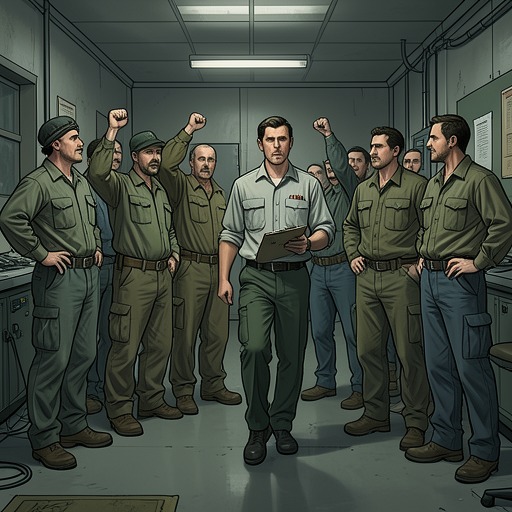
In September 1967, McGreal’s faction held a rally outside the Local 107 hall on Spring Garden Street. Sheeran estimated that about 3,000 people from the competing factions gathered there, with shouting, fistfights, and mounted police trying to manage the crowd. He says Frank Fitzsimmons called him late that night and instructed him to get the situation under control the next morning. Sheeran sought support from Angelo Bruno and arranged for men to guard the hall and the street. As McGreal’s supporters and the local’s loyalists approached one another, gunfire broke out. Sheeran recalled that the first shot passed close to him and that witnesses later said he had signaled for the shooting; he disputed the certainty of those accusations, saying the confusion made it impossible to know who had fired at whom.
Joseph Ciancaglini was shot in the abdomen. Sheeran says he carried him to a car, took him to a doctor, and then left him at St. Agnes Hospital. Sheeran went to Delaware, later returned to Philadelphia to surrender, and was arrested in connection with the incident. Ciancaglini and two other arrested men were tried within six weeks and found not guilty. Sheeran remained in jail for four months, lost the opportunity to campaign in his Local 326 election, and said Fitzsimmons did not help with his expenses or his legal predicament. The Local 107 hall later burned to the ground; the account says the participants suspected the Voice or McGreal’s faction but never established who was responsible. Hession stepped down as president soon afterward.
Local 107 in the Hoffa-Era Union
The Philadelphia local’s story links shop-floor representation and union elections to pension benefits, national bargaining, and the use of force. Its members stood to gain from standardized wages and retirement provisions, but the local’s internal divisions repeatedly threatened the unified position Hoffa needed to negotiate. The same structure that made Local 107 influential also made its offices and organizing machinery objects of intense competition.
The narrative also places the local within a broader system of authority: national leaders sought to direct local contests, while local factions pursued their own power and interests. The disputed elections, the division of the local into smaller units, and the 1967 hall confrontation show that central control could secure a bargaining victory without dissolving local rivalries. Local 107 was brought back into line for the national contract campaign, yet its factional conflict continued to surface in elections, dismissals, violence, and leadership change.