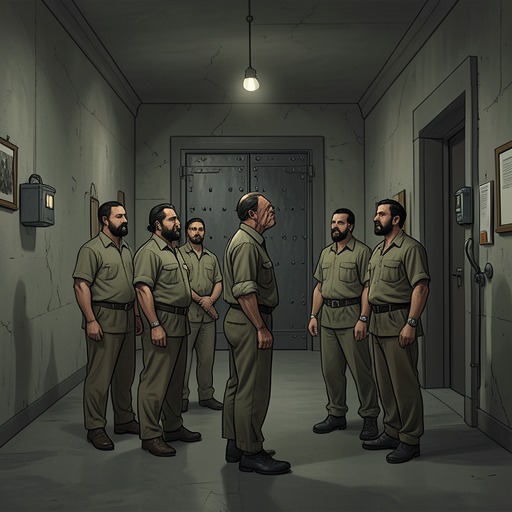
The mob’s “Stand-up” loyalty code
I Heard You Paint HousesThe mob’s “Stand-up” loyalty code, as Frank Sheeran describes it, made keeping faith with associates a measure of character—and sometimes a more important one than winning in court. Its force appears in the contrast between ordinary favors, paid work, and a federal indictment: Sheeran says he would not name the people implicated alongside him, and that this refusal brought him esteem even after the case against him was dismissed. In his telling, loyalty was not separate from criminal life. It was one of the means by which trust, favors, and protection circulated through it.
Meaning and Practice
For Sheeran, being stand-up meant being dependable to people who had shown him respect. He says he handled matters for Russell Bufalino without payment, not as a hired killer but as someone who ran an errand or did a favor, with the expectation that a favor might be returned if he needed one. The exchange was informal, but it had a clear logic: service created obligation, and reliability made a person worth trusting. His later work for Jimmy Hoffa followed a similar pattern. After Russell Bufalino introduced them, Hoffa put Sheeran to work for the International Brotherhood of Teamsters; Sheeran also handled matters for Hoffa on the side.
The code was thus presented as more than silence under questioning. It joined personal loyalty to a working network of favors and reciprocal assistance. Sheeran’s account distinguishes this from paid violence: he says he was not a hitman for hire, but a man who did jobs out of respect and could expect help in return. That distinction explains how he understood his own standing, but it does not make the errands innocent. The same trust that made him useful to friends could also make him useful within organized crime.
The Food Fair Case
The clearest test came after Sheeran’s years driving for Food Fair. On November 5, 1956, the company’s case against him for stealing in interstate commerce resulted in an indictment. His lawyer advised him to plead and turn in the others involved. Sheeran refused. As he recounts it, those people were also the government’s witnesses against him; if they were called to testify, they would have to account for their own part in the missing goods. He put word out that he would not inform and urged the witnesses to keep quiet as well.
At the same time, Sheeran secretly entered the office and took records documenting shortages beyond the meat he had delivered. At trial, the government’s witnesses could not pin the thefts on him. His lawyer introduced the company records, while the government objected that Sheeran had stolen them. Sheeran claimed that an anonymous person had taken the records and left them in his mailbox. The judge dismissed the case and criticized Food Fair’s position. The episode binds loyalty to self-defense: refusing to name associates was one part of his strategy, while the records offered a separate way to undermine the prosecution.
Food Fair then offered him $25,000 through his lawyer if he would resign. Sheeran declined, saying he could not afford the cut in pay. The outcome was not simply a story of a man sacrificing his livelihood to protect others. He had defended himself, kept his job, and avoided naming his associates; the account presents these choices together, rather than separating principle from advantage.
Reputation and Reward
Sheeran says the response among the men downtown revealed what counted most. After the case, he celebrated there and saw Skinny Razor and others impressed that he had not informed. In his recollection, their admiration for not ratting exceeded their interest in the fact that he had won. The difference matters: the court’s dismissal cleared him in that case, but the social judgment was about whether he could be trusted when pressure came.
That reputation became practical. Sheeran says people repeatedly cited his conduct in the Food Fair case as proof that he was stand-up. They began calling him Cheech, short for Francesco, and inviting him to the Messina Club at Tenth and Tasker, a members-only gathering place where they played cards and spent time away from the public. The move from an indictment to a nickname and a seat inside the club shows how loyalty could be rewarded with belonging. Trust opened doors that a legal victory alone would not have opened.
Loyalty and Its Limits
The book places this code inside a much larger, divided portrait of Sheeran: a father and grandfather, a former soldier, a Teamsters official, and a convicted felon described as a mob enforcer and a legendary stand-up guy. It also notes that Rudy Giuliani alleged in a civil RICO suit that Sheeran was acting in concert with the ruling commission of La Cosa Nostra. That allegation is not proof of every favor Sheeran recounts, but it sharpens the tension in the concept: conduct celebrated as loyalty among associates could also sustain a criminal organization.
Sheeran’s own account makes the code legible through its consequences. He gains work, protection, and acceptance by proving that he will not expose others; in turn, he remains embedded in relationships whose errands and obligations are not merely social. The story does not equate silence with virtue in any universal sense. It shows a community treating silence as evidence of character, even when that standard conflicts with the demands of law. The code’s moral power—and its danger—lies in the same promise: people who trust one another will not be left alone when the consequences arrive.