the Docile Don
I Heard You Paint HousesThe Docile Don (Angelo Bruno) is presented as a low-key Philadelphia crime boss whose quiet manner concealed a wide reach. In Frank Sheeran’s recollections, Bruno is at once Russell Bufalino’s closest friend, the silent partner behind downtown businesses, and a man whose approval could make a newcomer feel welcome—or whose summons could turn a familiar restaurant into a place of reckoning. His killing in 1980 marks the beginning of anarchy within the Philadelphia crime family he had led.
Position and Reputation
Bruno headed the Philadelphia crime family and was known as the Docile Don for the restrained style with which he ran it. He and Bufalino shared an old-fashioned approach to leadership; the book notes that their families were not permitted to deal in drugs. Bruno’s power was not limited to formal command. Sheeran describes him as Bufalino’s close friend and as a silent partner in nearly every kind of business downtown, including Villa d’Roma, where the two men were often found together.
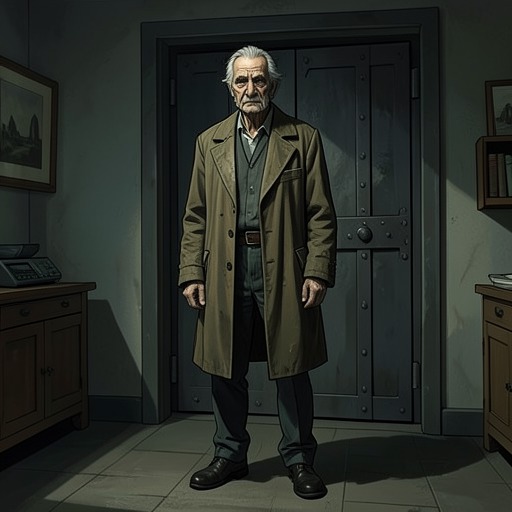
Sheeran first understood Bruno’s place in that network through an unexpected introduction. At Villa d’Roma, he recognized an older man who had once helped get his horse started at a truck stop. The man invited him to join him and his companion, who proved to be Bruno. Sheeran later learned that Bruno was not only Skinny Razor’s boss but the boss of Philadelphia. The encounter connected Sheeran’s casual social world downtown to a much larger structure of authority.
A Social Bond with Sheeran and Bufalino
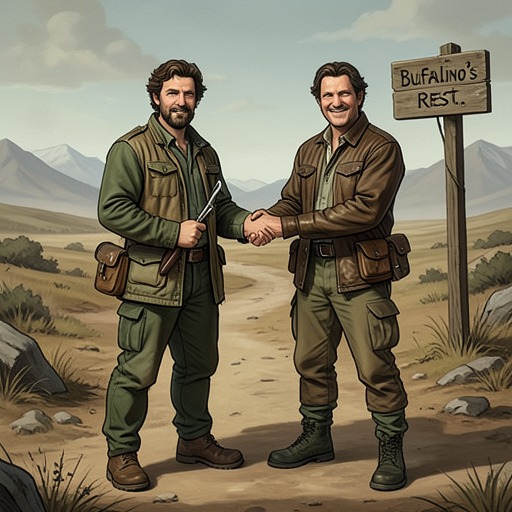
The early relationship was conducted through ordinary gestures. Sheeran brought Bufalino prosciutto bread and, later, sausages from Roselli’s; Bufalino welcomed him to sit, drink red wine, and share bread. He enjoyed that Sheeran had served in Catania, where Bufalino was born, and the two spoke a little Italian. Bufalino also bought Sheeran’s football lottery tickets. Sheeran describes these meetings as social, but their repetition made him a familiar presence beside two powerful men.
Bruno was part of that regular company. Sheeran recalls repeatedly seeing him with Bufalino around Philadelphia, and on Wednesday evenings Bruno and his wife, Carrie, joined Bufalino and his wife for dinner with Sheeran and Mary Leddy Sheeran at Villa d’Roma. The Wednesday custom—when married men went out with their wives rather than their mistresses—gave the dinners the appearance of ordinary sociability. For Sheeran, however, the relationship also carried practical weight: he was seen with Bufalino and Bruno, and that association helped establish him in the city’s underworld circles.
Authority and the Summons
The ease of the dinners did not mean that Sheeran stood outside the men’s authority. In one tense episode, a man told him, “I like you, Cheech. Angelo likes you, but you got some explaining to do.” A blue Ford like Sheeran’s, with Pennsylvania plates, had been seen, and a very large man had been seen getting out. The warning ended with an instruction: Bruno wanted to see him immediately.
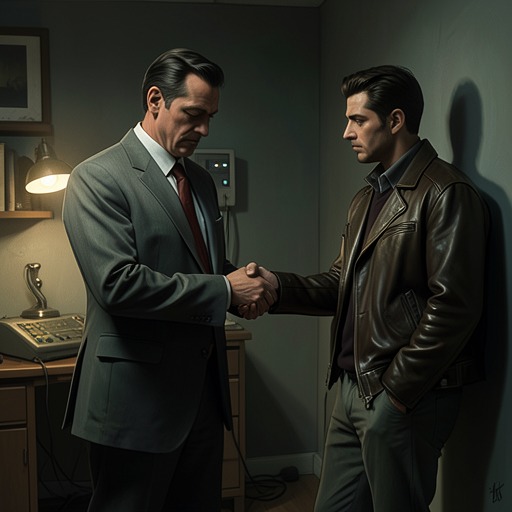
Sheeran went to Villa d’Roma and found Bruno seated in the corner with Bufalino. The restaurant was otherwise empty. As the bartender came around from behind the bar, he locked the door and put up a closed sign. The scene sharply reverses the restaurant’s earlier function as a place of wine, bread, and friendly conversation: its familiar setting now emphasizes how exposed Sheeran is before men he had treated as friends. Bruno pointed out a chair and began, “All right, let’s have it.” Sheeran’s answer was that he had intended to put Cadillac out of commission. The account establishes Bruno as the authority before whom Sheeran had to explain himself, though it does not specify further details of the incident in these passages.
The Wider Network and the Hoffa Disappearance
Bruno’s connection to Bufalino placed him within a network extending well beyond Philadelphia. Sheeran says he drove Bufalino to meetings at Joe Sonken’s Gold Coast Lounge in Hollywood, Florida, where people from around the country gathered. Bufalino met there with Trafficante and Marcello, and Sheeran met Trafficante’s lawyer, Frank Ragano. These meetings show the reach of the circle in which Bruno’s closest ally operated; they do not, by themselves, establish Bruno’s presence at those gatherings.
The book later makes the closeness of the Bufalino–Sheeran alliance a central clue in the disappearance of Jimmy Hoffa. Hoffa had written “Russ & Frank” on a yellow pad kept beside his phone. His family feared that only someone close and trusted could have approached the cautious Hoffa, and the two men named on the pad became leading suspects. Bruno is not named on the pad or in the early seven-man list of suspects described in the account. His relevance is instead part of the network that shaped Sheeran’s rise: the boss who welcomed him into the Philadelphia circle was also Bufalino’s closest friend.
Murder and Aftermath
Bruno was killed by greedy underlings in 1980. The book contrasts his fate and his family’s later disorder with Bufalino’s comparatively stable rule: after Bruno’s death, the Philadelphia crime family descended into what the account calls lasting anarchy. His successor, Philip “Chicken Man” Testa, was blown up a year after taking over. Testa’s successor, Nicodemus “Little Nicky” Scarfo, received multiple life sentences for murder after his underboss and nephew betrayed him; the next boss, John Stanfa, received five consecutive life sentences. Stanfa sent Sheeran a Christmas card each year while Sheeran was in his Leavenworth cell. Later, Ralph Natale became the first boss of the family to inform on and testify against his own men. Sheeran’s description of Philadelphia as “the city of rats” gives the succession a final, bitter note: the family Bruno had led was transformed by murder, betrayal, and informants.