
Thomas’s Descent into a Prophetic World
I Know This Much Is TrueThomas’s early sensitivity develops into psychosis, religious and political delusions, a self-mutilating act, and an unstable institutional life that ends in drowning.
increasing Bearing strength in each event
 decreasing
Bearing strength in each eventdecreasingThe Sensitive Twin
The Sensitive Twin
A vulnerable child
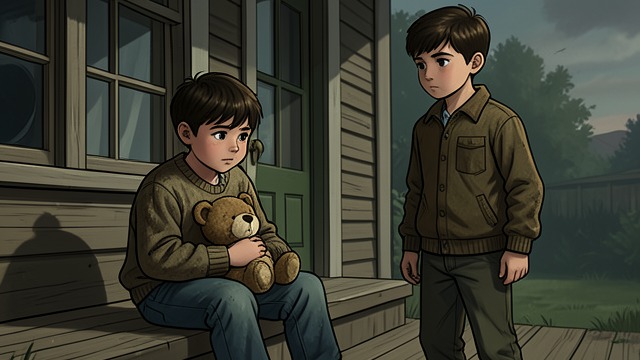
Thomas was the more cautious twin, a boy who worried about school, feared punishment, and sought reassurance from Ma. His sensitivity made him a target for Ray’s attempts to toughen the boys, including humiliating punishments and threats to tape Thomas’s hands when he chewed his clothing.
Dominick often saw Thomas as weak and mocked his dependence, even while Thomas worried about his brother’s safety. That early tenderness would later be obscured by illness, but it remained visible in moments when Thomas worried about Dominick or sought comfort from him.
Early signs
By adolescence and college, Thomas struggled to sleep, concentrate, and manage ordinary demands. He became increasingly isolated and anxious, but the family initially treated many warning signs as nerves, homesickness, or personal failure rather than the beginning of severe mental illness.
The First Collapse
The First Collapse
College pressure
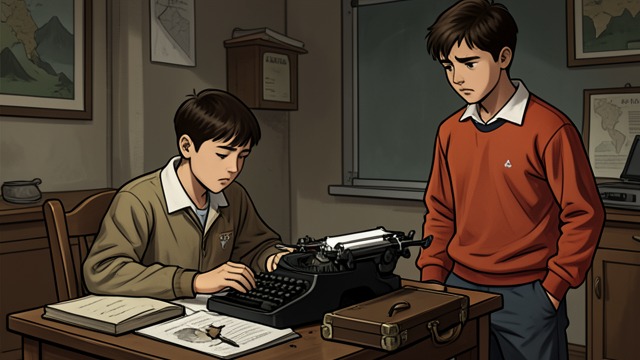
At the University of Connecticut, Thomas fell behind academically, became preoccupied with his difficulties, and destroyed the case of the brothers’ shared typewriter after convincing himself that Dominick had hidden its key. Dominick helped him submit a paper but did not understand how serious the change in Thomas’s thinking had become.
After returning to college, Thomas’s relationship with Angie ended amid increasingly bizarre behavior and sexualized religious fixations. He withdrew from school, lost his student deferment, and grew more isolated at home while Ma worried that something was wrong.
Delusions take hold
In March 1970, Thomas told Dominick that their dentist and the Manson family were part of a conspiracy involving devices in his fillings. He described competing voices, including a religious voice urging him to memorize the Bible and other voices commanding horrific acts.
The disclosure made clear that Thomas was not simply failing to cope with school. His beliefs and perceptions had become profoundly altered, and his first psychiatric hospitalization began a long cycle of treatment, medication changes, and returns to the state hospital.
Temporary Stability and Relapse
Temporary Stability and Relapse
A fragile recovery
Haldol helped Thomas improve enough to live in a group home, hold a maintenance job at McDonald’s, and form a relationship with Nadine. For a time, he seemed to have a more independent life, and Dominick hoped that the stability might last.
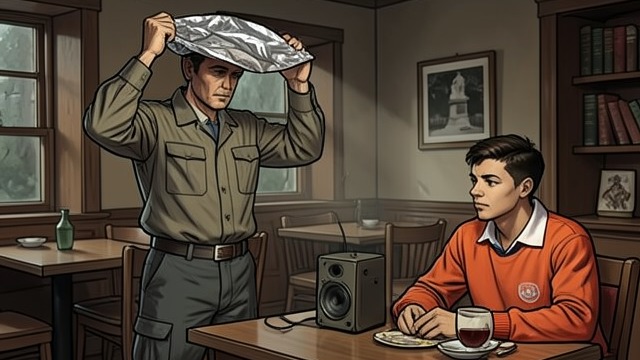
Thomas stopped taking his medication after Nadine encouraged him to rely on faith instead. His paranoia returned: he wore aluminum foil to filter messages and believed coworkers were communicating with him through the restaurant’s equipment.
A public breakdown
At McDonald’s, Thomas damaged the drive-through speaker and Ronald McDonald figure, then was hospitalized again. Later, amid the Persian Gulf crisis, he came to believe he had been chosen to prevent war and that sacrificing his right hand would awaken the nation.
On October 12, 1990, he cut off his hand at the Three Rivers Public Library. He saw the act not as suicide but as a divinely commanded sacrifice, and his refusal of reattachment reflected his belief that he must retain control of what he had done.
Confinement and Failed Release
Confinement and Failed Release
The transfer to Hatch
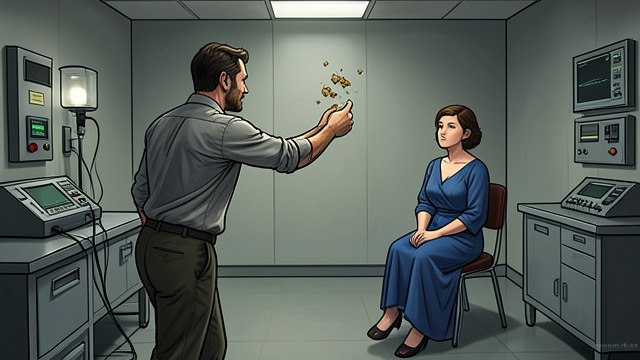
After surgery, Thomas was committed for observation and unexpectedly transferred from Settle to Hatch Forensic Institute. He experienced the maximum-security environment as threatening: surveillance cameras, restrictions, and separation from familiar staff intensified his suspicions.
Thomas’s paranoid beliefs persisted even as medication reduced some agitation. He believed he was being watched, that his mail was intercepted, and that powerful enemies were trying to stop his mission. During a dining-room disturbance, he threw food at a camera and was restrained.
A hearing that confirms his fears
Thomas assaulted Lisa Sheffer during an agitated episode shortly before his review hearing. At the hearing, he continued to describe a divine mission and said he would obey Jesus even if commanded to kill. The Psychiatric Security Review Board judged him dangerous to himself and others and committed him to Hatch for a year.
His release months later was abrupt and poorly prepared. Thomas left Hatch for Hope House while still frightened, delusional, and uncertain about the world outside the institution.
The Final Flight

The Final Flight
A brief return to freedom
Thomas left Hatch after the review decision changed, but the release did not bring recovery or lasting security. Dominick hoped to help him adjust, while Thomas returned to familiar religious language and remained vulnerable to confusion and fear.
At McDonald’s, Thomas asked for a Happy Meal and coffee, then insisted he had worked at that location. His shifting recollections and continuing delusions showed how little the administrative decision had changed his condition.
Drowning at the Falls
After the brothers separated, Thomas disappeared from Hope House during the night. He was later found drowned in the Sachem River, near the waterfall that had long figured in his life and in his family’s memories.
Dominick did not witness Thomas’s final moments, but the death intensified his guilt and grief. He had tried to protect his twin and had also struggled against the lifelong burden of that role; Thomas’s drowning left both truths unresolved.
childhood in the Birdsey household
1968 through March 1970
the early 1980s through October 1990
October 1990 through April 1991
the days after Thomas’s release from Hatch
