
Myth, Faith, and the Need for Order
I Know This Much Is TrueFrom Thomas’s prophetic delusions to the family’s inherited religious practices, the novel explores how stories of sacred purpose help people confront a chaotic world and can also endanger them.
increasing Bearing strength in each event
 decreasing
Bearing strength in each eventdecreasingA Sacrifice for the World
A Sacrifice for the World
Scripture as command
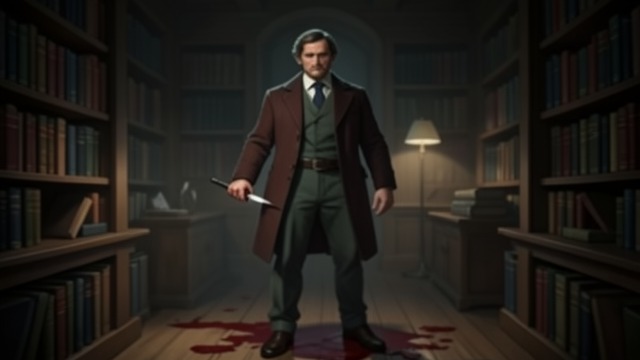
Thomas interprets the biblical injunction to remove an offending body part as a direct command. In the library, he cuts off his right hand, believing that the bodily sacrifice will awaken the country and prevent war.
Private suffering made public
The act is both a symptom of his illness and a deliberate statement in his own understanding. He does not intend to attack anyone else; he wants the public to hear a message about greed, violence, and the approaching conflict in the Persian Gulf.
The cost of certainty
Thomas’s certainty gives his action a coherent meaning for him, but it also makes him dangerously unable to reconsider the command. The novel asks readers to hold together his moral concern and the catastrophic consequences of a delusion that has become absolute.
The Prophet in the News
The Prophet in the News
A mission survives confinement
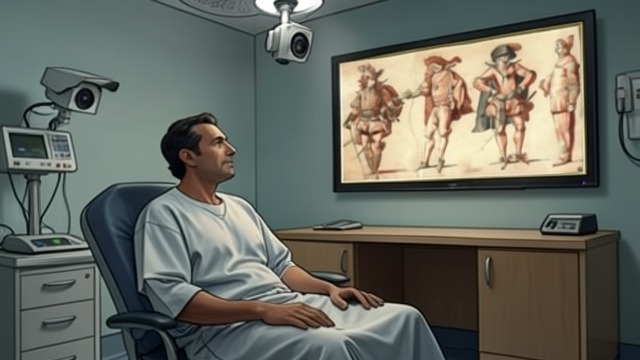
After entering Hatch, Thomas continues to believe he has been chosen to stop war and expose a conspiracy. Surveillance cameras, political figures, and hospital procedures become evidence in a story that confirms his special mission.
Myth as protection
Dr. Patel understands his grandiose visions partly as an effort to impose order on frightening experiences. If Thomas is the hero at the center of a myth, then his suffering has a purpose and the world is not wholly random. That structure may comfort him even as it deepens his isolation.
The limits of the heroic story
The Review Board hears Thomas explain his sacrifice and his willingness to follow divine instruction. His sincerity does not reassure them; it intensifies their concern that he could harm himself or others. A story that gives him purpose becomes, in the eyes of the institution, evidence of danger.
The Saints and the Body
The Saints and the Body
Suffering turned into spectacle
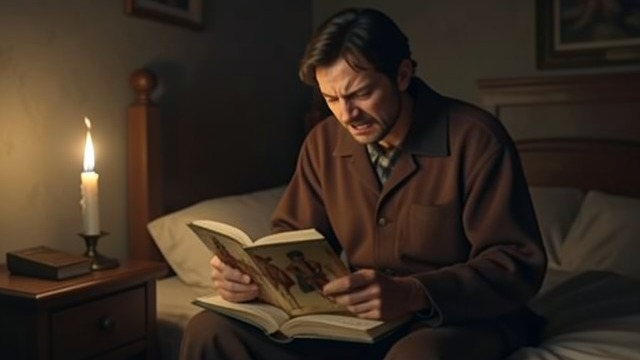
Thomas’s fascination with accounts of martyred saints emerges before his most public crisis. Angie later describes him asking her to read stories of bodily torture while he becomes sexually aroused, revealing a disturbing entanglement of religious imagery, desire, and pain.
A private pattern becomes a public act
Years later, the language of sacrifice returns in Thomas’s explanation of his hand’s removal. The bodily suffering he once encountered in books has become a literal means of communicating with a world he believes has failed to listen.
Meaning without moral endorsement
The novel neither treats Thomas’s religious language as proof of divine purpose nor dismisses his moral concern as meaningless. Instead, it shows how sacred stories can shape a person’s attempt to explain desire, humiliation, and fear—and how dangerous they become when illness makes metaphor indistinguishable from instruction.
The Grandfather’s Chosen Self
The Grandfather’s Chosen Self
A life narrated as destiny
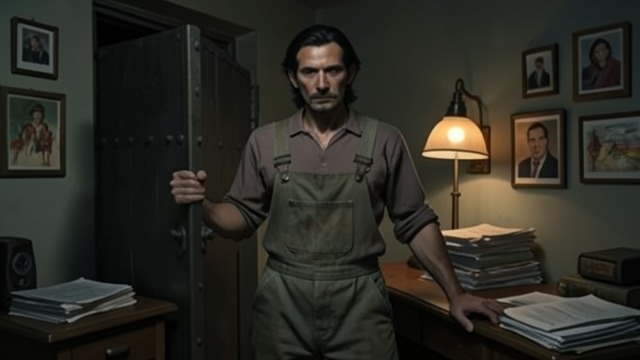
Domenico presents himself as exceptional from childhood: the boy chosen by the Weeping Virgin, the son of a hero, and the man destined to prosper in America. His memoir frames survival and success as confirmation that he has been singled out.
A self-made legend
He reshapes family history to place himself at its center. His mother, brothers, and rivals appear through the lens of his grievances, while his own acts of coercion are repeatedly explained as necessary responses to dishonor or disorder.
A warning inside the inheritance
Dominick initially sees the manuscript as proof that Domenico was a pompous man. Over time, he recognizes that the memoir also shows the danger of turning pain into a grand account of special destiny. The grandfather’s story becomes a mirror for the family’s repeated need to make suffering mean that someone has been chosen or wronged.
A Secular Confession
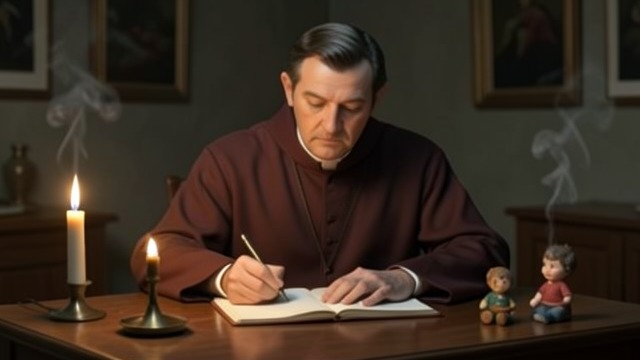
A Secular Confession
A man asks for relief
After a stillborn son and the birth of Concettina, Domenico seeks an audience with Father Guglielmo. He asks whether his actions have damned his son, and the priest answers that the child has been baptized and is in God’s care.
Penance as a demand for truth
Father Guglielmo instructs Domenico to examine his life and write it down. The task is not merely to defend his reputation but to confront the anger, pride, and silences that shape his family. Domenico’s manuscript becomes his attempt to fulfill that demand, though he repeatedly slips back into self-justification.
A record that outlives its author
Decades later, the memoir reaches Dominick through Ma, carrying both confession and evasion. Its existence makes the past available for examination, while its contradictions prevent the comfort of a final, clean verdict. The novel presents testimony as a beginning of understanding, not automatic absolution.
On October 12, 1990, at the public library
During Thomas’s first weeks at Hatch in late 1990
From Thomas and Angie’s relationship in 1969 through his treatment sessions
In Domenico’s 1949 manuscript, recounting his childhood and migration
In 1949, when Domenico meets Father Guglielmo after the birth of his twins
