
The Tempesta Family’s Passage from Sicily
I Know This Much Is TrueThis thread follows Domenico Tempesta’s rise from a Sicilian village to property ownership in Connecticut, while tracing the compromises, family losses, and self-serving legends embedded in his account.
increasing Bearing strength in each event
 decreasing
Bearing strength in each eventdecreasingA Boy Marked for Greatness
A Boy Marked for Greatness
A family under Etna
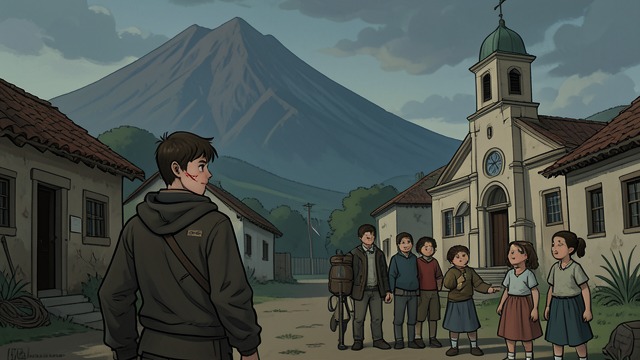
Domenico grows up in Giuliana in the shadow of Mount Etna, within a family shaped by an eruption that destroyed his maternal grandparents’ land and killed several relatives. His mother, Concettina, survives a childhood encounter with lava, carrying a scar on her right hand and a history of loss into motherhood.
Domenico’s father, Giacomo, is honored as a village hero after warning residents of a later eruption. The boy absorbs the prestige of the medal and the stories built around it. He comes to see his own birth, education, and supposed religious calling as evidence that he is exceptional.
A chosen son
After the Weeping Vergine is reported to have shed tears, young Domenico is identified by the village as the child who discovered the miracle. The event helps send him to religious schooling, where he excels academically and becomes favored by the Sisters of Humility.
His self-image grows alongside genuine ability, but it also depends on a village mythology that places him above his brothers. The distinction between talent and entitlement begins early: Domenico remembers his accomplishments vividly and frames his less favored relatives as burdens or failures.
The Firstborn’s Burden
The Firstborn’s Burden
A lost vocation
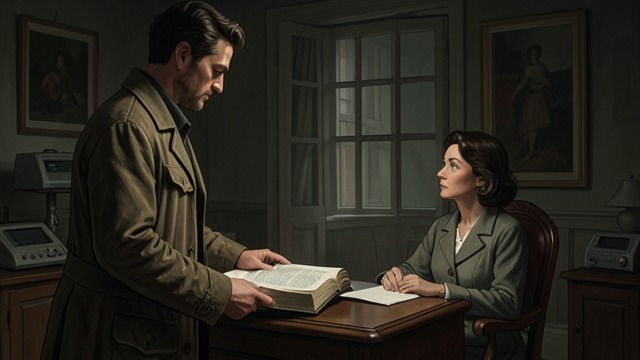
A mine collapse kills Giacomo and other workers, ending Domenico’s schooling and pulling him from his anticipated life as a priest. As the eldest surviving son, he becomes the family’s provider and claims the authority to discipline his younger brothers and their widowed mother.
The role gives him practical power but also fixes him inside a family pattern of coercion. He describes his beatings and control as necessary labor on behalf of family honor, while dismissing the harm they cause. His account exposes an early conflict between the vocation he imagined and the patriarchal role he assumes.
Brothers in unequal places
Vincenzo’s sexual misbehavior and Pasquale’s perceived weakness become problems Domenico believes he must contain. When Vincenzo’s conduct costs the family work and money, Domenico is forced into masonry rather than returning to his studies. He responds by treating his own sacrifice as proof of superiority.
Pasquale and Vincenzo are not simply rivals; they are brothers caught under Domenico’s rule. The “firstborn’s burden” becomes the excuse through which he explains both his service and his cruelty. It foreshadows his later habit of interpreting control as care and obedience as evidence that he is right.
The Journey to America
The Journey to America
Leaving the old country
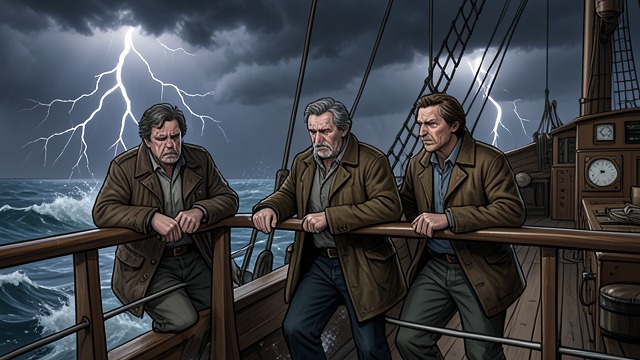
Domenico, Pasquale, and Vincenzo sail from Sicily to New York in steerage. The voyage is miserable: bad food, illness, rats, and the crowding of passengers make the crossing a test of endurance. Domenico’s ambition rests on the hope that America will reward hard work and allow him to reclaim the family’s lost standing.
The journey also reveals how differently the brothers respond to the new world. Domenico saves and studies English; Pasquale works steadily; Vincenzo seeks pleasure and trouble. Their shared migration does not make them equal in Domenico’s eyes. He continues to measure them by usefulness and discipline.
Work and opportunity
In Brooklyn, Domenico takes a night job at the New York Public Library and studies from discarded books and newspapers. An Italian American Woolen and Textile recruitment notice leads the brothers to Three Rivers, Connecticut, where they find work and inexpensive lodging.
Domenico quickly impresses factory supervisors and advances from laborer to boss dyer. He treats this success as confirmation that his judgment and seriousness distinguish him from everyone around him. The climb out of immigrant poverty is real, but so is his growing conviction that others’ needs should be managed by his authority.
The House on Hollyhock Avenue
The House on Hollyhock Avenue
A property owner’s ambition
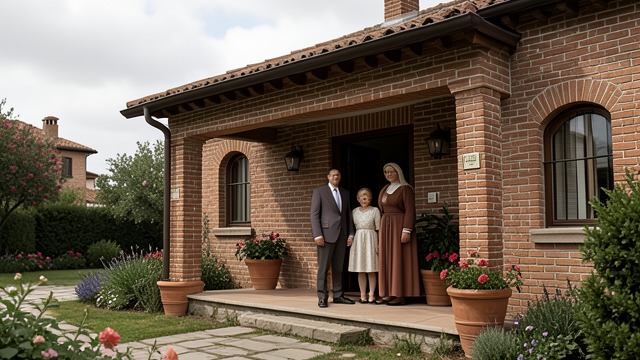
After saving and planning, Domenico buys a lot on Hollyhock Avenue and builds a two-family brick house with his own labor. He imagines a grand American front and a Sicilian backyard, complete with fruit, herbs, animals, and a place where family life can continue across the ocean.
The house fulfills a central ambition: Domenico becomes the first Italian immigrant in Three Rivers to own property. He sees the deed and the building as more than shelter; they are proof that he has risen above the losses and insults of his youth.
A family bargain
Domenico’s home is also a project of control. He plans to furnish it with the proceeds of his work, expects family to live according to his arrangements, and treats marriage as a matter of suitability and status. He assumes that the house will repair what migration has taken from him.
Yet the property cannot make its residents happy by itself. The family story that develops within its walls will include fear, unequal affection, and secrets. Its polished public image as the home of a successful immigrant contrasts with the private atmosphere remembered by his descendants.
The Life Story at the Garden Table
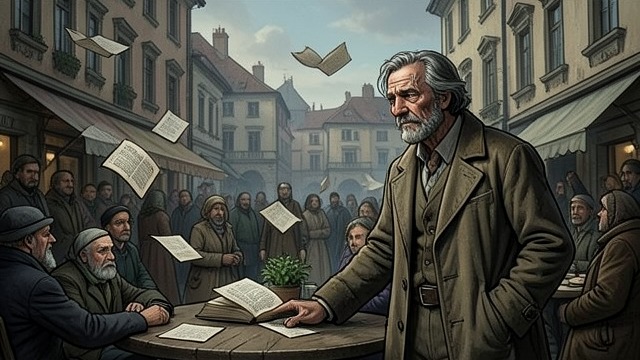
The Life Story at the Garden Table
A record of a great man
Near the end of his life, Domenico dictates and writes an account of his history. He first hires Angelo Nardi, rents recording equipment, and then rejects the arrangement, eventually completing much of the manuscript himself in the backyard.
The project is presented as a guide for Italian youth, but the surviving text reveals a private need to shape how his life will be remembered. Domenico recounts his achievements, grievances, and family conflicts in a voice that insists on his greatness even as it exposes his need for power and recognition.
A final contradiction
Domenico dies at the table before his history can be published. Pages blow across the yard, and Ma gathers them while waiting for help. His death leaves the manuscript unfinished and his daughter with a document she never reads.
The contradiction of his final project remains central to the family record: he wants to be a model, yet his pages show a man capable of harshness, pride, and profound regret. When Dominick later reads the text, its confessions become more useful than its boasts. They let him inherit a complicated past without mistaking the “great man” pose for the whole truth.
1880s, during Domenico’s childhood in Giuliana
Late 1890s, after Giacomo dies in the mine collapse
September 1901 to early 1908
1914 to 1916
Summer 1949, shortly before Domenico’s death
