
Inheritance of Violence and Silence
I Know This Much Is TrueAcross generations, the novel follows how shame, coercion, and unspoken family history shape the ways Dominick and Thomas learn to endure or repeat violence.
increasing Bearing strength in each event
 decreasing
Bearing strength in each eventdecreasingA Household Governed by Fear
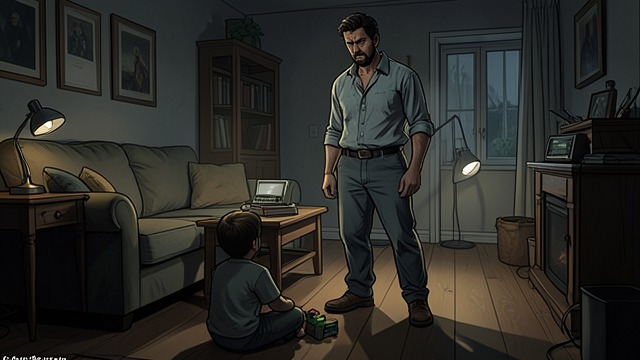
A Household Governed by Fear
Rules of survival
At 68 Hollyhock Avenue, Ray’s anger dictates the rhythms of family life. The children learn to tiptoe while he sleeps and to read the changes in his voice before a confrontation begins. Everyday behavior becomes a calculation about how to avoid provoking him.
Unequal exposure
Thomas is more often singled out for ridicule and punishment, while Dominick learns that appearing tougher can spare him some of the blows. Ma tries to soften the household, but her fear and dependence limit her ability to intervene. Protection is unevenly distributed, and the boys understand it even when no one names it.
Silence as a family rule
The household’s violence is rarely discussed afterward. The family keeps functioning, but its silence does not undo what happened; it teaches the children to hide evidence and manage appearances. Dominick’s later difficulty naming his own behavior grows from a childhood in which survival often meant not speaking.
The School of Toughness
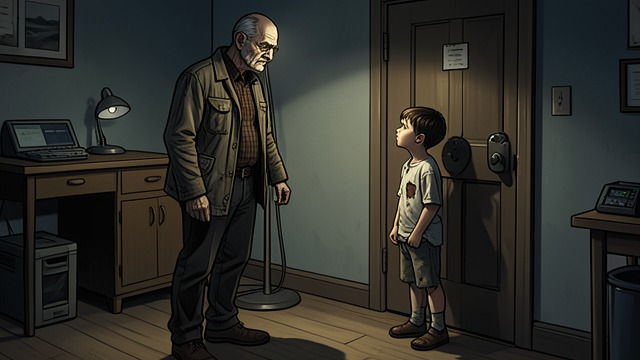
The School of Toughness
Lessons in hardness
Ray describes toughness as preparation for a harsh world, but his instruction is delivered through intimidation, humiliation, and physical force. He mocks vulnerability and treats crying as a public defeat. The boys learn that pain is not only something to endure; it is something an authority can use to control them.
A defense that injures others
Dominick adapts by learning when to bluff, when to stay silent, and when to strike back. These skills help him survive Ray, yet they also become habits he carries into adult relationships. His anger, especially under stress, can reproduce the very coercion he once feared.
The cost of the lesson
Thomas cannot reliably adopt Dominick’s defensive tactics, and Ray treats that difference as further evidence of weakness. The result is not protection but a family hierarchy in which one boy learns to avoid being targeted by allowing another to bear more of the pressure. The novel questions the claim that cruelty can make anyone strong.
The First Broken Trust
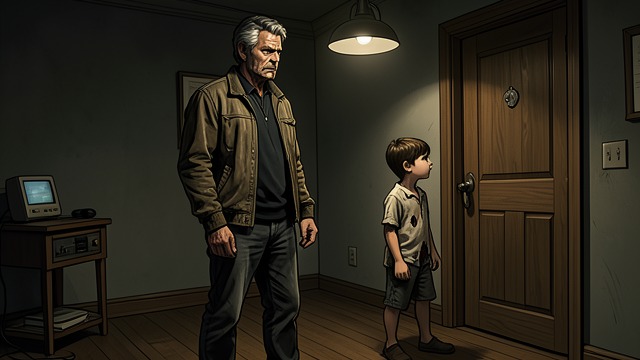
The First Broken Trust
A public humiliation
When Dell Weeks taunts Thomas and forces him toward exposure in front of the crew, Dominick does not intervene quickly enough to stop the humiliation. Ralph Drinkwater protests, but the crew’s loyalties are divided by fear, prejudice, and the desire to stay in Dell’s favor.
Self-preservation becomes betrayal
Later, when police question Dominick and Leo, Leo invents accusations against Ralph to protect himself. Dominick resists at first, then contributes a false detail under pressure. Their story turns Ralph’s vulnerability and racial marginalization into a shield for the white students.
A debt that remains
The betrayal becomes one of Dominick’s most enduring sources of shame. Seeing Ralph years later at Hatch brings the old choice back into view: Dominick had joined a system that believed the white boys over the Black and Wequonnoc worker. The harm cannot be undone by later regret, but remembering it prevents a clean self-exoneration.
The Unspoken Origin
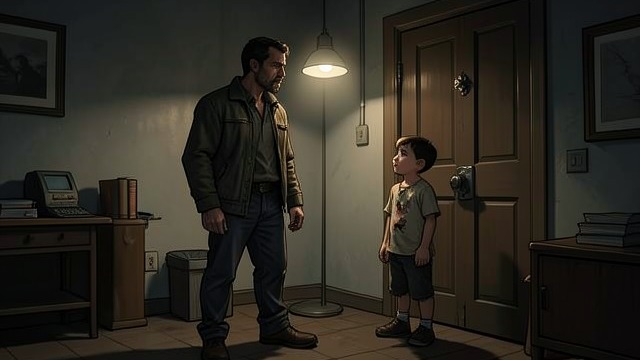
The Unspoken Origin
A question withheld
Dominick and Thomas grow up without the identity of their biological father, while their mother’s cleft lip and the circumstances of their birth remain protected by silence. Dominick fills the blank with comic-book and television fantasies, because an imagined father is easier to approach than an unanswered family fact.
The grandfather’s paper trail
The manuscript left by Domenico Onofrio Tempesta seems to offer access to the family past, but it records a self-serving narrator rather than a neutral history. Ma gives it to Dominick in the hope that he can make it readable, yet her death arrives before the translation is completed.
A family’s partial truths
The later revelation that the twins’ father was Henry Joseph Drinkwater gives Dominick a name and a lineage but does not make the past simple. His mother’s secrecy may have protected a vulnerable child, herself, or the family’s fragile place in a prejudiced community. The novel treats disclosure not as a magical cure but as a difficult form of inheritance.
The Family’s Repeated Wounds
The Family’s Repeated Wounds
Violence across generations
The histories of the Tempesta and Birdsey households are shaped by people who confuse authority with control. Domenico’s manuscript describes family discipline and pride, while Ray’s household repeats a modern version of intimidation. Different eras and circumstances do not make the underlying injury disappear.
Silence protects and conceals
Ma’s silence about Henry Joseph Drinkwater may have protected her from a hostile world, but it also leaves her sons to invent explanations for themselves. Dominick’s later discoveries reveal that the family’s silences were not empty; they held fear, shame, and attempts at survival.
Breaking the cycle imperfectly
Dominick confronts the ways he has used anger and control, especially in his relationship with Dessa and in his treatment of Thomas. Recognition does not erase his past conduct, but it interrupts the old assumption that harm is simply inevitable. The possibility of a different future begins with admitting what has been passed down.
During the twins’ childhood in the 1950s and 1960s
From the twins’ grammar-school years through the summer of 1969
During the summer work crew of 1969
From Ma’s death in 1987 through Dominick’s later reading of the family history
From the revelation of Dominick’s parentage through the novel’s later years
