Birdsey family television
I Know This Much Is TrueThe Birdsey family television is both the source of a childhood emergency and a later metaphor for Dominick Birdsey’s anger. When it suddenly catches fire as Dominick and Thomas Birdsey watch cartoons, the familiar appliance turns the family parlor into a scene of smoke, flames, and falling glass. Years afterward, Thomas invokes that explosion to describe the way Dominick can keep resentment inside until it erupts. The television thus links an abrupt physical disaster to a recurring pattern in the brothers’ family life.
The Fire in the Parlor
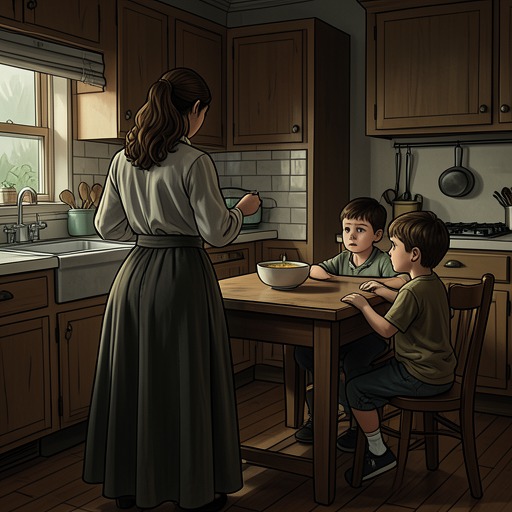
One Saturday morning, when the twins are ten, Dominick and Thomas are still in their pajamas, watching television instead of following Ma’s orders to bathe, dress, and help wash the windows. They usually obey Ray immediately, but he is away duck hunting with his friend Eddie Banas, and Ma’s instructions are easier for them to disregard. The set, initially part of an ordinary morning of cartoons, becomes the event that interrupts their domestic routine.
Thomas notices the first sign: a thin curl of smoke rising from the back of the television. The Howdy Doody Show is on; then the picture and sound cut out, and flames rush up the parlor wall. Dominick interprets the smoke and sudden failure through the Cold War warnings Ray has given at the dinner table. Ray had described the submarine base and Electric Boat as likely targets in a nuclear attack, and Dominick imagines that the Russians have dropped the bomb. He tells Thomas to duck and cover, and the boys fall into the protective position they have practiced at school. An explosion follows near the set; thick black smoke fills the room, and glass falls around them.
Ma runs in at the noise, lifts Thomas, and tells Dominick to climb onto her back. Dominick resists leaving the house because he fears fallout, but Ma gets the boys outside. The emergency is therefore shaped not only by the appliance’s sudden combustion but by the children’s readiness to understand fire as a nuclear catastrophe. The television’s failure makes a household danger collide with the much larger danger their father has taught them to anticipate.
The Photo Album and the Saved House
After a short time, Ma emerges from the burning house sobbing, with something held against her chest. Her coat is smoking and one pocket is on fire; Mr. Anthony pulls the coat off and stamps out the flames. When Ma reaches for the twins, loose photographs slip to the ground. Dominick then understands that she went back inside for her photo album, which she had kept in the bottom drawer of the china closet.
The rescued album changes what the fire means in the family’s recollection. The television is the visible source of the disaster, but the object Dominick remembers Ma risking herself to save is the family record. The episode ends not with the set restored, but with Ma holding the boys close, the album recovered, and the house her father built still standing. Her repeated assurance that everything is all right belongs to that particular accounting of what remains: her children are within reach, the photographs are saved, and the house will be saved too. The photographs that spill from the album make the family’s past briefly tangible amid the aftermath of the fire.
Thomas’s Comparison
Years later, Thomas turns the old television into a concise description of Dominick’s temper. After Dominick acknowledges that he has let anger build up toward Thomas, Ma, and Dessa until it explodes, Thomas tells him, “You’re like our old TV. The one that exploded.” The comparison rests on a shared memory rather than an abstract judgment: one moment the brothers were watching a show, and the next the set had erupted. Dominick repeats Thomas’s final sound softly, and the brothers fall silent for a minute or more.
The object’s meaning shifts in this exchange. As a child, Dominick treats the television’s explosion as evidence of an external catastrophe; as an adult, he hears Thomas use it to name a familiar emotional pattern. The machine’s sudden transition from background entertainment to danger gives the brothers a common image for anger that has been accumulating out of sight. Thomas’s analogy also makes the childhood fire part of their present relationship: their remembered family emergency becomes a way to speak, indirectly but plainly, about what Dominick’s anger has done to the people closest to him.
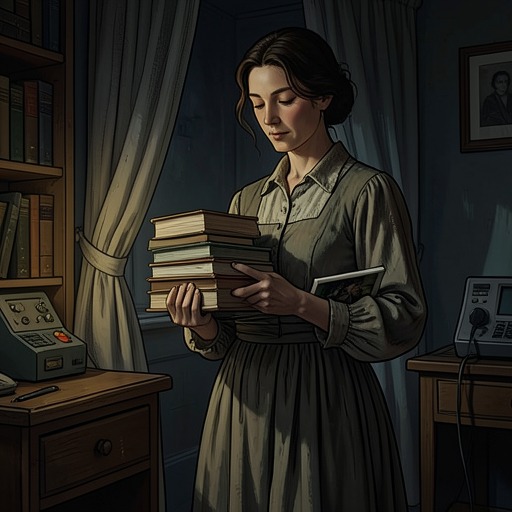
Thomas then reaches for the photo album and touches its leather cover, bringing Ma’s rescue back into the conversation through the object she saved. The television and album are linked in memory but carry different weight: one marks the moment of rupture, the other the family history carried through it. The brothers’ shared recollection holds both together, including Ma’s return from the burning house with the album and the assurance she repeated as she gathered them close.
Memory, Twins, and Responsibility
The novel places the fire within a wider pattern of recollection about the twins and their shared past. In conversations about Thomas’s illness, Dr. Patel asks Dominick to help map his brother’s past and present realities by listening to therapy-session recordings and recalling childhood, including the onset of the illness. She describes Dominick as Thomas’s mirror and, in scientific terms, a control group; she also discusses research comparing the brains of people with schizophrenia with those of their healthy twins. The old television episode belongs to the kind of childhood memory that makes the brothers’ shared history concrete, even as their experiences and later lives diverge.
That twin framework also clarifies why memories of sudden crisis carry particular weight for Dominick. In another discussion of Thomas’s hand amputation, Dominick admits that he should have been more alert and says that everyone missed what was happening. He insists that Thomas feels safe and comfortable with Dr. Ehlers, and asks for Dr. Patel to contact him so Dominick can try to get Thomas out. The television is not invoked in this conversation, but the family’s remembered explosion and Dominick’s later sense of responsibility sit beside one another in the novel’s account of his vigilance toward his brother: catastrophe can seem to arrive in an instant, while responsibility for noticing what is building beforehand remains unresolved.