Domenico Tempesta's autobiographical manuscript
I Know This Much Is TrueDomenico Tempesta's autobiographical manuscript is a scattered, partly handwritten life story whose difficult making and uncertain recovery turn it into more than a family document: it is an inheritance that Dominick Birdsey hopes might restore a history withheld from him. The manuscript preserves evidence of Domenico's effort to tell his own story, but the surviving pages do not resolve all the questions that later gather around them.
Identity and Material Form
The manuscript is introduced as the life story of Ma's father, dictated during the summer he died. Its opening bears the title The History of Domenico Onofrio Tempesta, a Great Man from Humble Beginnings and the date 8 July 1949. When Ma shows it to Dominick, the pages are in a large manila envelope curled around a small, coverless dictionary and held by an elastic band that breaks at his touch. The paper is thick; the first ten or fifteen pages consist of typed originals and carbon copies, while the rest is written in a sprawling, ornate hand in blue fountain-pen ink. The mixture of typescript and handwriting records a process that never settled into a single reliable method.
The manuscript is in Italian, and its physical condition makes it feel like a recovered fragment rather than a finished book. Dominick notices its mildewy smell as he handles it. The surviving opening and the pages Ma kept offer a tangible connection to her father, but the evidence does not establish that the recovered papers constitute a complete or fully edited account.
Dictation and Breakdown
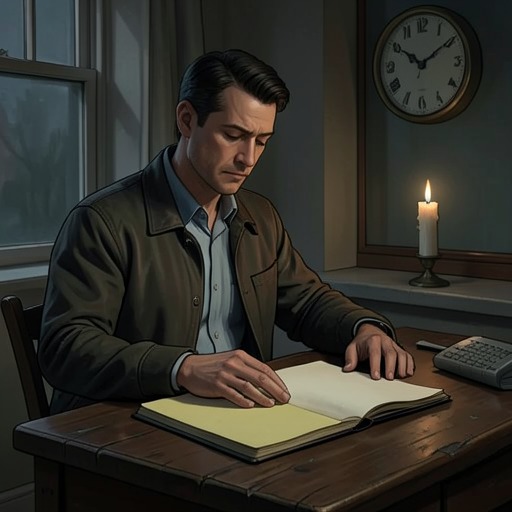
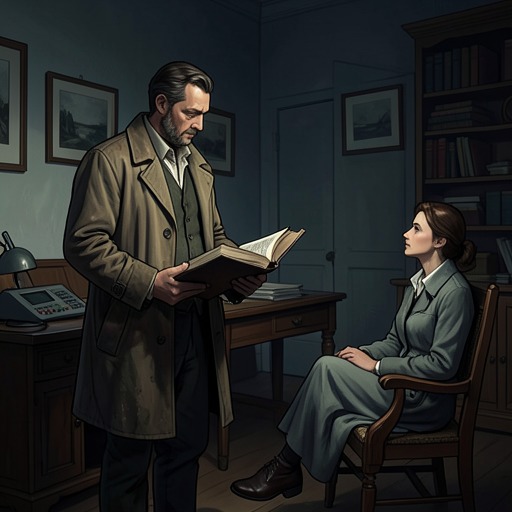
Domenico first devised an elaborate arrangement for telling his story: a stenographer, a Dictaphone, and separate rooms for the person dictating and the person taking dictation. Ma stayed away from the parlor while her father spoke into the machine; she remembered how seriously he treated the work and how private he was about it. The arrangement lasted about a week before failing. A misunderstanding over the Dictaphone rental meant that Domenico expected to pay eight dollars a week but was charged eight dollars a day, or forty dollars for the week. He ended the rental and, with Angelo Nardi, wheeled the carts onto the front porch, where they remained for two days before someone arrived from Bridgeport to collect them. Ma was anxious about the equipment being left outside, worrying that rain might damage it or someone might take it.
Domenico then returned to dictating directly to Angelo, but that attempt also went badly. The record therefore carries the marks of repeated practical failures as well as of Domenico's insistence on continuing. On the morning of his final day, while eating breakfast, he told Ma he was almost finished. Until then, he had not spoken to her directly about his progress.
Completion did not mean he intended to preserve the work. When Ma asked what he would do with it, Domenico said he might throw it into the ash barrel and set it alight. That possibility sits beside the labor he had already invested in the pages. Ma later recalled hearing him sobbing upstairs that morning, once wailing, but she feared approaching him would make him angry or worsen matters. His privacy kept the manuscript and his distress at a distance from her even as she understood that both were near their end.
Scattering, Preservation, and Recovery
When Ma brought Domenico his lunch, she found him slumped over the table, his head down. Pages of the life story lay scattered, including among the hedges and against the chicken coop. While waiting for help and the ambulance, she went around collecting them. The pages later shown to Dominick thus survive through an act of hurried preservation at the moment of Domenico's collapse; their disorder is part of the history of the document, not merely damage incurred afterward.
Ma kept her father's story for Dominick, telling him that Thomas Birdsey could look at it too, but that the story was his. She never got to read it herself. When she died, Dominick stayed beside her and, shortly before she expired, told her he would take care of Thomas and that she could go. Her death closed off the possibility that she would read the manuscript or reveal the identity of the man who had fathered the twins. The text consequently remains an inheritance passed on without the family explanations Dominick hopes it might contain.
The Manuscript as Family History
Years later, Dominick thinks about the strongbox and the pages Ma had saved. He recalls that the summer Domenico died was also the summer Ma was pregnant with him and Thomas, by a man whose name he believes he may never know. The manuscript prompts him to ask who his grandfather had been and to return to the unresolved question of his own parentage; it does not, in the available evidence, answer either question. Its importance lies partly in the gap between the promise of a life story and the silences surrounding the family.
Dominick also believes that Nedra Frank took the manuscript. He recalls her leaving during a snowstorm and regards the loss as a theft extending beyond the four hundred dollars he had advanced her, describing it in terms of both theft and breach of contract. He plans to find her and recover his grandfather's story, considering whether to seek help through her former husband or a police contact. He also considers tracing Angelo, the man who had worked with Domenico that summer. His desire to retrieve the pages is personal as well as documentary: he feels that their disappearance deprived him of his grandfather, and the manuscript becomes a possible route into a family past that has otherwise reached him in fragments.