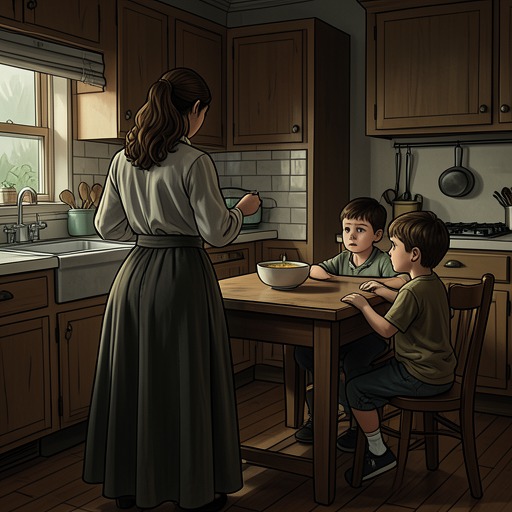
Dominick’s permission for Ma to die
I Know This Much Is TrueDominick’s permission for Ma to die is a quiet farewell shaped by care, hesitation, and unfinished family history. During a nightlong vigil, he tells his unconscious mother that he will look after Thomas and that she can go. Her death ends the vigil, but not Dominick’s bond with her or his unanswered questions about their family.
The Final Vigil
On May 1, 1987, Ma slipped out of consciousness while Dominick and Ray watched over her. Her breathing was labored, and she repeatedly tried to remove her oxygen mask. A hospice worker had explained that someone in a coma might still hear and understand, and suggested that the family could give Ma permission to go. Ray could not accept that suggestion. When he went down the hall, Dominick leaned close to his mother and told her he loved her, that he would take care of Thomas, and that she could go now.
The timing makes the farewell an intimate decision rather than a family consensus: Dominick speaks only when Ray is absent. His words join two acts that might seem opposed—promising to remain responsible for Thomas and releasing Ma from the need to remain. He does not describe her death as the dramatic revelation he had imagined during her final months. She dies without the deathbed confession he had hoped for.
What Ma’s Death Did Not Resolve
Ma never read her father’s history, and she did not reveal the identity of the man who fathered Dominick and Thomas. Dominick had formed theories about their biological father, including the possibility of Angelo Nardi, but none had been confirmed. Her death therefore closes off the direct possibility of asking her, leaving the question within the family’s larger landscape of secrets and incomplete records.
That silence contrasts with the promise Dominick makes at her bedside. He can offer Ma reassurance about Thomas, but he cannot obtain from her the explanation he has sought about his own origins. The farewell gives him a responsibility to carry forward, not the answer he had imagined might accompany her death.
The Rescued Album and Ma’s Reassurance
An earlier memory of a house fire gives the farewell a material echo. Ma had gone back into the house her father built to rescue her photo album from the bottom drawer of the china closet. When she returned, loose photographs fell to the ground; the house, her twins, and the album were all safe. The album itself had long been worn by repeated handling: its brass cover pins bent and broke, loosening many of its black construction-paper pages.
The album makes remembrance tangible, but also fragile. Ma preserved the family’s photographs; Dominick, at her deathbed, preserves her assurance by carrying forward the promise to care for Thomas. Years later, he dreams of Ma at the picture window of the condominium he shares with Joy, silently repeating the reassurance she gave long ago. The past returns not as a new revelation, but as a continuing connection to his mother.
Narrative Significance
Dominick recalls Ma’s death against the consoling expectations he had built around it: he had imagined that she might sit up and disclose the father’s name. Instead, the decisive words are his own, addressed to a mother who cannot answer. The scene turns the focus from what Ma might reveal to what Dominick accepts responsibility for doing.
The farewell also clarifies the limits of closure in the family story. Ma’s death ends her suffering and Dominick’s vigil, but leaves both the paternity question and the history she never read unresolved. His later dream keeps her reassurance alive, making the event at once a final separation and an ongoing source of comfort.