Ma’s death
I Know This Much Is TrueMa’s death on May 1, 1987, closes the possibility that she might explain the twins’ parentage and places a promise of care at the center of Dominick Birdsey’s bond with Thomas Birdsey. During the final vigil, Dominick gives his mother permission to let go while Ray struggles to accept that choice. Afterward, the brothers meet their loss in different ways: Thomas asks about Ma’s suffering and for the return of a collage, while Dominick stays beside him because he still needs his twin.
The final vigil
Ma slipped out of consciousness as Ray and Dominick kept watch through the night. Her breathing was labored, and she repeatedly tried to remove her oxygen mask. A hospice worker had explained that a person in a coma might still hear and understand, and suggested that the sons could give their mother permission to go if it felt right. Ray balked at the idea. For him, saying it aloud would mean accepting a departure he was not ready to authorize.
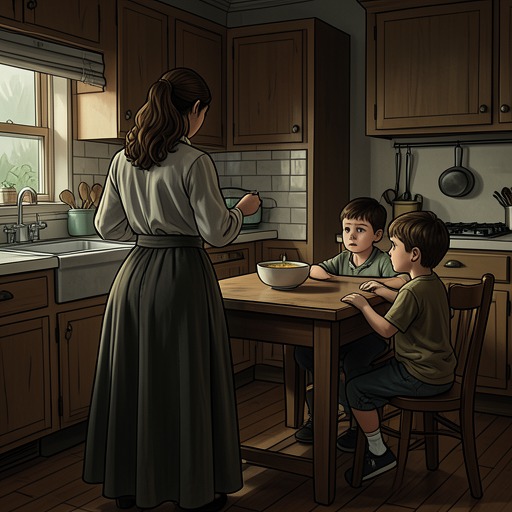
Ten minutes before Ma died, Ray went down the hall to the men’s room. Dominick leaned close to his mother and told her he loved her, that she need not worry, and that he would take care of Thomas. He then told her she could go. The promise made the moment both an act of tenderness toward Ma and an acknowledgment of the responsibility that had long shaped Dominick’s identity as Thomas’s twin. Ma died shortly afterward. Dominick had acted without Ray’s agreement, and the permission did not make the loss less real; it gave their mother a farewell that her sons could not provide together.
What her death did not disclose
Dominick had imagined that Ma might reveal the identity of the man who had fathered him and Thomas. Her death offered no such answer. She did not wake to name him, just as she did not live to read her father’s history. Dominick had suspected different men at different times, and by the time of the vigil he had settled on Angelo Nardi as a theory, not a fact. Her silence left the twins’ parentage unresolved at the moment when they most needed an explanation from her.
After the hospital paperwork, Ray and Dominick drove to the funeral parlor to make arrangements, returned to Hollyhock Avenue, and drank Ray’s good Scotch. Ma’s photo album lay on the dining-room table. Dominick could not bring himself to open it, but he took it with him when they went to tell Thomas. The album had already been rescued from the family house during a fire, a material link between Ma’s care for her sons and the family history she had preserved. Now it became part of the news of her death: too painful for Dominick to open, yet important enough to carry to his brother.
Thomas and Dominick receive the news
Thomas’s eyes filled with tears when he learned that Ma had died, but he did not have the dramatic reaction Dominick had feared. When Ray asked whether he had questions, Thomas asked whether Ma had suffered at the end and whether he could have his GOD = LOVE! collage back. Those requests register grief through immediate concerns: the condition of his mother at the end, and the return of an object associated with his own life. Ray left after about half an hour. Dominick remained, telling himself that he wanted to be there in case Thomas reacted later. He recognized that this was not the whole reason. On the morning of their mother’s death, he needed to be with his twin, regardless of who Thomas had become or how uncertain their lives had grown.
Dominick also apologized to Thomas for having lost his temper during an earlier visit to Ma. Thomas told him that her cancer was not his fault and attributed it to God. The response brought Dominick grim relief: Thomas was no longer blaming the Kellogg’s Cereal Company, which he had accused of putting carcinogens in Ma’s cereal. Yet his religious explanation also showed how he made sense of a loss that ordinary cause and blame could not undo. In a later account of the morning at Settle, Dominick remembered Thomas as philosophical about the death, then recalled him showing the Lives of the Saints and comparing Ma to a saint. Thomas’s religious framing did not erase his concern for her suffering; it gave the loss a language shaped by his illness and beliefs.
Grief that returns
Ma’s death does not end her presence in Dominick’s life. In a later dream, she appears at the picture window of the condominium he shares with Joy, repeating the reassurance associated with the fire and her promise that everything would be all right. The dream binds the dying mother to an earlier image of Ma protecting her sons: after returning to the burning house to rescue the album, she had gathered the twins close and tried to comfort them. The reassurance survives, but now it arrives in a dream because Ma is gone.
Her care had also shaped the twins’ childhood responses to other losses. After Penny Ann Drinkwater’s unsolved murder, Dominick’s nightmares brought Penny back in frightening scenes. Ma came to the boys’ room, rubbed his arm, told him he was safe, and let him leave the light on. Dominick watched Thomas sleeping until the steadiness of his brother’s breathing helped him settle. Recalled beside Ma’s death, those childhood nights show the older pattern behind Dominick’s promise: Ma had comforted him through fear, and he understood caring for Thomas as the duty that passed to him.
The loss also remains entangled with other absences. Dominick later remembers telling Thomas he would become an uncle after Angela was born; Thomas smiled, but never saw his niece before she died three weeks and three days after her birth. In Dominick’s account, Ma’s death, Angela’s death, and Thomas’s illness belong to a life in which closeness is repeatedly threatened by separation. His vigil beside Thomas is therefore more than practical support. It is an attempt to preserve the twin bond Ma’s final promise entrusted to him, even as he knows that love cannot restore what has been lost.