Ray
I Know This Much Is TrueRay is the Birdsey twins’ stepfather and the force they learn to measure themselves against: his household authority produces fear and secrecy, while his practical acts of care make him more than a single-note antagonist. His late disclosures also alter the family’s understanding of its own history, revealing how much of his place in the family was bound up with a promise to Ma and a secret about Dominick Birdsey’s parentage.
Identity and Household Authority
Ray works the third shift at Electric Boat, building submarines at night. During the day he sleeps in the spare room, rising to his alarm at three-thirty in the afternoon. The boys are expected to tiptoe and whisper while he sleeps; in the evening, his fellow third-shift worker Eddie Banas arrives around nine-thirty, and the household’s tension briefly loosens. Dominick recalls waiting hungrily for the sound of Eddie’s truck and the relief it brought. Ray’s authority is thus felt even when he is absent from the room: the family organizes its daily rhythms around his sleep, temper, and return.
The contrast between Ray’s commands and Ma’s instructions is telling. One morning, Dominick and Thomas Birdsey lounge in pajamas, ignoring Ma’s request that they bathe, dress, and help wash the windows. Ray is away duck hunting with Eddie, and the boys’ response to Ma differs sharply from their immediate obedience when Ray gives an order. His standing in the household rests not simply on being an adult but on the fear his authority commands.
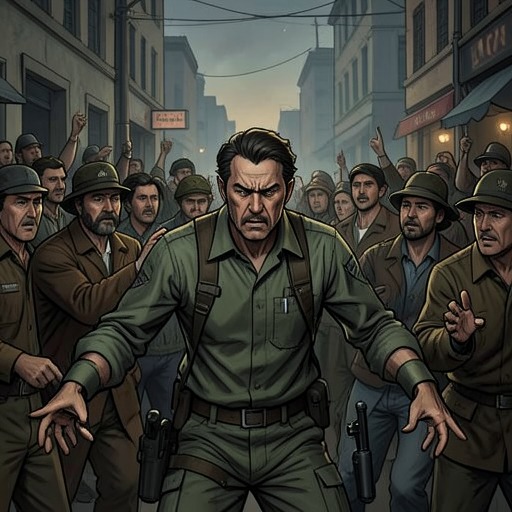
Dominick remembers Ray as a bully who punished weakness. In childhood, Dominick imagined a heroic figure arriving to rescue Ma, Thomas, and him and make Ray pay. As he grew older, he abandoned that fantasy and began goading Ray in small ways, hiding his fear behind a smirk, short answers, and direct eye contact. He understood that openly displaying fear could invite Ray’s attack, and he tried to redirect Ray’s attention toward Thomas, whom he regarded as more vulnerable. The behavior becomes an early form of self-protection—and one source of Dominick’s later guilt about the unequal treatment of the twins.
Discipline, Fear, and the Twins
Ray’s anger could be physical as well as verbal. Dominick remembers him as more often a screamer than a hitter, but his words reduced the boys to human garbage, and his threats made the possibility of violence plain. On one occasion, after the young twins argued in the car, Ray pulled onto the highway shoulder and drove away, leaving them there. They were about six or seven. When he returned, they were clinging to each other and crying. The incident makes their dependence on one another visible, while showing how Ray could turn an ordinary quarrel into an experience of abandonment.
Ray’s temper also shaped what could be spoken about in the house. Ma sometimes sent Dominick downstairs with a snack while she and Thomas stayed behind, warning him to let her know immediately if Ray came; she knew Ray would be angry if he discovered their private interaction. Even the possibility of his disapproval could make the family conceal ordinary moments from him. Dominick later recognizes that Ma had assigned him a lifelong protective role: he was expected to keep Thomas safe from Ray and from other threats. At Ma’s bedside, after sitting through the night with her and Ray, Dominick begins to understand how deeply he resents having been made the family’s sentry.
School could become another arena for Ray’s control. He repeatedly pressed Thomas about his education, and at one tense family gathering he turned to Thomas and demanded an explanation. In a separate confrontation, Ray took Ma by the arm and smashed three jars of her pickles: one against the refrigerator, another onto the floor in front of Thomas, and a third against a table leg. Broken glass, pickles, and juice covered the floor. The destruction transformed a domestic object and Ma’s work into the debris of Ray’s anger; Dominick’s immediate response was to tell Ma that he hated Ray.
Ray’s scrutiny extended into the twins’ growing independence. When Dominick shaved, Ray placed a box of condoms on the toilet tank without explanation, making his investigation unmistakable while leaving Dominick to pretend not to notice. The episode fits the larger pattern: Ray could communicate control through gestures and implied threats as readily as through direct confrontation.
Care, Work, and Family Obligations
Ray’s capacity for practical care complicates the portrait of the household bully. When Ma’s scrapbook binding broke, he took the album from the china closet and repaired it in the garage. He reinforced the binding with custom-cut aluminum strips and small bolts, then demonstrated the repaired book by holding it open and flapping its covers. The repair is resourceful and concrete: Ray protects an object carrying the family’s memories, even as his treatment of the people around it has made those memories difficult.
He also helped the twins continue their education. After pressing Thomas about school through the summer, Ray announced at the supper table that he would finance one last chance. He handed Ma a two-thousand-dollar bank check for the tuition bills due that week, covering both Thomas and Dominick. The gesture does not erase his earlier intimidation, but it shows him accepting a material responsibility for the boys’ future when their schooling was at stake.
Ray’s own experience of war surfaces when he learns that Thomas has cut off his hand with Ray’s World War II ceremonial knife. Dominick drives to Hollyhock Avenue after Ray returns from a fishing trip and tells him that Thomas took the knife from the bedroom wall and sharpened it on the garage grinding stone. He also explains the doctor’s assessment that the complete severance was remarkable given the wrist bone and the pain, and tells Ray that he himself decided against reattachment. Ray listens in silence, his face turning gray. His response is framed by his memory of war: he says that the twins were fortunate not to have gone, because war changes a person and leaves him unwilling to speak about it. The knife links Ray’s military past to Thomas’s act, while Ray’s distress registers the force of what his stepson has done without making him the decision-maker about the operation.
Secrets, Disclosure, and Later Life
During Ma’s final illness, Ray and Dominick sit up with her through the night while doctors, nurses, and hospice staff warn that she could die at any time. Ma had long expected Dominick to promise that he would look after Thomas. The promise is associated in Dominick’s mind with the burden of being Thomas’s guardian, but Ray’s presence at the bedside also places him within the family’s shared vigil, rather than outside its grief.
Years later, Ray tells Dominick that Ma disclosed a secret to him only a couple of months before she died. She had asked him to promise not to tell; Ray says that he had been as much in the dark as Dominick. He now considers the promise differently because money is involved. In revealing Dominick’s parentage, Ray brings into the open a fact Ma had withheld and explains the silence as something she had entrusted to him near the end of her life. The disclosure changes the meaning of his role: Ray had been the twins’ stepfather, not their biological father, and his long-held knowledge was part of the family history Ma controlled.
Afterward, Ray reaches across the table and pats Dominick’s hand, reassuring him with the saying, “Mongrels make damn good dogs.” The phrase is rough-edged rather than ceremonious, but the gesture is tender. It joins Ray’s habitual language of toughness to an acknowledgment of Dominick that does not depend on biological descent. His final years bring further bodily vulnerability: he adjusts to an artificial leg without much difficulty and returns home to Hollyhock Avenue. He has three or four good years before suffering a stroke; the account records that decline without detailing what follows.
Narrative Significance
Ray’s significance lies in the unresolved coexistence of harm and provision. His temper teaches the twins to anticipate danger, helps make Dominick a self-appointed protector, and turns family life toward concealment. Yet Ray also repairs Ma’s album, finances the boys’ tuition, shares the vigil during her final illness, and eventually discloses the secret she left with him. These actions do not cancel the fear: the novel keeps the smashed pickle jars and the boys abandoned by the roadside alongside the check, the repaired scrapbook, and the hand pat.
That contrast shapes Dominick’s account of family loyalty. For years he understands care chiefly as guarding Thomas from other people, especially Ray, and resents the assignment even while continuing to bear it. Ray’s later revelation and gesture offer a different, imperfect form of connection—one expressed through a practical confession and a blunt saying rather than a full reckoning with the past. His character therefore anchors the book’s tension between the damage a family keeps silent and the acts of responsibility through which its members remain bound to one another.