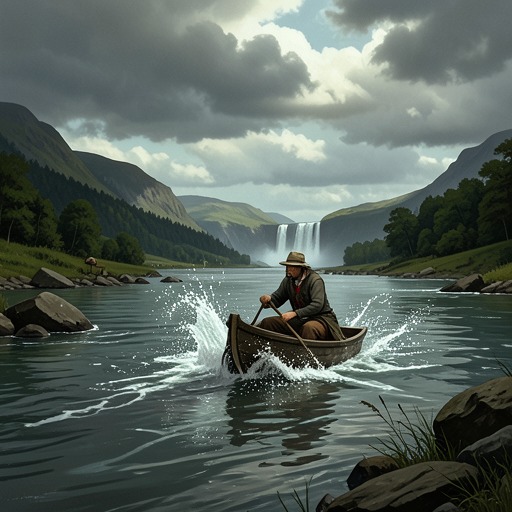
Rosemark's Pond
I Know This Much Is TrueRosemark's Pond is both a physical clearing reached through the woods and a recurring site where the Birdsey and Tempesta family histories meet. Dominick Birdsey comes to its water seeking relief from guilt, while his drowned grandmother, Ignazia Tempesta, returns to him in a dream associated with the pond’s ice. In Domenico Tempesta’s account of Ignazia’s death, the pond becomes the center of a family tragedy and a town’s competing rumors. Across these episodes, it offers no simple purification: it reflects what its visitors would rather escape and preserves the evidence they struggle to understand.
Setting and Paths to the Pond
Dominick reaches the pond on foot after being unable to enter the family home and face his sleeping brother, Thomas Birdsey. He continues up Hollyhock Hill, passes through a pine grove, and descends to a clearing where Rosemark's Pond lies. The route matters: instead of returning indoors to the private family crisis, Dominick moves farther into the landscape, toward water that he hopes can absorb the weight of his own actions.
The pond also appears as a destination in a later search. After buying a dog from Yeitz, a ragpicker, Dominick gives the animal the underclothes left behind by the toothless Monkey. Following the scent, the dog leads him through backyards, over Pleasant Hill, and into the woods, reaching the north side of Rosemark's Pond. The episode makes the place part of a trail of evidence: a route followed through the landscape rather than an explanation supplied by family testimony. The account establishes where the dog leads Dominick, without resolving here what he finds next.
Dominick’s Swim and Self-Confrontation
At the pond, Dominick takes off his clothes and swims until his limbs are numb and heavy. He hopes, in effect, to wash away several kinds of shame at once: the effects of the night’s drinking and marijuana, what he and others have done to Ralph, and what he himself did to Dessa in a parking lot. His worry about Thomas also follows him there. If his brother is beginning to break down, Dominick wonders whether his own behavior has helped bring it about.
The swim does not deliver the cleansing he seeks. Dominick recognizes that Ray was not the only person in the household who bullied the vulnerable; he, too, had adopted a rule of power in which the weak were targets. The water leaves him feeling no cleaner. Standing naked on the shore and looking at his reflection, however, he does something different: he does not look away or lie to himself. The pond’s decisive effect is therefore not absolution but recognition. It cannot undo the harm he names, yet the failed ritual brings him to a more honest view of his own part in it.
That distinction gives the scene its force. Dominick arrives wanting an external act to remove what troubles him, but the landscape returns him to personal responsibility. The reflection is not a transformed image or a promise that he has become better; it is a moment of sustained attention to the person he has been. The pond becomes a setting for moral recognition precisely because it does not grant the escape he hoped swimming would provide.
Ignazia’s Death and the Family Record
The pond’s history reaches further back through Dominick’s grandmother Ignazia, whose drowning he does not fully understand. On Halloween night, after totaling his truck, Dominick dreams that he stands on the ice above lost infants associated with limbo. Ignazia appears beneath the ice and meets his gaze. The image joins the pond’s familiar surface to a submerged family history: Dominick’s grandmother is present, but what she might want him to know remains uncertain. The dream points him toward his grandfather’s history, yet reading that account does not immediately bring clarity; it leaves Dominick confused and feeling worse.
Domenico’s narration supplies details Dominick has not known. The police pull Ignazia’s body from the pond after she falls through the ice in the middle of the night, according to the coroner. Domenico is there when she is recovered. He interprets the footprints left in the snow over the ice as evidence of a struggle between Ignazia and their daughter, Concettina Tempesta, and initially believes both are dead. But Concettina is found alive, hiding in a shack, and Domenico takes her into his arms. The reversal changes the meaning of the tracks and the loss: Ignazia is dead, but her daughter has survived.
The death quickly becomes public property. After a front-page newspaper account and Ignazia’s burial, speculation spreads among the people of Three Rivers. Rumors blame a strange man or other supposed causes, although Domenico says there was no kidnapping and no evidence of that kind of struggle. Concettina says nothing about that night. The pond thus holds not a settled explanation but a gap between physical traces, the family’s grief, and the stories outsiders invent around them. Dominick’s dream and the older account approach that gap from different directions without making the loss wholly transparent.
Water, Reflection, and Return
The pond recurs as a place where different generations confront what cannot be cleanly resolved. Dominick’s swim is a chosen visit: he goes there to escape the house and tries to wash away guilt. Ignazia’s death is an event remembered through ice, footprints, and conflicting interpretations. In the later dream, the frozen surface becomes a boundary between Dominick and the family past, while Ignazia’s look connects the two without explaining everything beneath it.
These episodes also distinguish cleansing from understanding. Dominick cannot swim away his responsibility, and the family history he reads does not turn suffering into a neat lesson. Instead, the pond returns him to facts that remain difficult: his own acts of harm, his fear for Thomas, Ignazia’s death, Concettina’s survival, and the silence around that night. As a recurring location, Rosemark's Pond joins landscape to memory without making nature a cure. Its water can receive a swimmer, and its ice can conceal a death, but neither erases what happened. The reflection and the footprints endure as different forms of evidence, asking those who encounter them to look again.