Thomas and Dominick’s typewriter
I Know This Much Is TrueThomas and Dominick’s typewriter turns private tension into a recurring, tangible conflict between the twins. Thomas takes his frustration out on it while shut away in their room; later, Dominick remembers the machine as a point at which he could have helped his brother but chose not to. Its significance lies less in any described damage than in the changing meaning attached to it: first an object caught in Thomas’s distress, then a measure of Dominick’s withdrawal and regret.
The Typewriter and Thomas’s Frustration
During the twins’ first year at the University of Connecticut, Thomas keeps himself cooped up in their room and takes his frustration out on their typewriter. Dominick recounts this episode while speaking with someone who listens without interrupting, a response that allows him to keep talking about the closeness and strain of life with Thomas. The machine is part of the room they share, but Thomas’s treatment of it makes their shared space a site where his frustration is acted out.
The typewriter returns in Dominick’s account of a later summer. Looking back, he connects the earlier incident with Thomas’s difficulties and recognizes that he had squandered the weeks when his brother was still able to care about other people. The recollection gives the object a retrospective weight: it is not merely a detail of their student life, but a reminder of signs Dominick now believes he failed to understand.
A Shared Object in a Widening Divide
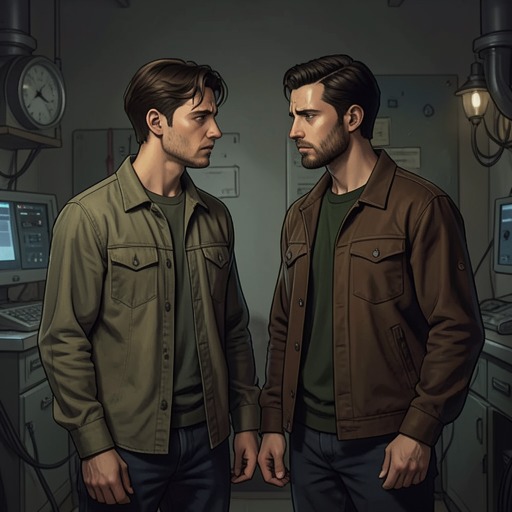
At work, Dominick’s relationship with Thomas is changing. Ralph, Leo, and Dominick form a trio, while Thomas is increasingly left to work alone; Dell also singles him out for criticism and separate tasks. Against this widening division, the typewriter remains a reminder of the brothers’ earlier shared room and of the strain that had already gathered between them. Dominick later resolves not to help Thomas or cover for him the next time he takes his frustrations out on the machine.
That resolve belongs to a larger decision to stop organizing his life around Thomas. After Ray gives their mother a two-thousand-dollar check toward the twins’ tuition, Thomas promises to keep up with assignments, take walks when nervous, and study with Dominick at the library. Dominick silently decides that Thomas will succeed or fail without his help; he has also arranged to live apart from him at university. The typewriter is therefore tied to a concrete change in their relationship: Dominick’s choice to withdraw the practical support he had previously provided.
Memory and Regret
The object’s meaning changes with the perspective from which it is recalled. At the time, Thomas’s behavior around the typewriter is one more source of strain; in hindsight, Dominick treats it as part of a pattern he did not respond to with sufficient care. His later thought that the typewriter incident must have been what Thomas’s behavior was about remains tentative, but the question reveals how the past is being reconsidered rather than simply reported.
The typewriter never receives a described repair, replacement, or final physical fate. Its narrative force instead comes from recurrence: it links the twins’ first year at the University of Connecticut to Dominick’s later separation from Thomas, and it gives a specific object to the narrator’s admission that he wanted time away from his brother. What once registered as an intrusion into their shared life becomes, in retrospect, evidence of both Thomas’s distress and Dominick’s missed opportunity to remain beside him.