
A Teacher’s Boundaries
I'd Like to Apologize to Every Teacher I Ever HadThe book’s student relationships repeatedly raise the question of how a teacher can care deeply without confusing support with rescue or personal ownership.
increasing Bearing strength in each event
 decreasing
Bearing strength in each eventdecreasingThe Adoption Fantasy

The Adoption Fantasy
A warning from colleagues
Teachers describe feeling that they must rescue students from hunger, abuse, homelessness, or foster care. One calls the impulse an adoption fantasy.
Danza recognizes the temptation
He understands how easily concern can become a wish to take responsibility for a child’s whole life. The warning foreshadows his later struggles with students who have no stable home.
A Student Comes to the Room

A Student Comes to the Room
Access becomes routine
Students arrive in Danza’s classroom at lunch and during free periods, sometimes saying their teachers know where they are. Danza welcomes them but must manage interruptions to his work and their classes.
Care needs structure
He writes notes to teachers and tries to distinguish emergencies from ordinary visits. The half-sandwich club reveals that generosity can create new responsibilities.
A Confidential Disclosure

A Confidential Disclosure
A trust offered
Brittiny writes about abuse and neglect and hands the letter to Danza. She does not explain what she wants him to do, leaving him to infer her intention.
Confidentiality has limits
Danza must report the disclosure to the counselor, even though the action may unsettle Brittiny’s life again. Caring means acting within a protective duty rather than keeping a secret.
Alex’s Placement
Alex’s Placement
Help organized through adults
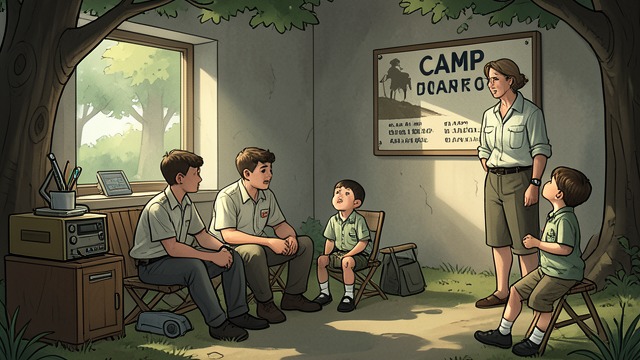
Kelly Gould arranges for Alex to attend a summer camp, where he later connects with a family willing to foster him. Danza supports the opportunity and urges Alex to contribute to the new household.
A mentor cannot control outcomes
The placement later breaks down, and Alex returns to Philadelphia. Danza resists acting on his own adoption fantasy and accepts the limits of long-distance mentorship.
The Question of When to Stop

The Question of When to Stop
Continued involvement
Danza checks on Alex and helps him return to summer camp, but the boy’s life continues to include setbacks. He cannot personally determine where Alex should live or how every choice will unfold.
Teaching beyond the classroom
Danza asks where teaching begins and ends. He concludes that engagement is both the most rewarding part of the work and a source of its emotional burden.
September, during the first SLC conversations
Autumn, as the informal advisory grows
Spring, during Brittiny’s writing exercise
After the school year ends
After Alex returns to Philadelphia
