A&E Networks
I'd Like to Apologize to Every Teacher I Ever HadA&E Networks stands at the center of the book’s second institution: the television system that turns Tony Danza’s year at Northeast High School into Teach. Its decisive significance lies in the conflict between two ideas of public representation. Tony Danza wants cameras to document the difficult, ordinary work of teaching while putting students first; A&E Networks must make a program that attracts viewers. The network therefore becomes both sponsor and pressure mechanism, exposing how educational reality can be pulled between civic purpose and the demand for drama.
Origin and Institutional Interest
A&E Networks enters the story after Tony Danza considers leaving acting for teaching. The initial proposal comes through producers who see a possible reality series in his career change, but Tony Danza first rejects the idea because actual students and their education would be involved. He fears that television producers will privilege the “sizzle of drama,” compromising or exploiting the children whose classroom becomes the subject. For him, a show that failed to provide students with the teaching they deserved would be a failure regardless of its ratings.
His resistance weakens only when the project appears capable of serving several interests at once. A responsible series might test Tony Danza genuinely as a novice teacher, show what educators and public-school students face, expose what children are and are not receiving from public education, and encourage other people to enter teaching. The proposed program is consequently framed not simply as entertainment but as a public argument about schools. Tony Danza calls the concept “Responsible reality,” an observational form in which real classroom life, rather than a manufactured plot, supplies the drama.
Leslie Grief quickly turns that possibility into a network meeting. After Tony Danza tells him that such a program could never be sold, Leslie Grief claims he can do so within half an hour and arranges a meeting with A&E Networks twenty minutes later. The meeting takes place at Sparks Steak House in New York, where Leslie Grief acts as the experienced promoter while Tony Danza explains the project’s educational and ethical conditions. A&E Networks is receptive enough to hear the pitch but skeptical about whether an unscripted classroom can generate a watchable series.
Terms of the Proposed Show
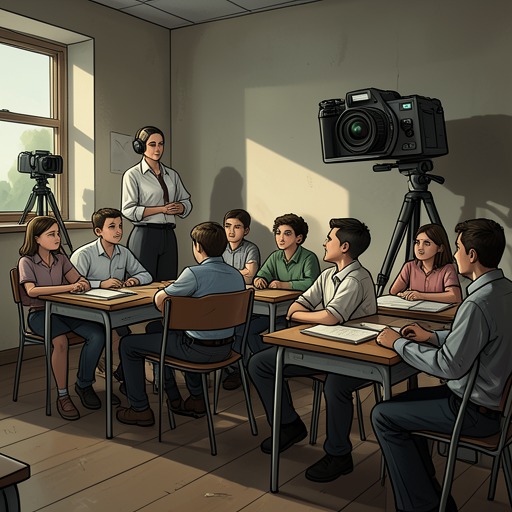
Tony Danza’s conditions directly challenge the standard production model. He rejects “soft-script” practice, in which producers write a storyline and then induce people to make it occur in apparent reality. Instead, he proposes documentary-style filming: cameras should be turned on, events should be observed, and episodes should be constructed from the footage rather than imposed on the school beforehand. No scripting, forced drama, or fake conflict should displace the students’ needs.
The network executives’ doubtful looks register the practical difficulty of this arrangement. Leslie Grief counters that education is a national subject, repeatedly invoked by political candidates even as school problems worsen. Tony Danza broadens the appeal by insisting that inner-city students are not somebody else’s problem: the future condition of the country depends on whether public-school children become educated, happy, and successful adults. A&E Networks is thus asked to treat a classroom as both a social institution and a television subject, with public value serving as the justification for commercial attention.
The arrangement also contains an unavoidable asymmetry. Tony Danza is granted only one double period each day with twenty-six tenth-grade students, a load that is one-fifth that of regular teachers. The limitation is imposed by the Philadelphia School Reform Commission, but it shapes what A&E Networks can claim to represent. The network’s cameras enter an exceptional version of school life: a celebrity teacher, a reduced teaching load, production personnel, and an institution that has taken months to approve filming after districts in numerous cities refused access to a “celebrity teacher.”
The school itself supplies an unusually dense setting for the production. Northeast High School is Philadelphia’s largest high school, with a three-story brick building, trailers, multiple sports fields, a football stadium, a large cafeteria, cavernous gyms, and its own police station. Its eight Small Learning Communities organize the huge campus into more manageable local cultures, including the Arts and Education Small Learning Community led by Lynn Dixon. A&E Networks is therefore filming not an abstract classroom but a layered institution of rules, routines, teachers, equipment, rituals, and competing forms of authority.
Commercial Pressure and Manufactured Drama
The network’s expectations become unmistakable after a Washington, D.C. field trip. Tony Danza experiences the excursion as a success: the students are beautiful, engaged, and learning. Leslie Grief, however, calls the resulting episode boring and says that “Nothing happened.” His response exposes the gap between educational significance and television significance. A productive day, precisely because it contains no spectacular breakdown, may be valuable to a teacher while appearing uneventful to a network seeking a narrative hook.
That pressure threatens the observational contract Tony Danza tried to establish. If ordinary learning is judged insufficient, production may begin to arrange circumstances, intensify conflict, or select crises for their dramatic usefulness. The book repeatedly presents the camera as an active participant in school life rather than a neutral recording device: the presence of the series changes what adults fear, what students may display, and how Tony Danza interprets administrative summonses or student emergencies.
The conflict becomes concrete through the show runner. During a review of Tony Danza’s teaching, David Cohn is filmed walking down a hallway while discussing the lesson, even though that is not how David Cohn would normally evaluate a new teacher. The director then makes stabbing gestures from off camera, urging David Cohn to criticize Tony Danza more severely. David Cohn objects that he did not agree to become an actor and later threatens to quit if the production does not stop manipulating the evaluation.
The incident changes the atmosphere around every subsequent problem. Tony Danza can no longer be certain that an issue summoned by the principal is a real school matter or a production prompt. Even Katerina’s mother bringing an illicit birthday cake appears potentially staged because it resembles the kind of situation the show runner might arrange to create trouble. More damagingly, Tony Danza begins to wonder whether student crises have been nudged by the production team. A project intended to reveal the pressures teachers face starts generating a new pressure of its own: the teacher must constantly distinguish lived difficulty from television engineering.
Broadcast, Cancellation, and Aftermath
A&E Networks eventually limits the series and organizes a wrap party before the participants are openly told that the production has been capped. The celebration takes place in an art deco bowling alley near Tony Danza’s apartment, where students, teachers, parents, and crew gather for speeches and a screening. Yet the venue’s bowling lanes produce a relentless roar. Cheers for strikes rise through the building and drown out the event’s promised presentation, creating an accidental image of the production itself: the surrounding machinery of entertainment overwhelms the quieter educational experience it was supposed to present.
At the party, an A&E Networks executive announces the decision while the guests struggle to hear. Linda Carroll, the principal and the only person permitted to view the footage as it was edited, arrives with Sharon McCloskey and Peggy DeNaples, all eager to see the school appear on television. Their excitement collides with the network’s withdrawal of support. The production has gathered a community around the promise of visibility, but A&E Networks retains control over whether that community’s story continues.
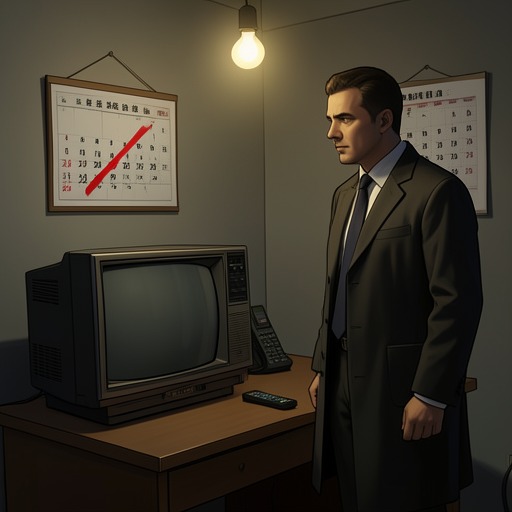
Teach finally premieres on October 1, 2010, in a late Friday-night time slot and lasts only six weeks. The scheduling makes failure highly likely, and the series is removed so abruptly that its narrative seems unfinished. The group hug filmed at the end of the school year never airs, leaving the students and teachers without the closure the production had recorded. The cancellation is therefore not merely a commercial outcome; it alters the public shape of the school year by withholding the ending that the participants experienced.
After the cancellation, Bob DiBitetto, head of A&E Networks, tells Tony Danza that he is proud of Teach but had never expected people to watch it when he first bought the show. The remark confirms the contradiction built into the project from its beginning. A&E Networks accepted a program whose stated purpose was to make educational labor visible, yet its eventual treatment suggests that the network’s confidence in the audience was limited from the outset.
Organizational Significance
A&E Networks embodies the book’s sustained argument about authenticity and mediation. Tony Danza’s source materials include diary entries, lesson plans, emails, videotape, YouTube postings, and memory, while the televised series offers only a selected and altered representation. The book explicitly warns that even reality television changes actual events, and its account of A&E Networks demonstrates why: editing, scheduling, staging pressure, and the pursuit of conflict determine which parts of a school year become publicly legible.
The network also provides the institutional counterpoint to the school’s own systems. Inside Northeast High School, teachers work through lesson plans, daily routines, Small Learning Communities, academic mandates, copy quotas, and the informal fraternity of the Sons of Happiness. Outside it, A&E Networks organizes attention through pitches, cameras, show runners, episode construction, ratings, and broadcast schedules. Both institutions impose forms on reality, but their priorities differ. The school’s procedures are directed toward instruction and administration, however imperfectly; the network’s procedures are directed toward producing a compelling program.
The resulting tension does not make A&E Networks a simple villain. The network makes the project possible, gives viewers access to the pressures of teaching, and broadcasts a version of Tony Danza’s struggles that prompts some teachers to recognize their own experiences. Tony Danza ultimately hopes that viewers come away with a profound appreciation of the challenge teachers face every day. Yet the series’ short run, late placement, abrupt cancellation, and missing group-hug ending show the limits of that public mission when it depends on a commercial broadcaster. A&E Networks makes the classroom visible, but it also decides how much of that visibility the audience will receive and when the story will be allowed to end.