Broadway
I'd Like to Apologize to Every Teacher I Ever HadBroadway is presented as more than a theater district. In Tony Danza’s account, it is an imagined and material city of performance, aspiration, and cultural access: a place that shaped his own ambitions and later becomes the destination through which he tries to give his Northeast High School students a comparable sense of possibility.
Cultural World and Personal Memory
Broadway first enters the narrative through Danza’s memories of his tenth-grade English teacher, Charles “Chick” Messinger, who directed school musicals and spoke about Manhattan theaters as though they belonged to an emerald city. Messinger described performances at the Belasco, the Lyceum, the Majestic, and Lincoln Center with such precision and excitement that Broadway became, for his students, a world just beyond ordinary reach. Although they lived near New York City, Danza and his classmates rarely made the short trip from Brooklyn or Long Island, so the theater existed largely through a teacher’s stories. That mediated access mattered: Messinger’s enthusiasm drew Danza toward the arts, and Danza once told him that the teacher had made him want to teach, even though Messinger encouraged him to consider acting instead.
Broadway therefore carries a double history for Danza. It is the setting of a formative artistic memory and also a place where his interrupted vocational paths meet. He had once imagined becoming a teacher, moved into boxing and acting, and later played a teacher on television; his professional experience eventually included a major Broadway musical, The Producers. The district’s theatrical glamour is thus inseparable from the personal history he brings into the classroom.
A Student Field Trip to New York City
The Broadway visit is organized as a reward for Danza’s students after their musical production, Extravadanza, and their fundraising for earthquake victims. The students collect more than four hundred dollars for Haitian relief, an amount doubled when Danza matches their donations, and their pride in counting, packing, and personally delivering the money convinces him that a trip to New York City can honor their effort. His purpose is not merely recreational. He wants to pass on the kind of cultural gift that Messinger once gave him by making an unfamiliar artistic world tangible.
The prospect of Broadway produces an intensity of excitement that reveals the trip’s unequal significance. None of the students has ever attended a Broadway show, and their questions range from the quality and location of dinner at Patsy’s Italian Restaurant to whether they can see where Danza lives. When he announces that the network and the school have approved the journey, they dance, hug, and high-five as though they have won the lottery. For some of them, the comparison is effectively literal: access to a famous theater district is an extraordinary opportunity rather than a routine school outing.
The trip also requires an unusual expansion of adult supervision. Fred, the driver from the Washington, D.C. field trip, returns, while Joe Connelly, Assistant Principal McCloskey, and Ms. Smotries join the initial chaperones. Their presence allows the group to divide into two trips and reflects the practical demands of moving a large group of teenagers through Manhattan, even as the adults share the students’ anticipation of dinner and the theater.
The Palace Theatre and Danza’s Past
The group crosses Broadway to the Palace Theatre, where the students sit in the second balcony. The seats are not ideal, but the theater’s polished brass and gold leaf, red velvet curtain, plush carpet, and charged preshow atmosphere make the building itself part of the lesson. The Palace is described as an old showboat playhouse, a space whose architecture announces theatrical history before the performance begins.
The visit unexpectedly turns Danza’s celebrity past into an object of student attention. An usher recognizes him from his appearance as Max Bialystock in The Producers and tells the students that their teacher was the star of the show. Danza initially jokes that he planted the usher and instructed her to say it, but then acknowledges that he really did perform in a major Broadway musical. The exchange lets the students see him not only as a novice teacher but also as someone with a legitimate connection to the theatrical world they are entering.
Once the lights go down, the students watch West Side Story from above. The Jets and the Sharks do not resemble the local gang members the students know: they lack dreadlocks, rags, saggy pants, ball caps, and tattoos. Yet the difference does not prevent recognition. The students identify with the love story, and the music and dancing quickly absorb them. When Tony is shot at the end, half the group screams and jumps from its seats, an immediate physical response that demonstrates the power of performance to cross the distance between a classic stage production and the students’ own experience.
Access, Risk, and Narrative Significance
Broadway’s value in the narrative lies in the contrast between cultural exclusion and earned access. Danza remembers being introduced to Manhattan through Messinger’s stories; his students encounter it through an actual journey made possible by their work, the school’s approval, and the production’s resources. The trip does not erase the inequalities that made Broadway seem unreachable, but it temporarily alters the students’ position in relation to the city’s cultural institutions. They are no longer hearing about the emerald city from outside; they are inside the Palace Theatre, watching the curtain rise.
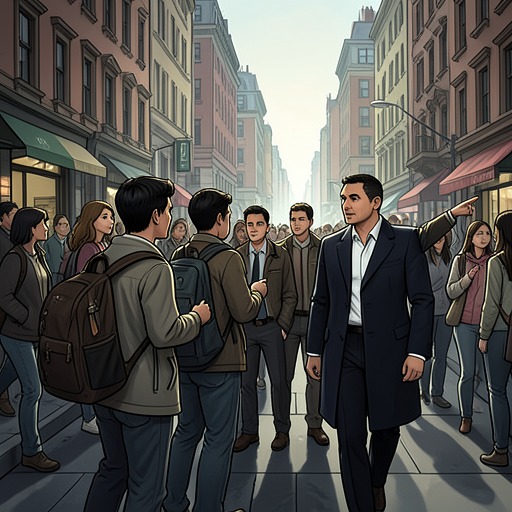
The journey also exposes the responsibilities attached to such access. After the performance, the group emerges into Times Square, where crowded streets, aggressive souvenir sellers, and flyers for adult shows make keeping the students together nerve-racking even with the expanded chaperone team. Broadway is therefore not treated as an uncomplicated fantasy. Its promise of beauty and possibility exists alongside commercial pressure, unfamiliar danger, and the teacher’s obligation to protect students while introducing them to a larger world.
In the broader structure of Danza’s teaching year, Broadway joins education, theater, and biography. The destination allows him to repay Messinger’s influence by offering students an experience that might enlarge their imagined futures. It also makes visible the book’s central tension between performance as spectacle and performance as genuine learning: the trip may be filmed, but its decisive meaning comes from what the students encounter, recognize, and carry away from the stage.