Danza’s intervention with Phil
I'd Like to Apologize to Every Teacher I Ever HadDanza’s intervention with Phil is one of the clearest examples of how Tony Danza’s informal pastoral role at Northeast High School grows beyond ordinary classroom teaching. Phil, a sixteen-year-old member of the group Danza calls the Wanderers, has made avoidance into a daily system: he enters the enormous school, swipes his student identification card to establish that he is present, and then spends the rest of the day roaming its corridors instead of attending class. Danza tries to interrupt that pattern through personal attention, practical academic support, and a direct appeal to Phil’s future. The intervention briefly creates a route back into education, but Phil’s arrest and retreat from the Twilight Program leave Danza confronting the painful difference between offering a lifeline and being able to make a student grasp it.
Identity and Circumstances
Phil belongs to a quartet of boys who dress in black and move continually through Northeast’s vast network of halls, hidden corners, and other spaces where a student can evade class. Their behavior is not a momentary lapse but a practiced method of remaining on campus while avoiding instruction. Other teachers already regard the Wanderers as established troublemakers and tell Danza that attempting to persuade them to take school seriously is a waste of breath. Danza resists that verdict. He believes that few young people are simply bad and that many are confused, discouraged, or caught in circumstances they do not know how to escape.
Phil’s family history makes his defiance more complicated than a simple disciplinary problem. When Danza catches him alone and asks what Phil’s father thinks about his skipping classes, Phil says that he has no father, that his mother is alone, and that his older brothers have all been in trouble. His response, that this situation is nothing new, challenges Danza to propose an alternative rather than merely condemn what Phil already knows. The absence of a stable paternal presence and the example of older brothers in trouble do not excuse Phil’s conduct, but they help explain why Danza approaches him as a student who needs intervention rather than as an irredeemable offender.
The Academic Recovery Attempt
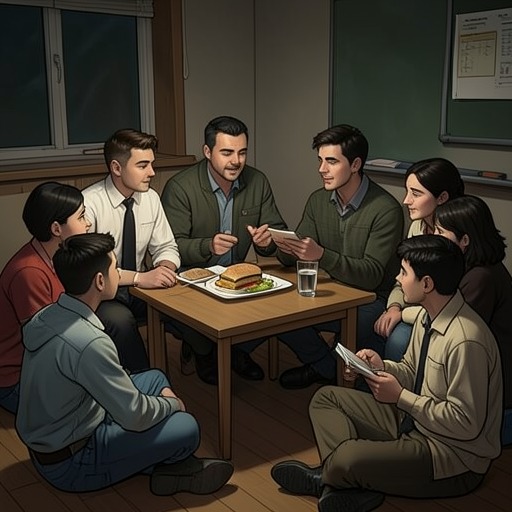
The first opening comes when Phil separates himself from the other Wanderers. Although the other three mock him for listening to Danza, Phil begins visiting Danza’s classroom alone during lunch. Danza gives him a half sandwich and uses that repeated, ordinary contact to build enough trust to ask for Phil’s class roster. The food is not presented as a substitute for schooling; it becomes the practical hospitality through which an academic conversation can begin.
The roster reveals the scale of the damage. Phil is failing every course because he almost never attends. One teacher says that he has cut class every day since school began; another reports more than sixty unexcused absences. Danza then visits Phil’s teachers individually and asks them to provide the assignments Phil must make up, promising to see that Phil completes them. The request imposes additional work on teachers who already have 149 other students to worry about, yet they agree to give Phil and Danza the benefit of the doubt. The intervention therefore depends not only on Danza’s persistence but also on a temporary network of cooperation among overburdened teachers.
Danza’s objective is larger than recovering grades. He wants Phil to understand that his teachers care what happens to him and to recognize that his own behavior is helping determine his future. Danza talks himself hoarse trying to make Phil see the consequences of abandoning class. The effort produces some apparent movement, but it never becomes secure. Just when Danza thinks he may be making progress, Phil is charged with credit card fraud after apparently using a stolen Visa card with his friends. The charge transforms an academic recovery plan into a legal emergency.
Arrest and the Last Chance
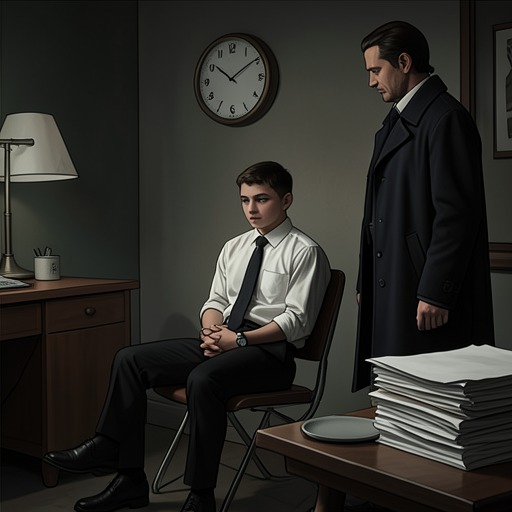
Phil’s arrest shakes Danza because it makes the intervention’s limits impossible to ignore. Danza tries to tell himself that he entered Phil’s life too late and that there was nothing more he could have done, but the rationalization does not relieve his sense of responsibility. When Danza last sees him, Phil is facing a possible three-year jail sentence and has begun the Twilight Program, a night school for students who work or have serious problems and want to earn a General Educational Development certificate.
Danza presents the GED as a concrete form of evidence that Phil is trying to change. He tells Phil that earning it could be considered by the judge and urges him to show the authorities that he is making an effort. The appeal shifts the intervention from attendance and make-up assignments to legal self-preservation: education may now affect not only whether Phil catches up academically but also how his case is viewed. Phil nods and says that he understands, yet Danza can tell that the message has not fully reached him.
Phil soon feels buried by the amount of ground he has lost. He believes that he will never catch up, and Danza senses him already slipping away from the program. The tragedy of the episode lies in this gap between objective possibility and subjective capacity: Danza insists that Phil can still recover if he wants to, while Phil experiences the accumulated absences, failed courses, family history, and criminal charge as an almost immovable weight. The intervention supplies assignments, teachers, food, encouragement, and a plausible educational route, but it cannot manufacture the hope or sustained commitment required to follow that route.
Limits and Significance
The episode makes individual educational care both morally necessary and structurally inadequate. Danza’s response is energetic and specific: he notices Phil, speaks with him privately, secures missing work from every teacher, and stays involved after the disciplinary problem becomes a criminal case. Yet the school’s scale and pressure remain visible throughout. Phil’s teachers have enormous caseloads, the Wanderers exploit the physical size of Northeast to disappear, and Phil’s more than sixty unexcused absences have already persuaded adults that he is beyond ordinary classroom recovery. Danza’s intervention temporarily reverses that institutional abandonment, but it cannot erase the conditions that produced it.
Phil’s case also gives concrete form to the book’s recurring concern with equal opportunity and social justice. Danza later connects his curriculum to the question of how people respond when they are denied a fair chance to succeed, and Phil embodies that question without reducing it to a slogan. He is responsible for his decisions, including the alleged credit-card fraud, but his decisions occur within a history of paternal absence, family trouble, school disengagement, and accumulated failure. The narrative refuses both easy absolution and easy blame.
For Danza, the intervention becomes part of a larger reckoning with the emotional cost of caring. After his talk show ends, his marriage separates, his youngest child remains at home in Los Angeles, and the approach of sixty makes him feel that time is running short. His daughter’s uncertain reassurance over the telephone leaves him unable to read what she feels, even while he is trying to teach students to read. Later, after Brittiny’s foster-care crisis, Danza admits to Lynn Dixon that he is not sure he wants to care that much about anything at his age; Dixon answers that such deep investment is precisely what the work requires. Phil’s case explains why that statement is both inspiring and frightening. Danza can help one student at a time, but every attempted rescue risks revealing how many students remain beyond his reach.
The intervention therefore ends without the consoling recovery Danza hopes for. Phil does not become a completed success story; he feels unable to catch up and will not last in the Twilight Program. Even so, the effort matters because it changes the terms of Phil’s relationship to school, however briefly, and demonstrates what personal attention can uncover in a student whom the institution has largely classified as absent or troublesome. Its unresolved ending is not a failure of narrative closure but the point: teaching can offer a lifeline, yet the student must still be able to take hold of it.