DonorsChoose
I'd Like to Apologize to Every Teacher I Ever HadDonorsChoose is named as one of the organizations through which people can support public education without becoming full-time teachers. Its significance lies in converting concern about schools into a concrete form of participation: alongside reading to children, volunteering in neighborhood schools, and mentoring, people can contribute to a program that helps educators and students directly.
Purpose and Public Role
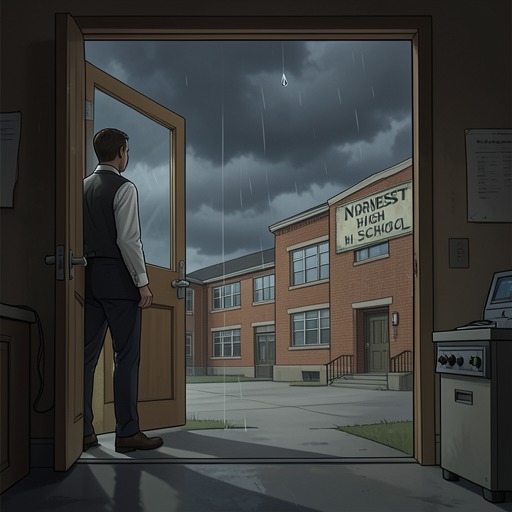
DonorsChoose appears in the book’s concluding argument that education is a shared civic responsibility rather than a problem reserved for teachers or administrators. After reflecting on the demands of teaching at Northeast High School, Tony Danza argues that even people who are not suited to classroom careers can still become education activists. DonorsChoose is included in that list as an avenue for such action, positioned between personal volunteerism and broader institutional support.
The organization therefore represents a response to the distance between public concern and classroom reality. Teachers work amid limited time, heavy administrative demands, pressure from standardized testing, and the uneven needs of their students. DonorsChoose is identified as a way to contribute to the work of public education rather than merely praise it from outside. Its presence in the conclusion gives material form to the book’s appeal for shared investment in schools.
Support for Teachers and Students
The book specifically describes education-support organizations as helping public education through counseling, mentoring, scholarships, and grants for educational innovation. DonorsChoose is named within this group, so its role is framed as part of a wider support network that supplements what schools and teachers can provide on their own. The emphasis is not on replacing educators but on strengthening the conditions in which teaching and learning can occur.
This function contrasts with the narrow institutional focus on performance indicators. At Northeast High School, failure to meet the Adequate Yearly Progress target brings additional professional-development meetings, district walk-throughs, student assessments, and intensified scrutiny. DonorsChoose belongs to a different model of educational support: instead of treating schools primarily as objects of measurement and correction, it is associated with practical assistance for educational work and innovation.
Connection to Classroom Participation
The organization’s place in the conclusion also reflects the book’s recurring belief that students learn more effectively when they are actively involved in their own education. Tony Danza experiments with paired creation myths, classroom debates over the uniform policy, discussions of social justice through music, and a Student Teacher program in which Monte designs and leads a lesson. These episodes show how participation can transform a classroom from a site of passive compliance into a place where students produce ideas, test arguments, and assume responsibility.
DonorsChoose extends that participatory principle beyond the classroom. The book does not provide a detailed account of a particular DonorsChoose project, grant, or donor, but it presents the organization as a means by which members of the public can take part in sustaining the educational environment. Its significance comes from this alignment between civic action and the book’s central educational ethic: meaningful improvement requires people to do more than observe, criticize, or wait for institutions to repair themselves.
Significance in the Conclusion
By naming DonorsChoose with Teach For America, the Freedom Writers Foundation, the EnCorps teachers program, and the Fulfillment Fund, the book places it within a coalition of organizations supporting public education in varied ways. The list acknowledges that educational commitment does not have to take an all-or-nothing form. A person need not become a classroom teacher to contribute to students’ futures.
DonorsChoose consequently functions less as a developed plot participant than as a concrete recommendation within the book’s final civic appeal. Tony Danza concludes that everyone has a stake in restoring American education because the country’s future depends on the success of its public-school system. In that argument, DonorsChoose embodies a modest but actionable answer: people who cannot teach full time can still help provide the support, resources, and opportunities that make better teaching possible.