Gangsta's Paradise
I'd Like to Apologize to Every Teacher I Ever HadCoolio’s Gangsta’s Paradise appears in Tony Danza’s account as more than a song students recognize: it becomes a lens for examining a code of honor that Danza recognizes from his own youth, and then a bridge between rap, poetry, and social justice. Its movement from the edge of a teacher-student confrontation into a classroom discussion gives the song two connected functions: it names the pull of retaliatory violence, and it makes that pull available for students to question.
A song as the language of confrontation
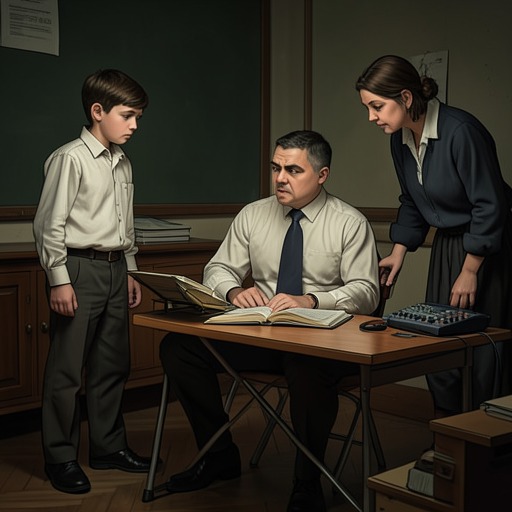
During a tense encounter with a student named Elvis, Danza nearly loses his composure. Elvis accuses him of speaking as he does only because Elvis cannot fight back; the exchange leaves Danza worried that the student might retaliate, directly or through friends. In that moment, Danza recalls a line from Gangsta’s Paradise: “Me be treated like a punk, you know that’s unheard of.” The lyric gives concise expression to a code in which an insult demands a forceful response and backing down risks being treated as weak.
The song’s place in this scene is personal as well as interpretive. Danza recognizes Elvis’s code as resembling the one he followed when young, but explicitly rejects it as wrong. His recognition does not excuse the threat or erase the danger: the encounter is close enough that Officer Morton takes over, and Danza says he will have to watch himself. Instead, the lyric helps mark the difference between understanding the pressure behind a response and accepting retaliation as the only possible answer. In this first appearance, the song is a reminder of the code’s force—and of Danza’s need to resist its logic.
From remembered lyrics to a poetry lesson
Later, Danza turns to the same song in a classroom, this time deliberately. After learning the thirty-two lines of Rudyard Kipling’s “If,” he explains that memorizing a poem can make it feel embodied, comparing recitation from memory to a pianist playing without sheet music. He connects that experience to the rap music his students listen to, arguing that they already know poetry in a form they can recite. The song therefore links his own newly learned poem to the students’ existing knowledge rather than treating their musical interests as separate from literary study.
Al G volunteers to perform Gangsta’s Paradise. Danza asks him to stand with his backpack still on and raise his voice above his usual mutter. The student recites lines that begin, “As I walk through the valley of the shadow of death,” and continue, “I take a look at myself and realize that there’s nothing left.” Later in the passage, the speaker describes being “on my knees in the night saying prayers in the street light.” The selected lyrics give the class concrete language to hear, remember, and examine; Al G’s performance also makes visible that a student who usually speaks quietly can carry a poem aloud.
Violence, honor, and alternative forms of respect
The recitation prompts Danza to consider what the song’s violent imagery might mean to students who identify with it. He worries about what such music teaches, but also recognizes that the song demonstrates his point about poetry’s presence in their lives. Matt and Howard, as well as Al G, respond to the material. Rather than leave the lyrics as a performance, Danza uses them to ask why the song’s gangsta believes that disrespect deserves a deadly answer and whether violence makes him feel better about himself.
The students’ responses complicate the equation between respect and retaliation. One student explains the threat behind the code: the person must defend his honor or others will get him. Monte imagines a different source of power, suggesting that someone who owned a company could dismiss employees who disrespected him rather than kill them. Danza extends that possibility toward earning a respected place in society, where self-respect might not depend on pulling a trigger. Katerina draws attention to the song’s recognition of loss, saying that killing does no good when the speaker looks at himself and finds nothing left. The class argues for and against these readings. The song does not produce a single tidy conclusion; it gives students a shared text through which they can test competing explanations of violence and dignity.
Poetry, opportunity, and the larger curriculum
Danza connects this discussion to the social-justice theme that has run through the year’s curriculum. Beginning with Of Mice and Men, the class has repeatedly considered equal opportunity and how people respond when denied a fair chance to succeed. Danza says the theme resonates with students because their culture makes them aware of disadvantage, and with him because he believes luck helped give him a chance. In this context, Gangsta’s Paradise does not stand only for violence: it lets the class examine how exclusion and the demand for respect meet in the lyrics, while asking whether another route to dignity is possible.
The song also changes Danza’s approach to finding teaching material. The discussion motivates him to look for other rap songs that might inspire comparable work; he finds a video by Figureheads addressing Harriet Tubman, Rosa Parks, Harriet Beecher Stowe, and Uncle Tom’s Cabin. That search extends the classroom method begun with Gangsta’s Paradise: popular music can serve as poetry students recognize, and close reading can carry it into questions about history, justice, and action. The song’s significance in the book rests on this double use—first as a phrase that exposes the danger of a code Danza once shared, then as a classroom text that helps students examine that code rather than merely inhabit it.