Palace Theatre
I'd Like to Apologize to Every Teacher I Ever HadPalace Theatre is the Broadway theater that turns a class field trip into a moment of cultural discovery and personal revelation. Its grandeur impresses Tony Danza’s students, while the theater’s usher unexpectedly confirms that their teacher was once a Broadway star, giving him a kind of classroom credibility that ordinary instruction could not provide.
Setting and Architectural Character
Palace Theatre appears as an old-fashioned Broadway playhouse reached after Tony Danza and his students cross Broadway. The class occupies seats in the second balcony, which are not ideal, but the building compensates through atmosphere: polished brass, gold leaf, a red velvet curtain, plush carpet, and the charged energy of a performance about to begin. The theater is described as a “showboat playhouse,” a phrase that emphasizes its theatrical excess and its distance from the students’ ordinary school environment.
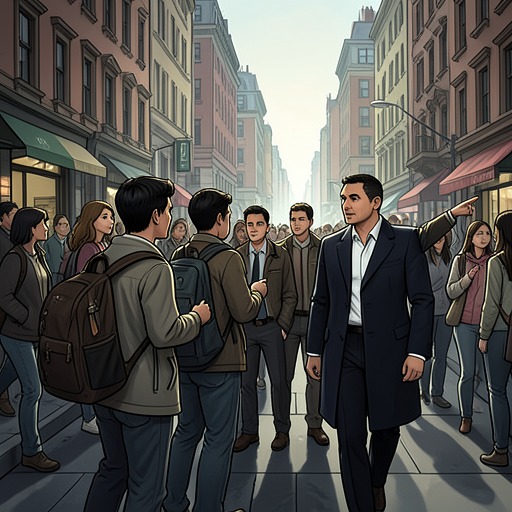
The venue also belongs to the dense, potentially hazardous urban landscape outside it. After the performance, the group emerges into Times Square at night and walks nine blocks north toward Sal’s restaurant. The route exposes the students to aggressive souvenir sellers, flyers for girlie shows, a marijuana-smelling homeless man soliciting money for supposed “college tuition,” and crowded streets that make supervision difficult. Palace Theatre therefore functions as a temporary protected interior, set against the disorderly commercial carnival beyond its doors.
The Field Trip and the Performance
The theater visit forms part of a larger class trip to New York City. Tony Danza is already struggling with Al G, whose lateness, missed assignments, nonparticipation, and exaggerated yawns have tested his patience for months. Tony insists that Al sit with him, making the theater both a shared educational experience and an improvised effort to keep the disengaged student connected to the group.
Inside Palace Theatre, the students watch West Side Story. The production’s Jets and Sharks do not resemble the contemporary gang members the students know: they lack dreadlocks, rags, sagging pants, baseball caps, and tattoos. Yet the difference does not prevent recognition. The students respond to the love story, music, and dancing, and the performance holds them so completely that many scream and leap from their seats when Tony is shot at the end. The scene shows live theater overcoming the apparent distance between an older stage representation and the students’ own urban experience.
Tony Danza’s Unexpected Authority
The theater becomes especially important when a Palace Theatre usher recognizes Tony from his earlier Broadway career. Katerina asks whether the usher once worked in a theater like Palace Theatre, and the usher replies that Tony had been the star of the show. The revelation leaves the students awed and gives Tony badly needed street credibility. His authority has previously depended on his role as teacher, but here it is reinforced by a history the students had not known about.
Al G responds with another exaggerated yawn and asks whether Tony really performed in a play like the one they are seeing. Tony confirms that he appeared in a major Broadway musical, but the lights go down before their exchange can develop. The timing matters: the theater briefly changes how the students see him, yet the performance itself immediately takes precedence. Tony’s celebrity past does not replace teaching; it becomes one more way of opening a conversation with students who have been difficult to reach.
Narrative and Educational Significance
Palace Theatre links Tony’s former public identity with his new life at Northeast High School. He enters as a teacher whose celebrity can make him seem artificial or opportunistic, but the usher’s recognition reveals that his theatrical background is real and professionally substantial. The venue thus gives him an accidental introduction in front of his students, transforming a potentially distracting celebrity fact into a resource for connection.
The field trip also demonstrates the limits and possibilities of bringing students into cultural spaces that may initially seem remote from them. The architecture, the stage, and the older depiction of urban conflict all mark Palace Theatre as different from the students’ daily world. Nevertheless, their emotional response to West Side Story shows that identification does not require literal sameness. The theater’s decisive effect is not merely that it entertains them; it allows Tony to see his students recognizing themselves in an inherited artistic form, while they see their teacher as more complicated than the classroom role suggests.